
Daily Activities

UPSC Prelims Current Affairs

UPSC Mains Current Affairs

Current Affairs

Ramsar Site Surha Tal Designation

Ramsar Site Surha Tal Designation

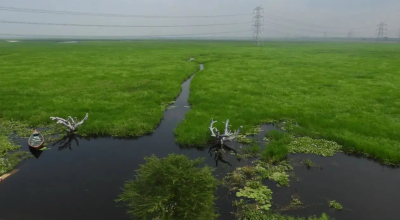
On World Environment Day, June 5, 2026, the United Nations Environment Programme led global celebrations under the theme “Inspired by Nature. For the Climate. For Our Future.” On this occasion, India officially designated the Jai Prakash Narayan Bird Sanctuary, popularly known as Surha Tal, in Ballia, Uttar Pradesh, as its 100th Ramsar Site. Prime Minister Narendra Modi welcomed this milestone, which highlights the expanding network of protected wetlands in the country. The Ministry of Environment, Forest and Climate Change noted that this addition positions India as the leader in Asia and third globally for the highest number of Ramsar sites.

Geographical and Ecological Profile of Surha Tal

Geological Genesis and Hydrology

Surha Tal is a natural, perennial oxbow lake situated in the middle stretch of the Ganga River basin. It was formed over centuries by the shifting meanders of the Ganga River. The wetland covers a structural area of 3,432.93 hectares, which swells during the monsoon season to submerge nearly 25,000 hectares of the surrounding floodplain. The site is located 17 kilometers from Ballia district headquarters near Basantpur village, receiving freshwater inputs through three primary distributary channels.

Avifaunal and Aquatic Biodiversity

The sanctuary serves as a major wintering ground for waterbirds traveling along the Central Asian Flyway. During peak summer months, when smaller regional water bodies dry up, this permanent wetland provides refuge to diverse species. The ecosystem supports 221 plant species, 66 fish species, seven reptile species, and three amphibian species.

  • Vulnerable Avian Species: Common Pochard (Aythya ferina) and Indian River Tern (Sterna aurantia).
  • Vulnerable Fish Species: Wallago attu and Bagarius bagarius.
  • Mammalian Predators: Fishing Cat (Prionailurus viverrinus), which utilizes the extensive marshes and rice paddies as hunting grounds.

Chronology of Indian Ramsar Additions in 2026

India reached its century of Ramsar sites by systematically adding multiple ecologically sensitive wetlands across different states.

Ramsar SequenceWetland NameGeographic Location (State)Timeline of Declaration
97th SitePatna Bird SanctuaryUttar PradeshJanuary 2026
98th SiteChhari-Dhand WetlandGujaratJanuary 2026
99th SiteShekha Jheel Bird SanctuaryUttar PradeshApril 2026
100th SiteJai Prakash Narayan Bird Sanctuary (Surha Tal)Uttar PradeshJune 2026

Framework of the Ramsar Convention

Conceptual Core and Wise Use Pillar

The Ramsar Convention on Wetlands of International Importance was signed in the Iranian city of Ramsar in 1971. It serves as an inter-governmental framework guiding the preservation of ecological characteristics through local actions and international cooperation. The defining mandate is the “Wise Use” principle, which allows human utilization of wetlands provided it maintains the natural properties of the ecosystem.

Global Structural Metrics
  • Total Protected Network: Over 2,595 sites globally, protecting more than 2.5 million square kilometers.
  • Global Top Countries: United Kingdom leads with 176 sites, followed by Mexico with 144 sites.
  • Largest Spatial Protections: Rio Negro in Brazil covers 1,20,000 square kilometers, making it the largest single protected wetland zone under the convention.

Statutory Protections and Regulatory Mechanisms

Regulatory Rules in India

Wetlands in India are legally protected under the Wetlands (Conservation and Management) Rules, 2017, formulated under the Environment (Protection) Act, 1986. These rules prohibit hazardous activities inside designated boundaries, including solid waste dumping, discharge of untreated industrial effluents, and permanent construction.

Ecosystem Service Valuation

Wetlands occupy roughly 6 percent of the Earth’s land surface but harbor 40 percent of all global plant and animal species. They act as natural sponges that absorb excess run-off to mitigate regional floods, filter toxins from groundwater tables, and capture atmospheric carbon within their saturated soils.

IASPOINT Booster Facts for UPSC

  • Initial Indian Inclusions: Chilika Lake in Odisha and Keoladeo National Park in Rajasthan were the first Indian wetlands added to the Ramsar list on October 1, 1981.
  • Uttar Pradesh Standing: With the addition of Surha Tal, Uttar Pradesh possesses 13 Ramsar sites, holding the second highest count behind Tamil Nadu, which leads with 20 sites.
  • Montreux Record Status: Only two Indian wetlands remain on the Montreux Record of degraded sites: Keoladeo National Park (Rajasthan) and Loktak Lake (Manipur). Chilika Lake was removed from the record in 2002 following successful ecological restoration.
  • Ratification Timeline: India formally ratified and became a contracting party to the Ramsar Convention on February 1, 1982.
  • Historical Renaming: Surha Tal was originally declared a bird sanctuary by the Uttar Pradesh state government in 1991 and was renamed the Jai Prakash Narayan Bird Sanctuary in 2002.
Last Modified: June 6, 2026

Leave a Reply

Your email address will not be published. Required fields are marked *

Archives