
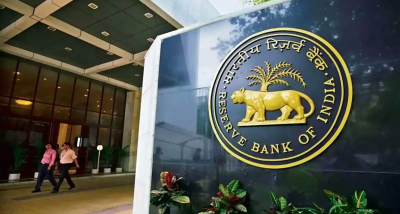
The Reserve Bank of India (RBI) approved a record surplus transfer of ₹2.86 lakh crore (specifically ₹2,86,588.46 crore) to the Central Government for the financial year 2025-26. This decision was finalized during the 623rd meeting of the RBI Central Board of Directors held in Mumbai, chaired by Governor Sanjay Malhotra. The record payout marks a 6.7% increase from the ₹2.69 lakh crore transferred in the previous fiscal year. Driven by a 26.42% rise in gross income and a 20.61% expansion of its balance sheet to ₹91.97 lakh crore, this transfer provides non-tax revenue support to the central government amid shifting global macroeconomic conditions.
Mechanism of RBI Surplus Generation
Sources of RBI Income
The central bank does not operate to make a profit but generates an operational surplus through its statutory and financial duties. Its gross income rises through multiple channels:
- Domestic Operations: Earnings from interest on Government Securities (G-Secs) held for open market operations and interest on overnight or term lending to commercial banks.
- Foreign Exchange Operations: Gains from active currency market interventions, specifically the sale of foreign currency assets (US dollars) to stabilize the Indian Rupee, alongside interest earned on foreign sovereign bonds.
- Seigniorage: The net revenue derived from issuing currency, representing the difference between the face value of a banknote and its actual cost of production.
Expenditure Headings
The gross income earned by the RBI undergoes deductions before any surplus becomes payable to the central government. The primary expenditure lines include:
- Operational Costs: Costs related to security printing, coin minting, employee salaries, agency charges, and administrative overheads.
- Provisions for Contingencies: Statutory allocations made under Section 47 of the Reserve Bank of India Act, 1934, covering bad and doubtful debts, asset depreciation, and staff superannuation funds.
Economic Capital Framework and Risk Provisioning
Evolution of the Framework
The Economic Capital Framework (ECF) sets an objective, rule-based methodology to determine the balance between risk provisions kept by the RBI and the surplus transferred to the government. This policy is governed under Section 47 of the RBI Act, 1934. The framework was updated following the recommendations of the Expert Committee on Economic Capital Framework, chaired by former RBI Governor Bimal Jalan in 2019.
Contingent Risk Buffer Parameters
The Contingent Risk Buffer (CRB) is a rainy-day fund kept to absorb unexpected financial, operational, and systemic shocks, such as a drop in the value of securities or monetary policy fluctuations.
- Target Range: The revised framework provides flexibility to maintain the CRB between 4.5% and 7.5% of the total balance sheet size.
- Current Allocation: For the financial year 2025-26, the RBI Central Board set the CRB at 6.5% of its balance sheet. To preserve this ratio against a expanding balance sheet, the bank allocated ₹1.09 lakh crore (₹1,09,379.64 crore) to the buffer, up from ₹44,861.70 crore in the preceding year.
Fiscal Implications for the Central Government
Non-Tax Revenue Impact
The surplus transfer forms a major component of the central government’s non-tax revenue receipts. Over the last decade, this dividend has expanded from making up roughly 5% of revenue receipts to nearly 8%. The current transfer accounts for approximately 90.8% of the government’s budgeted non-tax revenue expectations from financial institutions.
Fiscal Deficit Management
The incoming capital acts as a fiscal cushion for the union budget. It helps manage public spending and offsets expenditure pressures arising from volatile global crude oil prices, increased fertilizer subsidies, and shifts in excise duty revenues. The capital support aids the government in moving toward its stated fiscal deficit target of 4.3% of Gross Domestic Product (GDP).
Financial Performance Comparison
The operational and financial metrics of the central bank show clear growth over the last two financial years:
| Financial Indicator | FY 2024-25 | FY 2025-26 | Year-on-Year Change |
| Total Balance Sheet Size | ₹76.25 lakh crore | ₹91.97 lakh crore | +20.61% |
| Gross Income Growth Rate | Base Year | — | +26.42% |
| Net Income (Before Provisions) | ₹3.13 lakh crore | ₹3.96 lakh crore | +26.52% |
| Contingent Risk Buffer Allocation | ₹44,861.70 crore | ₹1,09,379.64 crore | +143.8% |
| Contingent Risk Buffer Ratio | 7.5% | 6.5% | -100 basis points |
| Total Surplus Transferred | ₹2.69 lakh crore | ₹2.86 lakh crore | +6.7% |
IASPOINT Booster Facts for UPSC
- Section 47 of the RBI Act, 1934: Explicitly directs that the allocation of surplus funds to the Central Government can only happen after the central bank has made full provisions for bad debts, depreciation, and standard banking contingencies.
- Bimal Jalan Committee (2019): Recommended that the RBI’s clear components of economic capital should be split into Realized Equity (Contingent Risk Buffer) and Revaluation Balances. It fixed the ideal CRB range between 5.5% and 6.5%, which was later widened to a 4.5% to 7.5% range.
- Record High Trends: The FY 2025-26 transfer stands as an absolute high in terms of total nominal volume, surpassing the previous record of ₹2.11 lakh crore set during the 2023-24 financial year and ₹2.69 lakh crore in 2024-25.
- Accounting Year Realignment: The RBI previously followed a July–June accounting year. It aligned its financial calendar with the Government of India’s April–March fiscal cycle starting from the 2020-21 financial year.
- Seigniorage Ownership: Unlike commercial bank profits which belong to private shareholders, seigniorage profits are fully sovereign and naturally flow back to the issuing state via the central bank transfer mechanism.