
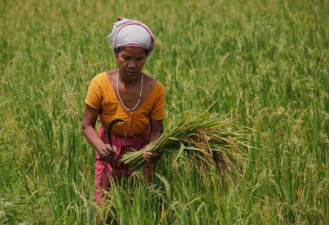
India frequently showcases record foodgrain production as evidence of agricultural strength. Official statistics point to rising output and bumper harvests year after year. Yet beneath this headline success lies a persistent crisis facing small and marginal farmers, who form the backbone of Indian agriculture but remain its most vulnerable participants.
The paradox behind rising foodgrain production
More than 85% of farmers in operate on less than two hectares of land. For this majority, higher national output does not automatically translate into higher incomes. Fragmented landholdings limit economies of scale, while profits are steadily eroded by rising costs of seeds, fertilisers, diesel, and labour. Even in years of good harvests, many farmers struggle to merely break even.
Climate uncertainty and shrinking margins
Climate change has amplified the risks inherent in farming. Erratic rainfall, prolonged heatwaves, unseasonal hailstorms, and sudden floods increasingly disrupt crop cycles. Traditional sowing and harvesting calendars have lost reliability, forcing farmers into risky decisions based on uncertain weather patterns. While crop insurance schemes exist, delays in damage assessment and compensation often mean relief arrives too late to prevent financial distress.
Market access and price vulnerability
Access to fair and stable markets remains a major constraint. A large proportion of farmers are dependent on intermediaries who dominate local supply chains and influence prices. Minimum Support Price mechanisms cover only a limited set of crops and regions, leaving most cultivators exposed to volatile market conditions. For perishable produce such as fruits and vegetables, the absence of storage and processing facilities often results in distress sales.
Debt as a persistent rural burden
To manage cultivation expenses and household needs, many small farmers rely on borrowing. Formal credit remains inaccessible for a significant number, pushing them towards informal lenders who charge high interest rates. When crops fail or prices collapse, repayment becomes impossible, locking families into cycles of debt. This financial pressure frequently spills over into poor health outcomes, interrupted education, and distress migration.
Limits of welfare-driven relief
Government interventions through direct income support, subsidised inputs, and loan waivers have provided short-term relief. However, agricultural economists argue that such measures address symptoms rather than underlying structural weaknesses. Without sustained reforms in land management, irrigation efficiency, market integration, and climate resilience, small farmers remain exposed to recurring shocks.
Diversification as a pathway to resilience
Experts increasingly point to diversification as a viable way forward. Moving beyond cereal-centric farming towards horticulture, livestock, fisheries, and value-added processing can help stabilise incomes. Strengthening farmer producer organisations can also enhance bargaining power, reduce input costs, and improve access to markets and credit.
Why farmer viability matters for food security
As India strives to ensure food security for a growing population, the economic survival of small farmers cannot be treated as secondary. Productivity gains and record harvests lose meaning if those who cultivate the land cannot sustain their livelihoods. A resilient agricultural future depends not just on output, but on ensuring that farming remains a viable and dignified occupation for millions who feed the nation.
What to note for Prelims?
- Over 85% of Indian farmers are small and marginal (below 2 hectares).
- High output does not automatically ensure higher farm incomes.
- Climate change is increasing production and income risks.
What to note for Mains?
- Disconnect between foodgrain production and farmer income.
- Structural issues: land fragmentation, market access, climate vulnerability.
- Role of diversification, FPOs, and value addition in agricultural reforms.