
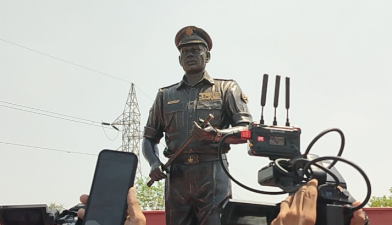
Lieutenant General Sagat Singh Rathore was honoured in Churu with the unveiling of his statue and the observance of ‘Shaurya ke Saath Sankalp Diwas’. The event brought into light his military legacy, his role in key national operations, and Rajasthan’s efforts to recognise soldiers and ex-servicemen through welfare measures and commemorative initiatives.
Legacy of Sagat Singh Rathore
Lieutenant General Sagat Singh Rathore began his military career at the age of 19 in the army of the erstwhile Bikaner princely state. He later became known for pioneering India’s first military helicopter operation. His service during the India-China War and the Bangladesh Liberation War is remembered for courage, strategy, and leadership. He was awarded the Padma Bhushan and the Param Vishisht Seva Medal.
Commemoration in Churu
The statue unveiling was accompanied by the inauguration of a war memorial and the inspection of the commemorative plaque. Churu Stadium was renamed as Sagat Singh Rathore Stadium in his honour. The programme was positioned as a tribute to military valour and as a source of inspiration for youth and future generations.
Rajasthan’s Welfare Measures for Soldiers
The state brought into light several initiatives for soldiers and ex-servicemen. These include:
- Rajasthan’s first Integrated Soldiers’ Welfare Complex in Didwana-Kuchaman.
- New District Soldiers’ Welfare Offices.
- 50 per cent concession for war widows in Rajasthan Tourism Development Corporation hotels and guest houses.
- 25 per cent concession for serving and ex-servicemen in the same facilities.
- Enhanced honourariums, pension support, and reservation provisions for Agniveers in selected services.
Broader Defence and Development Context
The address also referred to the implementation of One Rank, One Pension, military modernisation through Make in India, and the role of the armed forces in tackling internal security challenges. It further mentioned Rajasthan’s development agenda, including water projects such as the Eastern Rajasthan Canal Project and the Yamuna Water Agreement, which is expected to improve water supply in the Shekhawati region.
Last Modified: April 25, 2026