
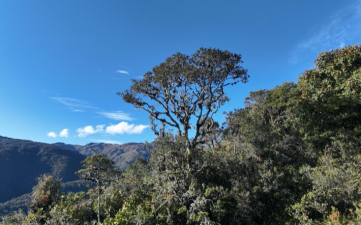
Botanists and taxonomists formalised the classification of two giant tree species in South America, identifying a brand-new genus in the high-altitude cloud forests and rediscovering an endangered canopy giant in the lowland Amazon. The discoveries of Daturodendron absconditum and Drypetes oliveri expand the evolutionary maps of the Solanaceae and Putranjivaceae plant families. These findings highlight the dense, specialized biodiversity residing within South American mountain and rainforest biomes, emphasizing the role of genetic and field-based taxonomy in modern conservation biology.
Daturodendron Absconditum: The Nightshade Giant
The formal recognition of Daturodendron absconditum establishes a monotypic genus within the tribe Datureae of the Solanaceae family. This tree had eluded precise classification for more than two decades before its formal description.
Evolutionary and Botanical Profile
- Family Alignment: It belongs to the Solanaceae family, placing this 20-metre-tall tree in the same evolutionary lineage as economically vital crops like tomatoes, potatoes, eggplants, and peppers.
- Tribe Positioning: Positioned as a sister lineage to all other members of the tribe Datureae, which historically included the genera Datura, Brugmansia (Angel’s Trumpets), and Trompettia. Its basal position acts as a genetic bridge, clarifying how ancient lineages diversified across early tropical ecosystems.
- Morphological Deviations: Unlike many of its herbaceous and drooping-flowered relatives, Daturodendron features an arborescent (tree-like) habit with a single main trunk. It produces erect, upward-facing flowers, a circumscissile calyx, tough leathery corollas, and suborbicular to reniform seeds enclosed in a dry, woody fruit.
- Chemical Composition: The leaves and tissues synthesize specialized tropane alkaloids, specifically scopolamine and hyoscyamine. These toxic compounds serve as defensive barriers against herbivorous insects and possess high ethnomedical and pharmaceutical value.
Habitat and Geographic Range
- Altitude and Biome: The species is endemic to the high-altitude Andean cloud forests of Colombia and northern Peru. It grows at elevations ranging between 4,400 and 6,900 feet.
- Conservation Status: It is designated as “Data Deficient” by researchers. Despite its proximity to urban roads and cities in regions like Santander, Colombia, its populations are highly fragmented and vulnerable to infrastructure expansion.
Drypetes Oliveri: The Rediscovered Amazonian Carbon Sink
Drypetes oliveri is a 35-metre-tall (115 feet) canopy-emergent tree belonging to the family Putranjivaceae. First sampled as an unidentified specimen by American botanist Alwyn Gentry four decades ago, it was formally identified following field collections in 2023.
Key Biological Features
- Sexual Dimorphism: The species is dioecious, meaning individual trees are distinctly male or female, requiring active cross-pollination across the canopy layer.
- Structural Anchor: The massive trunk reaches up to 55 centimetres in diameter and relies on wide, extensive buttress roots. These root configurations stabilize the heavy tree in the humid, clay-rich soils of high river terraces.
- Fruit and Ecology: It bears oval fruits just over two centimetres long, covered in a dense, velvety brown fuzz. The pulp carries a characteristic peppery and bitter flavour, typical of Old World Drypetes species, which serves to deter generalist herbivores while attracting specialized seed-dispersing canopy animals.
Geographic Isolation and Extinction Threats
- Endemism: The tree is highly endemic to a tiny pocket of the Tambopata National Reserve in the Madre de Dios region of southeastern Peru. All known living specimens are concentrated within an area of less than 10 square miles.
- Conservation Crisis: The species is classified as Endangered on the international red list of threatened species. Only four living adult trees have been verified, making the population exceptionally vulnerable to localized disturbances.
- Anthropogenic Pressures: Its remaining habitat faces immediate threats from illegal gold mining, mercury contamination in water catchments, climate-induced forest fires, and logging roads that fragment the southern Peruvian Amazon.
Taxonomic Methodologies and Ecosystem Dynamics
The classification of these giant trees relied on a combination of advanced laboratory genetics and traditional forestry field data.
Comparative Taxonomy and Methods
| Feature | Daturodendron absconditum | Drypetes oliveri |
| Family | Solanaceae | Putranjivaceae |
| Primary Habitat | High-altitude Andean Cloud Forests | Lowland Amazon Rainforest (River Terraces) |
| Height | Up to 20 metres (66 feet) | Up to 35 metres (115 feet) |
| Primary Method of Identification | Phylotranscriptomic Analysis (292 genes) | Field Morphological and Fruit Sampling |
| Geographic Range | Colombia and Northern Peru | Tambopata National Reserve, Southeastern Peru |
| Key Threats | Urban sprawl, road construction | Gold mining, logging, climate-driven drought |
Advanced Analytical Techniques
- Phylotranscriptomic Analysis: This methodology sequences RNA from expressed genes to compare gene expression patterns across different species. Scientists evaluated 292 genes across 45 nightshade species to establish Daturodendron as the baseline sister group of the Datureae tribe.
- Metabolomic Profiling: Chemical mapping used to detect and catalog secondary metabolites like tropane alkaloids, confirming evolutionary links to toxic Old World and New World nightshades.
IASPOINT Booster Facts for UPSC
- Solanaceae Family Characteristics: Also known as the nightshade family, this family includes important agricultural crops (potato, tomato, eggplant, chili peppers) alongside deadly poisonous plants like Atropa belladonna (deadly nightshade) and Datura.
- Andean Cloud Forests as Biodiversity Hotspots: Cloud forests are high-altitude ecosystems characterized by persistent, low-level clouds or mists. They feature high levels of endemism and act as vital watersheds, filtering water for major river systems.
- Hyperdominance in the Amazon: A small number of common tree species (about 227 species) make up nearly half of the estimated 390 billion individual trees in the Amazon basin. The remaining thousands of species, like Drypetes oliveri, exist as ultra-rare populations.
- Dioecious Plants: Plants that have unisexual reproductive units occurring on different individuals. This reproductive strategy increases genetic variation through mandatory cross-pollination but makes rare species highly vulnerable to extinction if male and female trees become isolated.
- Putranjivaceae Phytochemistry: Members of the Putranjivaceae family are known for producing mustard oils (glucosinolates), which impart a distinctive peppery or spicy taste to their fruits, bark, and leaves as a defense mechanism against insects.
- Tambopata National Reserve: Located in Peru’s Madre de Dios department, it is globally celebrated for its extreme biodiversity, containing high concentrations of birds, butterflies, and dragonflies, alongside critical clay licks used by macaws.