
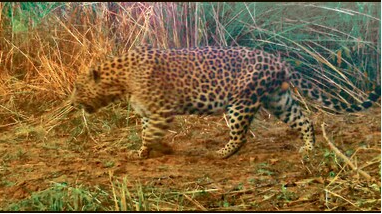
Nestled in the Shivalik Hills near Chandigarh, Sukhna Wildlife Sanctuary has recorded clear evidence of leopards living permanently within its 26 square kilometre area. Camera traps and field inspections have confirmed the presence of at least two leopards, with signs of continued movement across the sanctuary. The development marks a major ecological milestone for a protected area created to save Sukhna Lake from severe siltation.
From Eroded Slopes to Protected Forest
Sukhna Lake was created in 1958 by damming Sukhna Choe, a seasonal stream, as part of Chandigarh’s original urban plan. The lake soon faced heavy siltation due to erosion from the fragile Shivalik slopes. To protect it, the government acquired around 25.42 square kilometres of catchment land in the 1960s for soil and moisture conservation.
Conservation Measures and Ecological Recovery
The forest department carried out afforestation, slope stabilisation and erosion control works over several decades. Early plantation efforts failed in the degraded terrain, but later a mix of engineering and vegetative measures succeeded. Hardy grasses and local species helped bind the soil and reduce erosion sharply. Siltation fell from very high levels to around 3–5 tonnes per hectare per year in many areas.
Leopard Presence as an Ecological Indicator
The return of leopards is seen as proof that the sanctuary has matured into a near-natural forest capable of supporting apex predators. Officials have noted fresh pug marks and repeated activity at multiple sites, suggesting active use of the landscape. The sanctuary was formally notified on 6 March 1998, and the area is now regarded as a key conservation success in the Chandigarh region.
Last Modified: April 28, 2026