
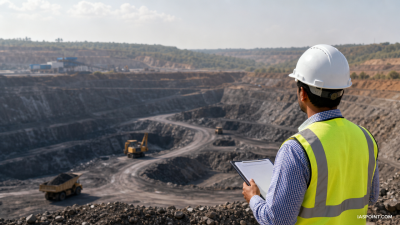
The Ministry of Coal released AAROH: Annual Report on Mine Closure on 22 July 2026. The report documents 42 scientifically closed coal mines and sets targets, funding and institutional measures to scale scientific closure, land repurposing and community transition across India’s coal regions.
What is the current issue and why it matters
Scientific mine closure converts exhausted coal sites into safe, productive land while addressing environmental hazards and local livelihoods. Effective closure matters for public safety, groundwater quality, regional economies, renewable energy deployment, and meeting national sustainability and land-use goals.
Key elements of India’s mine-closure ecosystem
- Lead agency: Coal Controller Organisation (CCO) under the Ministry of Coal — author of the AAROH report and nodal technical authority.
- Legal-guidance: Mine Closure Guidelines, 2025 — prescribes planning, community engagement and technical standards for closure and monitoring.
- Operational frameworks: RECLAIM (community engagement), L.I.V.E.S. (livelihood and inclusion), A.R.T.H.A. (green financing and carbon valuation).
- Digital tools: SUVIKALP platform and SUVIKALP Samvaad — decision-support and stakeholder knowledge exchange for land-use planning.
- Funding: Dedicated corpus of over ₹40,000 crore for progressive scientific closure; 25% (~₹10,000 crore) earmarked for community development over the next decade.
- International cooperation: Implementation agreement with GIZ (EUR 10 million, project to 2030) for technical cooperation on “to-be-closed” mines.
Institutional arrangements and governance
- Central coordination: CCO issues technical approvals and compiles closure metrics. AAROH provides the national repository of case studies.
- Decentralised oversight: District Collector-led Mine Closure Advisory Committees align closure plans with local development priorities and monitoring.
- Public–private and community roles: Coal India subsidiaries, state agencies, local self-help groups (SHGs) and private investors manage project execution, operation of reclamation assets and livelihood programmes.
- Accountability tools: Progressive release of funds tied to technical milestones, digital monitoring via SUVIKALP and mandatory post-closure ecological monitoring.
Environmental and geological rehabilitation
- Primary hazards: land subsidence, acid mine drainage, open/underground fires, soil contamination and loss of vegetation and biodiversity.
- Technical measures: backfilling and compaction, slope stabilisation, controlled capping of fire zones, treatment of mine discharge and acid drainage, phytoremediation and hydroseeding.
- Monitoring: groundwater and surface-water quality surveys, geotechnical stability assessments, biodiversity indices and long-term remote-sensing surveillance.
Socio-economic transition and livelihoods
- Just Transition focus: minimise displacement of income by planning alternative livelihoods before final closure; integrate social protection and skill conversion for mining workers and local enterprises.
- Community investment: 25% of closure costs reserved for community projects — health, water, education, skill development and micro-enterprises.
- Case examples: Coal NEER plants operated by BCCL, CCL, MCL and SECL process mine discharge into bottled drinking water managed by local SHGs; skill centres and textile initiatives in Jharia to absorb surplus labour.
Economic repurposing and “waste-to-wealth” options
- Renewable energy: solar parks on reclaimed benches and voids; lower land acquisition friction and grid-proximate sites.
- Water resources: conversion of stabilized voids into water reservoirs and watershed structures to recharge aquifers and support agriculture.
- Agri- and eco-use: agroforestry, horticulture trials and eco-tourism (examples: restored parks in West Bokaro, Bishrampur).
- Micro-industries: Coal NEER-linked bottled-water enterprises, technical-textile clusters and processing units for local employment.
Finance mechanisms and green investment
| Instrument | Purpose | Lead |
|---|---|---|
| Dedicated corpus (₹40,000+ crore) | Fund progressive closure works | Ministry of Coal |
| Community allocation (25%) | Livelihoods and local infrastructure | State and district agencies |
| A.R.T.H.A. Framework | Green financing, carbon co-benefit valuation | Ministry/CCO |
| International grant (GIZ, EUR 10m) | Technical assistance and capacity building | GIZ/CCO |
Digital, technical and capacity needs
- Decision support: SUVIKALP for site-specific land-use planning using geospatial and hydrogeological data.
- Technical skills: geotechnical engineers, hydrogeologists, remediation specialists and community facilitators at district level.
- Research and innovation: pilot technologies for passive treatment of acid mine drainage, use of mine spoil in construction materials, and adaptive afforestation models.
Risks, implementation challenges and mitigation
- Risk: inadequate baseline data leading to poor design. Mitigation: mandatory pre-closure surveys and digital data standardisation.
- Risk: weak coordination between central, state and district agencies. Mitigation: strengthen Collector-led committees and tie funding to compliance milestones.
- Risk: short-term employment loss. Mitigation: phased closures, skill training, local enterprise grants and SHG integration (Coal NEER model).
- Risk: financing gaps for long-term monitoring. Mitigation: blend corpus funds with green bonds and ARTHA-guided instruments.
International cooperation and standards
- GIZ partnership: EUR 10 million project to 2030 for technical planning and capacity building; commissioned by BMZ and co-financed by the European Union.
- Standard adoption: exchange of global best practices on closure sequencing, long-term monitoring and community models to align domestic operations with international norms.
Operational targets and recent progress
- Completed: 42 scientifically closed coal mines; 33 closures occurred in FY 2025–26.
- Planned: target to close 147 more mines in the next two to three years under the Viksit Bharat 2047 vision.
- Ongoing: roll-out of Coal NEER plants across Coal India subsidiaries and expansion of SUVIKALP-based planning at district level.
Model Questions
1. Examine the concept of a ‘just transition’ in coal mining. How does India’s AAROH-era mine closure ecosystem address the socioeconomic challenges of mine-dependent communities? [GS-III: Economic Development]
Answer: A just transition preserves livelihoods while closing mines through phased closures, retraining and local enterprise promotion. India’s approach earmarks 25% of closure funds (~₹10,000 crore) for community development, deploys RECLAIM and L.I.V.E.S. for participatory planning, establishes skill centres and Coal NEER SHG enterprises, and ties funding to district-level plans—thereby combining income protection, local ownership and economic diversification.
2. Analyse the main environmental and geological hazards of abandoned coal mines and outline the technological and digital interventions required for scientific reclamation. [GS-III: Environment & DM]
Answer: Hazards include land subsidence, acid mine drainage, underground fires and groundwater contamination. Technical interventions: backfilling, slope stabilisation, drainage treatment, fire sealing, phytoremediation and reservoir creation. Digital tools: SUVIKALP for site-specific land-use decisions, remote sensing for stability and vegetation monitoring, and GIS-linked water-quality surveillance to plan and verify reclamation outcomes.
3. Evaluate the institutional and regulatory framework for scientific mine closure in India. Can international partnerships and decentralised governance improve compliance and local outcomes? [GS-II: Governance]
Answer: The CCO and Mine Closure Guidelines 2025 set standards; district Collector-led committees provide local oversight. Compliance improves with mandatory technical milestones, SUVIKALP transparency and community engagement via RECLAIM. International partnerships (e.g., GIZ EUR 10m project) supply technical capacity and best practices. Decentralised governance aligns plans with local needs and enhances accountability when backed by conditional funding and digital monitoring.
4. Assess the geographical and economic potential of repurposed mine lands in coal regions. How can “waste-to-wealth” initiatives alter regional economies? [GS-III: Economic Development]
Answer: Reclaimed mine lands suit solar parks, water reservoirs, agroforestry and eco-tourism, capitalising on existing grid access and land availability. Waste-to-wealth models—Coal NEER bottled-water units, technical-textile hubs, and solar farms—create local enterprises, diversify income, raise land value and stabilise water resources. Combined with skill development and green finance (ARTHA), these measures can shift mono-industrial mining districts to mixed, resilient economies.
Last Modified: July 25, 2026