The Constitution of India is the supreme law of the country. It was adopted on 26th January 1950. The document outlines the framework for governance. It establishes fundamental rights and duties for citizens. The Constitution also defines the structure of government. It promotes justice, liberty, and equality. It reflects India's diverse culture and values. Amendments can be made to address changing needs.
There have been 98 amendments, beginning from 1951 to mid-2014, i.e., 98 amendments in roughly 64 or so years, a little more than one and a half every...
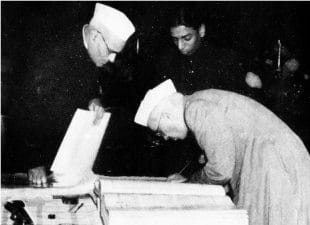
The constitution of a country, including India, is usually, framed by the people through their elected representatives. The Indian Constitution, framed by the Constituent Assembly as established through...
The Constitution of India which came into effect in 1950 is said to be the result of borrowings, both external as well as internal. The framers of the...
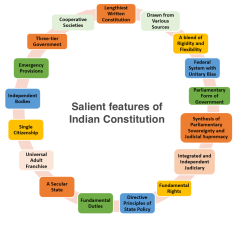
The Constitution of India is, indeed, unique'unique because of it numerous aspects. Some of the major salient features of the Constitution of India can be summed up as...
The Constitution of India, when enacted in 1950, had 22 parts. Parts VII was repealed in 1956 by the seventh amendment, reducing the number of parts to 21...
The Constitution of India incorporates several features from other countries' constitutions. Notable borrowed elements include: Government of India Act, 1935: Federal scheme, emergency provisions, and the office of...
Article 371 of the Constitution of India provides special provisions for certain states. It aims to address the unique needs of specific regions. This article was incorporated through...
Directive Principles of State Policy (DPSP) are guidelines for the State in India. They are enshrined in Part IV of the Constitution of India, encompassing Articles 36 to...
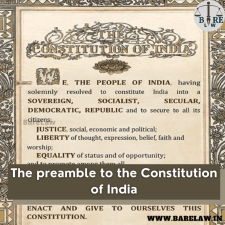
The American Constitution was the first to begin with a Preamble; India adopted this practice. The term "Preamble" refers to the introduction or preface to the Constitution. N....
Constitution of India is renowned for its uniqueness, versatility, and comprehensive nature. As it stands today, it incorporates various features that make it distinct from other constitutions in...