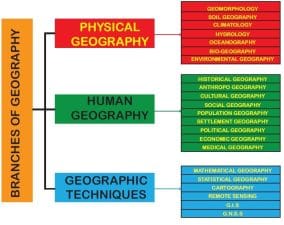
Human geography studies the relationship between people and their environments. It examines how cultures, economies, and societies shape landscapes. This field explores urban development, migration patterns, and population dynamics. It also considers the impact of human activity on natural resources. Understanding human geography is essential for addressing global challenges. It informs policies on sustainability and urban planning.
Neo-determinism, a term that has gained prominence in the realm of geography, challenges traditional deterministic viewpoints by incorporating dynamic factors and acknowledging the complexities that shape geographical phenomena....
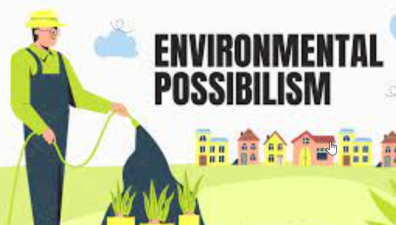
Possibilism is a geographical theory that challenges the deterministic view that the physical environment wholly shapes human societies. In contrast to environmental determinism, which posits that natural features...
Human geography is a captivating field that delves into the intricate relationship between people and their environments. This discipline explores the spatial patterns and connections that shape our...
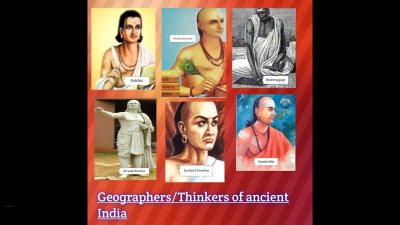
Geography in the Indian context has evolved from ancient cosmological descriptions in the Puranas to a rigorous social and physical science during the post-independence era. Indian geographers have...
Here are 10 contemporary (20th–21st century) geographers of note. 1. David Harvey David Harvey (born 1935) is a British-American geographer known for his work in human geography and...
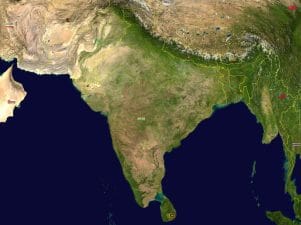
Size and Extension India extends from 8' 4' north to 37' 6' north latitude and 68' 7' east to 97' 25' east longitude. us, its latitudinal and longitudinal...
Geography as a scholarly discipline explores the Earth’s surface through two fundamental methodologies. These approaches define how geographers organize spatial data and analyze the complex interactions between the...
Geography is the systematic study of the Earth’s surface, its physical features, and the complex relationship between human societies and their environment. Derived from the Greek words Geo...