
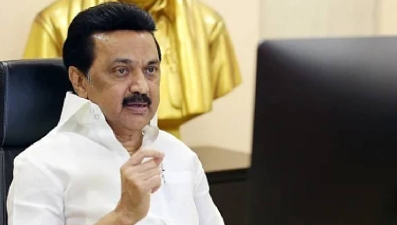
M.K. Stalin resigned as the Chief Minister of Tamil Nadu on 5 May 2026 following the Dravida Munnetra Kazhagam’s (DMK) defeat in the state Legislative Assembly elections held on 23 April 2026. Governor Rajendra Vishwanath Arlekar accepted the resignation and requested Stalin to continue as the caretaker Chief Minister until the formation of a new government. The election results broke the multi-decade duopoly of the DMK and the All India Anna Dravida Munnetra Kazhagam (AIADMK). The newly formed Tamilaga Vettri Kazhagam (TVK), led by actor-politician Vijay, secured 108 seats to emerge as the single largest party in the 234-member house, while the DMK won 59 seats to become the principal opposition.
Electoral Outcome and House Composition
The 2026 Tamil Nadu Legislative Assembly elections concluded with a fragmented mandate, where no single political party managed to secure the absolute majority mark of 118 seats on its own strength.
Party-Wise Seat Distribution
The composition of the newly elected 234-member Tamil Nadu Legislative Assembly is structured as follows:
| Political Party | Seats Won | Status in the House |
| Tamilaga Vettri Kazhagam (TVK) | 108 | Single Largest Party / Ruling Coalition Leader |
| Dravida Munnetra Kazhagam (DMK) | 59 | Principal Opposition |
| All India Anna Dravida Munnetra Kazhagam (AIADMK) | 47 | Opposition Party |
| Indian National Congress (INC) | 5 | Coalition Partner |
| Pattali Makkal Katchi (PMK) | 4 | Independent/Other |
| Left Parties & Regional Outfits (CPI, CPM, VCK, IUML) | 8 | Coalition Partners (2 seats each) |
| Others (BJP, DMDK, AMMK) | 3 | Independent/Other (1 seat each) |
Constitutional Provisions and Executive Transition
The resignation of an incumbent Chief Minister and the subsequent process of government formation are governed by explicit constitutional mechanisms under the Constitution of India.
Appointment of Chief Minister (Article 164)
- Governor’s Discretionary Power: Article 164(1) states that the Chief Minister shall be appointed by the Governor. When no single party wins an absolute majority, the Governor exercises situational discretion to invite the leader of the single largest party or a pre/post-poll coalition to stake a claim.
- Collective Responsibility: Article 164(2) mandates that the Council of Ministers is collectively responsible to the Legislative Assembly of the State. This necessitates proving majority support on the floor of the House.
- Oath and Tenure: The Governor administers the oaths of office and secrecy. Ministers hold office during the pleasure of the Governor, which is constitutionally tied to maintaining the confidence of the Assembly.
The Role of a Caretaker Chief Minister
The concept of a caretaker government is an established constitutional convention designed to prevent an executive vacuum.
- Operational Limits: A caretaker Chief Minister handles routine administrative business but is restricted from taking major policy decisions, announcing new financial sanctions, or making structural appointments that could influence legislative independence.
- Duration: The caretaker setup persists strictly as a transient arrangement until the Governor completes consultations and administers the oath to the incoming Chief Minister.
Government Formation Process and Floor Test
Following the declaration of results, TVK leader Vijay formally met Governor Rajendra Vishwanath Arlekar on 5 May 2026 to stake a claim to form the next state government.
Staking Claim and Building Coalition
Because the TVK’s tally of 108 fell short of the 118-seat majority mark, the party initiated post-poll alliance negotiations. Security of the mandate required formal letters of support from smaller parties, including the Congress, Left parties, and regional blocks, to assemble a working majority before the formal legislative induction.
Mechanics of the Floor Test
- Constitutional Basis: The requirement for a floor test is derived from the principle of collective responsibility under Article 164. The definitive legal precedent was established by the Supreme Court in the S.R. Bommai vs. Union of India (1994) case, which ruled that the majority of a government must be tested on the floor of the House, not in the Governor’s office.
- Procedure: The Governor summons the Assembly under Article 174 and appoints a Pro-tem Speaker to administer oaths to new MLAs. A physical vote, via voice vote or division, is then conducted to pass a Motion of Confidence.
IASPOINT Booster Facts for UPSC
- Anti-Defection Law (Tenth Schedule): Inserted via the 52nd Constitutional Amendment Act of 1985, the Tenth Schedule penalizes individual legislators for voluntarily giving up party membership or voting against party whips. In a hung assembly setup, split or merger rules apply, requiring at least two-thirds of a party’s legislative strength to merge with another block to avoid disqualification.
- Size of Council of Ministers: The 91st Constitutional Amendment Act of 2003 inserted Article 164(1A), which dictates that the total number of ministers, including the Chief Minister, in a State Cabinet cannot exceed 15% of the total strength of the Legislative Assembly. For Tamil Nadu’s 234 seats, the maximum permissible size of the Cabinet is 35 ministers.
- Legislative Structure of Tamil Nadu: The state features a unicameral legislature. The Tamil Nadu Legislative Council (Upper House) was abolished via the Tamil Nadu Legislative Council (Abolition) Act, 1986, which took effect on 1 November 1986 during the M.G. Ramachandran administration.
- Simultaneous Contests: Under Section 70 of the Representation of the People Act, 1951, an individual can contest from multiple constituencies but can only retain one seat. If elected to two seats, the member must vacate one within the prescribed statutory period, leading to a subsequent bye-election.
- Article 356 (President’s Rule): If no stable coalition emerges and a governance deadlock occurs, the Governor can submit a report to the President under Article 356, stating that the government of the State cannot be carried on in accordance with the provisions of the Constitution.