
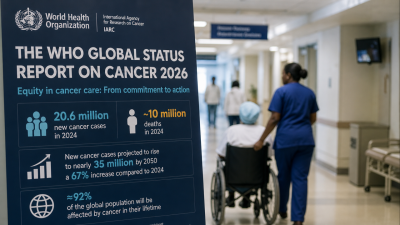
Recently, WHO and IARC released the Global Status Report on Cancer 2026 and GLOBOCAN 2024 estimates. The report records 20.6 million new cancer cases and nearly 10 million deaths annually, projects a 67% rise by 2050, and notes that about 92% of people will be affected by cancer in their lifetime.
What is the issue?
- Scale: 20.6 million new cases and nearly 10 million deaths annually; lung cancer top diagnosed (2.6 million) and top cause of cancer deaths (1.9 million).
- Projection: Annual cases may reach nearly 35 million by 2050 without urgent action (67% increase).
- Lifetime impact: Approximately 92% of the global population will be affected by cancer personally or via a close family member.
Why it matters for governance, economy and society
- Health systems: Rising caseloads will strain hospitals, diagnostics, oncology workforce and supply chains.
- Economy: Productivity losses, out-of-pocket expenditure and long-term care increase fiscal and household burden.
- Social welfare: At least 45% of affected people report financial hardship; over half report mental health problems; caregivers face sustained pressure.
- Equity and diplomacy: Stark survival gaps and unequal access to medicines raise international policy and aid priorities.
Key facts and comparative snapshot
| Metric | Value / Note |
| Annual new cases (global) | 20.6 million |
| Annual deaths (global) | Nearly 10 million |
| Projected annual cases by 2050 | Nearly 35 million (67% rise) |
| Lifetime affected | ~92% of global population |
| Lung cancer (incidence / deaths) | 2.6 million / 1.9 million |
| Breast cancer 5-year survival | 87% (high-income) vs 42% (low-income) |
| UHC inclusion | Fewer than one in three countries include cancer care in UHC |
| Preventable fraction | Nearly 4 in 10 cases linked to modifiable risk factors |
| Regional imbalance | Europe: ~9% population; 21% of cases and 20% of deaths |
Inequalities in care and Universal Health Coverage
- Survival gap: Wide variation in outcomes between high- and low-income countries; example — breast cancer survival 87% v 42%.
- UHC shortfall: Less than one-third of countries include cancer care in UHC packages. This creates gaps in prevention, screening, diagnostics, treatment and palliative services.
- Access barriers: Diagnostics, radiotherapy, trained specialists and essential medicines are unevenly available and affordable.
Socio-economic and mental health impacts
- Household finance: At least 45% of affected people report financial hardship from diagnosis and treatment.
- Mental health: Over half of patients report psychological distress; caregiver burden is near-universal.
- Macro-economic effect: Increased health expenditure, lost labour income, and long-term disability reduce growth and raise social protection costs.
Preventable risk factors and public health significance
- Preventable share: Nearly 40% of cancers are linked to modifiable risks: tobacco, alcohol, overweight/obesity, inactivity, unhealthy diet, and infections.
- Public health priority: Population-level interventions—taxation, regulation, vaccination, urban design and health promotion—reduce incidence at lower cost than late-stage treatment.
Challenges in cancer control
- Financing: Insufficient domestic and pooled financing for prevention, early diagnosis and long-term treatment.
- Infrastructure: Shortages of pathology, imaging, radiotherapy and surgical capacity in many countries.
- Human resources: Deficit of oncologists, oncology nurses, radiotherapists and specialised technicians.
- Medicines and technology: Limited availability and affordability of essential cancer medicines and diagnostics.
- Awareness and uptake: Low screening coverage and late-stage presentation reduce treatment efficacy.
- Data systems: Weak cancer registries and health information systems impede planning and monitoring.
Policy interventions and way forward
Prevention
- Tobacco and alcohol control: Enforce tax, marketing restrictions and public smoking laws; strengthen implementation of national tobacco legislation.
- Vaccination: Expand HPV and hepatitis B vaccination to reduce infection-related cancers.
- Lifestyle policy: Promote healthy diets, physical activity and obesity prevention through fiscal and regulatory tools.
Early detection and diagnosis
- Screening: Implement evidence-based screening for cervical, breast and oral cancers within primary care and referral pathways.
- Diagnostics: Invest in pathology, imaging and telepathology to shorten time-to-diagnosis.
Treatment, palliative care and medicines access
- Service coverage: Include core cancer treatments, radiotherapy and palliative care in UHC benefit packages.
- Essential medicines: Strengthen procurement, pooled purchasing and price regulation to improve affordability.
- Support services: Integrate mental health, rehabilitation and caregiver support into cancer pathways.
Health system strengthening
- Workforce: Scale up oncology training, task-sharing and retention incentives for rural and public sector posts.
- Financing: Combine domestic health budgets, pooled insurance, donor funding and targeted subsidies to reduce out-of-pocket costs.
- Data and governance: Expand population-based cancer registries and performance monitoring.
India-specific context and actions
- Existing platforms: National Programme for Prevention and Control of Cancer, Diabetes, Cardiovascular Diseases and Stroke (NPCDCS); Ayushman Bharat — Health and Wellness Centres and PM-JAY provide entry points for cancer prevention, screening and financial protection.
- Policy priorities: Scale community-based screening, expand HPV vaccination, strengthen referral networks, increase radiotherapy and pathology capacity, and include core cancer services in state and national UHC packages.
- Regulatory and fiscal tools: Enforce tobacco control laws (COTPA), use sin taxes, and ensure price regulation and availability of generics for anticancer medicines.
- Digital health: Use tele-oncology and national health data systems to improve access in remote areas.
International cooperation and India’s role
- Global functions: WHO/IARC set standards, provide technical guidance, and compile data for policy planning.
- Cooperative actions: Pooled procurement, technology transfer, collaborative research and capacity building lower costs and accelerate access to diagnostics and treatments.
- India’s contributions: Manufacture affordable generics, provide training and telemedicine support, participate in international trials and share low-cost innovations.
Geographical disparities and drivers
- Uneven burden: Regions vary by age structure, exposure to risk factors, detection rates and health system capacity. Europe reported a disproportionately high share of cases and deaths relative to population size.
- Drivers: Ageing populations, screening intensity, risk-factor prevalence and healthcare access explain regional differences.
Model Questions
1. Analyse the key findings of the WHO Global Status Report on Cancer 2026 and evaluate the challenges of integrating comprehensive cancer care within Universal Health Coverage in developing countries. [GS-II: Governance]
Write a condensed answer in 60-70 words covering all points /dimensions in short. Integration faces multiple barriers: high and rising burden (20.6M cases, ~10M deaths; 67% rise to 2050), survival disparities (breast 87% v 42%), and limited UHC coverage (<1/3 countries). Challenges include financing, workforce, diagnostics, medicines access, late presentation and weak registries. Policy response requires UHC package expansion, pooled financing, primary-care screening, procurement reforms for essential medicines, and capacity building for oncology services.
2. Discuss the socio-economic and mental health consequences of the rising global cancer burden and suggest policy measures to mitigate these impacts. [GS-I: Indian Society]
Write a condensed answer in 60-70 words covering all points /dimensions in short. Consequences: 45% face financial hardship; over half report mental health issues; caregivers suffer sustained pressure; productivity loss and higher public spending follow. Mitigation: strengthen financial protection and insurance, expand palliative and mental health services, provide caregiver support and income protection, deploy community-based screening to reduce late-stage care costs, and integrate psychosocial care into cancer pathways.
3. With nearly four in ten cancers linked to modifiable risks, critically assess India’s public health response and recommend measures to address the projected 67% increase in cases by 2050. [GS-III: Economic Development]
Write a condensed answer in 60-70 words covering all points /dimensions in short. India has NPCDCS and Ayushman Bharat platforms but coverage and capacity remain uneven. Required measures: scale HPV and hepatitis B vaccination, enforce tobacco and alcohol controls, implement population-level obesity and activity policies, expand community screening via health and wellness centres, increase radiotherapy/pathology capacity, strengthen supply of affordable medicines, and allocate sustained finance for prevention and cancer care under UHC.
4. Examine the role of international cooperation and technological advancement in reducing global cancer disparities. How can India contribute to and benefit from such cooperation? [GS-II: International Relations]
Write a condensed answer in 60-70 words covering all points /dimensions in short. International cooperation enables pooled procurement, tech transfer, shared R&D, and standardised guidelines. Technology—telemedicine, digital registries, low-cost diagnostics—improves access. India can contribute affordable generics, training, tele-oncology and low-cost innovations; it can benefit from access to advanced diagnostics, clinical trial networks and funding partnerships. Collaborative research and capacity building reduce costs and improve outcomes across lower-resource settings.
Last Modified: July 10, 2026