
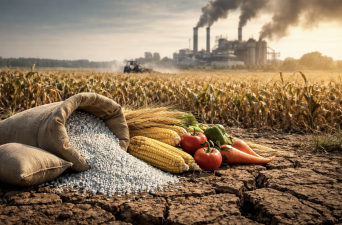
Recent reports reveal a near shutdown of shipping in the Strait of Hormuz. This has caused severe disruptions in global fertiliser supplies. Fertiliser prices are rising sharply. This threatens food production in many import-dependent countries. The United Nations Conference on Trade and Development (UNCTAD) has issued warnings about the growing risks to food security worldwide.
Impact of Strait of Hormuz Disruptions
The Strait of Hormuz is a vital shipping route. It handles over 95 per cent fewer transits recently. This affects energy and fertiliser trade. The region produces and transports large shares of global fertilisers, especially nitrogen and phosphate. Interruptions here disrupt supply chains causing shortages and price hikes. This situation is critical for countries relying on imports for agriculture.
India’s Fertiliser Dependency and Risks
India is the second-largest importer of fertilisers globally. It produces less than its total fertiliser demand. In 2024-25, India produced about 465 lakh metric tonnes (lmt) but needed nearly 650 lmt. The shortfall was met by imports, mainly from Gulf countries like Oman, Saudi Arabia, Qatar, and UAE. Rising natural gas prices have increased fertiliser costs. This affects farmers’ ability to buy inputs, leading to lower crop yields and possible food shortages.
Rising Transport and Insurance Costs
Shipping disruptions have raised freight and insurance costs sharply. Oil tanker freight rates increased by over 90 per cent since February. Bunker fuel prices almost doubled. War risk insurance premiums surged, with some insurers refusing coverage in the Persian Gulf. Shipowners face higher costs or suspend voyages. These costs add to fertiliser prices, worsening the supply crisis. This creates a feedback loop impacting food production and exports.
Global Food Security Concerns
UNCTAD warns that overlapping shocks in energy, fertilisers, and shipping threaten global food systems. Countries highly dependent on food and fertiliser imports are most vulnerable. The crisis risks exacerbating hunger and economic instability in poorer nations. Timely policy responses and alternative supply routes are crucial to mitigate these risks.
Topics for Prelims:
Strait of Hormuz
- Key maritime chokepoint between Persian Gulf and Gulf of Oman.
- Handles about 20% of global oil trade.
- Strategic for energy and fertiliser shipping.
- Recent transit collapse by over 95%.
- Disruptions affect global energy and food markets.
India’s Fertiliser Sector
- Second-largest fertiliser importer globally.
- 2024-25 production – 465 lakh metric tonnes.
- Demand – nearly 650 lakh metric tonnes.
- Main imports from Gulf countries (70% urea imports).
- Dependent on nitrogen and phosphate fertilisers.
Shipping and Insurance Costs
- Freight rates rose over 90% since early 2026.
- Bunker fuel prices nearly doubled.
- War risk insurance premiums surged.
- Some insurers withdrew coverage in Persian Gulf.
- Higher costs increase fertiliser prices and food insecurity.
Questions for Mains:
- Critically discuss the impact of maritime chokepoints like the Strait of Hormuz on global food security and energy markets. [GS-III-Economic Development]
- Examine the role of fertiliser imports in India’s agricultural productivity and the risks posed by global supply disruptions. [GS-III-Economic Development]
- Analyse the effects of rising shipping and insurance costs on international trade and food prices, with examples from recent global events. [GS-III-International Relations]
- With suitable examples, discuss how overlapping crises in energy, transport, and agriculture can create feedback loops worsening global food insecurity. [GS-III-Environment & DM]
Answer Hints:
1. Critically discuss the impact of maritime chokepoints like the Strait of Hormuz on global food security and energy markets. [GS-III-Economic Development]
- Strait of Hormuz is a vital chokepoint connecting Persian Gulf to Gulf of Oman; handles about 20% of global oil trade and major fertiliser shipments.
- Recent near shutdown caused over 95% drop in shipping transits, disrupting energy and fertiliser supply chains globally.
- Disruptions lead to spikes in oil and fertiliser prices, increasing production costs and affecting food prices worldwide.
- Countries heavily dependent on imports for energy and agriculture, especially in Asia and Africa, face heightened food insecurity risks.
- Geopolitical tensions in the region amplify risks of supply interruptions, causing volatility in global markets.
- Need for diversification of supply routes and strategic reserves to reduce vulnerability to chokepoint disruptions.
2. Examine the role of fertiliser imports in India’s agricultural productivity and the risks posed by global supply disruptions. [GS-III-Economic Development]
- India is the second-largest fertiliser importer; domestic production (465 lmt) falls short of demand (~650 lmt), requiring imports to fill gap.
- Majority of urea (70%) and shares of DAP and NPK fertilisers are imported from Gulf countries (Oman, Saudi Arabia, Qatar, UAE).
- Rising natural gas prices and global supply chain disruptions increase fertiliser costs, impacting affordability for farmers.
- Reduced fertiliser availability or higher prices can lower application rates, crop yields, and threaten food security.
- Dependence on imports exposes India to geopolitical and market risks, necessitating policy focus on self-reliance and alternative sources.
- Supply shocks can alter cropping patterns and agricultural output, affecting rural incomes and overall economy.
3. Analyse the effects of rising shipping and insurance costs on international trade and food prices, with examples from recent global events. [GS-III-International Relations]
- Freight rates for oil tankers increased by over 90% since early 2026; bunker fuel prices nearly doubled, raising transportation costs .
- War risk insurance premiums surged, with some insurers withdrawing coverage for vessels in high-risk areas like Persian Gulf.
- Higher shipping and insurance costs are passed on to commodity prices, including fertilisers and food grains.
- Shipping route disruptions cause delays and longer transit times, straining supply chains and increasing volatility.
- Example – Strait of Hormuz disruptions led to increased fertiliser prices, affecting agricultural input costs globally.
- These cost escalations contribute to inflationary pressures, impacting food affordability especially in import-dependent countries.
4. With suitable examples, discuss how overlapping crises in energy, transport, and agriculture can create feedback loops worsening global food insecurity. [GS-III-Environment & DM]
- Energy crisis (e.g., rising natural gas prices) increases fertiliser production costs, leading to higher fertiliser prices.
- Transport disruptions and rising freight/insurance costs further increase prices and delay supply of fertilisers and food commodities.
- Higher input costs reduce agricultural productivity and crop yields, threatening food availability and affordability.
- Food insecurity can exacerbate economic instability and social unrest, affecting energy and transport sectors indirectly.
- Example – Strait of Hormuz shipping collapse causing simultaneous shocks in energy supply, fertiliser availability, and transport costs.
- Feedback loops intensify crises, requiring integrated policy responses across sectors to build resilience.