
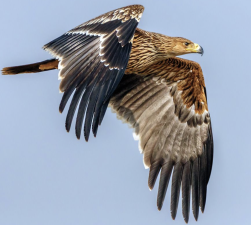
An Eastern Imperial Eagle has been recorded in the Mudumalai Tiger Reserve during the winter migratory season, denoting the reserve’s importance as a wintering habitat for raptors. A pair of the rare birds, Aquila heliaca, was observed, and one image also captured an Egyptian vulture, another threatened species. Repeated sightings from 2020 to 2025 suggest that the species regularly visits this landscape between November and February.
Species and Migration Pattern
The Eastern Imperial Eagle breeds mainly in Western and Central Asia. It also migrates in winter to Africa, the Middle East, and parts of South and East Asia. Its breeding range extends from Western and Eastern Europe to Central Asia, Siberia, and north-western China. The species depends on open landscapes with scattered forests, known as forest-steppe habitats.
Ecological Importance of the Species
The eagle is a top predator and helps maintain ecological balance by controlling rodents and other small animals. Its presence is often treated as an indicator of a healthy ecosystem. The bird needs tall trees for nesting and open ground for hunting, which makes suitable habitat essential for its survival.
Mudumalai as a Raptors’ Habitat
Researchers have documented 58 species of raptors in Mudumalai Tiger Reserve between 2011 and 2022. The reserve offers food availability, open grasslands, forest edges, and relatively low human disturbance. These conditions support winter migrants, especially birds of prey, and explain the regular presence of the Eastern Imperial Eagle.
Conservation Concerns and Tourism Pressure
Conservationists have warned that increasing tourism may place stress on the tiger reserve. They have urged limits on visitor numbers during peak summer and winter periods. Protecting both breeding and wintering grounds is considered vital, as habitat loss, disturbance, and reduced food availability threaten the species across its range.
Last Modified: April 25, 2026