
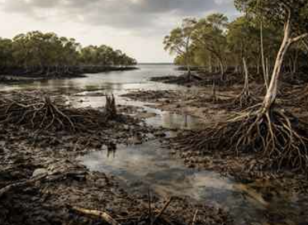
Mangrove-lined estuaries are increasingly exposed to hypercapnic hypoxia, a harmful chemical condition marked by high carbon dioxide and low oxygen. A global assessment of mangrove sites shows that climate change is intensifying these stress levels, especially in warm tropical waters, low-salinity zones, and during low tide. The findings raise concerns for mangrove biodiversity, fish nurseries, and coastal livelihoods.
What Hypercapnic Hypoxia Means
Hypercapnic hypoxia occurs when water contains too much CO₂ and too little dissolved oxygen. Such conditions make estuaries stressful for marine life. The problem is most severe in shallow, warm, and weakly flushed areas. These conditions reduce the time when fish can safely enter mangrove nurseries.
Global Findings from Mangrove Sites
A study covering 23 mangrove sites found that most already experience mild or severe hypercapnic hypoxia for part of the time. Under climate change scenarios, oxygen levels in mangrove waters may fall by 5–35 per cent and CO₂ levels may rise by 8–60 per cent by 2100. Extreme scenarios may make such events 15 times more frequent.
Impact on Fish and Biodiversity
The study warned that these events will last longer and become more intense. This may reduce mangrove biodiversity and damage habitat quality for commercially important fish. Species such as silver-biddy, silver grunt, pink ear emperor, and Indian goatfish are among those likely to be affected. The shift may favour fewer large reef-associated species valued by fishers.
Implications for Coastal Livelihoods
Mangroves support food chains by providing shelter, food, and nursery grounds for crab, shrimp, and fish. They also strengthen nearby coral reefs and seagrass meadows. Around 4 million fishers depend on mangrove ecosystems, mainly in developing countries. The study noted that the deepest parts of mangrove forests may face even more severe conditions than the measured sites.
Last Modified: April 29, 2026