
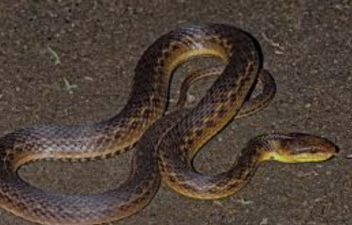
India’s reptile fauna has gained two new additions with the first recorded presence of the Rakhine Keelback and the Kachin Hills Keelback within Indian territory. The species were documented in protected areas of the north-east, underlining the region’s close ecological links with Myanmar and the wider Indo-Myanmar biodiversity hotspot.
New Species Records
The Rakhine Keelback, scientifically named Herpetoreas davidi, was recorded in Ngengpui Wildlife Sanctuary in Mizoram. The Kachin Hills Keelback, Hebius gilhodesi, was found in Namdapha National Park and Kamlang Tiger Reserve in Arunachal Pradesh. Both species were earlier believed to occur only in Myanmar.
Why the Discovery Matters
These findings expand the known range of two rare snake species and add to India’s documented biodiversity. They also show that parts of north-east India remain underexplored, especially in remote forest landscapes. Such records are important for taxonomy, wildlife mapping and conservation planning.
Ecological Significance of Keelbacks
Keelback snakes are generally non-venomous and are often associated with streams, wetlands and moist forest habitats. Their keeled scales give them a rough texture and help with camouflage in leaf litter and wet ground. Their presence is often seen as a sign of healthy riparian ecosystems.
Conservation Value of the Region
The discovery reinforces the importance of protected areas such as Ngengpui Wildlife Sanctuary, Namdapha National Park and Kamlang Tiger Reserve. These landscapes support high species diversity because of varied altitude, climate and habitat types. The findings also show the need for continued surveys in north-east India, where more undocumented species may still be present.
Last Modified: April 29, 2026