
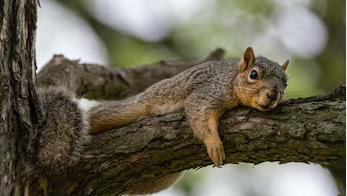
The rare Indian giant flying squirrel, a species native to the Western Ghats, has been sighted repeatedly in the Udanti-Sitanadi Tiger Reserve (USTR) in Chhattisgarh. Its frequent presence suggests healthy forest conditions and strong canopy continuity in the reserve. The species is ecologically important because it depends on connected tree cover and is highly sensitive to habitat fragmentation.
Rare Species in New Habitat
The Indian giant flying squirrel is larger than the common squirrel and behaves differently. It spends most of its life in the upper forest layer and moves by gliding from branch to branch. It rarely comes down to the ground. Its presence in USTR is notable because the species usually survives only in forests with uninterrupted canopy cover.
Ecological Significance of Canopy Connectivity
The species relies on arboreal highways, meaning continuous tree canopies that allow movement, feeding, breeding, and protection from predators. Illegal tree felling, encroachment, road building, and habitat fragmentation can break these corridors. The squirrel also feeds on juicy fruits and gets moisture from them rather than drinking water directly.
Central Indian Highlands as a Faunal Bridge
The Central Indian Highlands act as an ecological link between the Western Ghats, the Eastern Ghats, and Himalayan landscapes. This connectivity helps some rare species expand their range across forest belts. The repeated sighting of the squirrel in USTR indicates the reserve’s role in maintaining this broader ecological network.
Conservation Measures in USTR
USTR has estimated around 400 flying squirrels in the reserve. Conservation efforts include a plantation campaign to restore canopy cover and strengthen habitat quality. The reserve has also increased action against poaching. Around two dozen poachers have been arrested in multiple cases over the past year, showing a stronger protection effort for the species.
Last Modified: April 28, 2026