
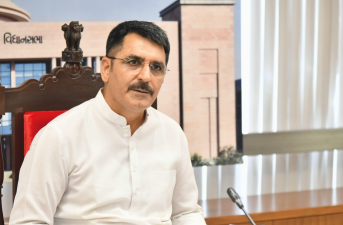
The Gujarat Legislative Assembly has constituted its financial and non-financial standing committees for the 2026-27 fiscal year. Assembly Speaker Shankar Chaudhary announced the formation of these panels and appointed senior legislators as chairpersons to lead them. The newly formed bodies include key financial watchdogs like the Public Accounts Committee, Estimates Committee, and Committee on Public Undertakings. These panels hold the state administration accountable by scrutinizing budgetary allocations, reviewing departmental expenditures, and auditing public sector enterprises. The non-financial committees will simultaneously monitor government assurances, evaluate subordinate legislation, and oversee the welfare of marginalized communities.
Financial Committees of the Assembly
Public Accounts Committee (PAC)
- Core Mandate: The PAC examines the annual appropriation accounts and finance accounts of the State of Gujarat. It scrutinizes the audit reports submitted by the Comptroller and Auditor General (CAG) of India.
- Function: It verifies that the money granted by the legislature was spent legally and for the specific purpose intended. It looks for cases of financial waste, extravagance, or procedural irregularities in state departments.
- Tradition: By legislative convention, the chairperson of this committee is often appointed from the main opposition party to ensure impartial oversight.
Estimates Committee
- Core Mandate: This committee examines the budget estimates presented to the assembly to suggest alternative policies and administrative economies.
- Function: It reports on what economies, improvements in organization, or administrative reforms can be made. It ensures that the state budget drives efficient administration matching the approved policy framework.
- Operational Limit: The committee examines estimates only after they are presented to the house. It does not halt the voting of demands for grants by the assembly.
Committee on Public Undertakings (COPU)
- Core Mandate: COPU reviews the reports, accounts, and specific CAG audit reports of autonomous State Public Sector Undertakings (PSUs).
- Function: It assesses whether Gujarat’s state-owned enterprises, such as state electricity corporations and transport bodies, are managed efficiently. It checks if these companies follow sound business principles and commercial practices.
Structural Comparison of Financial Committees
The three financial committees differ in their specific focus areas and operational boundaries:
| Committee Name | Primary Audit Input | Primary Objective | Focus Scope |
| Public Accounts Committee | CAG Audit Reports on Appropriation & Finance Accounts | Detect financial waste and unauthorized spending | Post-facto review of actual expenditure |
| Estimates Committee | Departmental Budget Estimates | Suggest institutional economies and administrative efficiency | Review of planned future expenditures |
| Committee on Public Undertakings | CAG Commercial Audit Reports & PSU Accounts | Assess commercial viability and autonomous governance | State-owned corporations and boards |
Non-Financial and Welfare Committees
Committee on Welfare of Scheduled Castes (SC) and Scheduled Tribes (ST)
- Mandate: This panel monitors the implementation of constitutional safeguards and welfare schemes designed for SCs and STs in Gujarat.
- Review Scope: It reviews the representation of these communities in state public services, checks the utilization of Special Component Plans, and inspects welfare hostels.
Committee on Government Assurances
- Mandate: Ministers frequently make promises, assurances, and undertakings on the floor of the assembly during debates and question hours.
- Function: This committee tracks these statements to see how far they are implemented. It reports whether the department fulfilled the promise within the standard implementation period of three months.
Committee on Subordinate Legislation
- Mandate: The legislature often delegates rule-making powers to the executive branch through framing acts.
- Function: This committee scrutinizes whether the rules, regulations, bylaws, and schemes framed by the state bureaucracy match the scope of the parent act passed by the assembly.
Rules Committee
- Mandate: This panel considers matters relating to the internal procedure and conduct of business in the house.
- Function: It suggests necessary amendments or additions to the Rules of Procedure of the Gujarat Legislative Assembly. The Speaker acts as the ex-officio chairperson of this committee.
IASPOINT Booster Facts for UPSC
- Constitutional Basis: State legislative committees derive their institutional authority from Article 208 of the Constitution of India, which empowers a House of the Legislature of a State to make rules for regulating its procedure and the conduct of its business.
- Exclusion of Ministers: No Minister of the State Government can be elected or appointed as a member of the financial committees (PAC, Estimates, or COPU). If a member is appointed as a minister after joining a committee, they cease to be a member from the date of appointment.
- Term of Office: The members and chairpersons of the standing committees of the Gujarat Legislative Assembly are appointed or elected for a term not exceeding one year.
- The CAG Link: The Comptroller and Auditor General acts as a friend, philosopher, and guide to the Public Accounts Committee during the detailed examination of state revenue and expenditure reports.
- Unicameral Nature: The Gujarat Legislature is unicameral, meaning it has only one house (the Legislative Assembly). Therefore, all committee members are drawn exclusively from the Legislative Assembly, unlike bicameral parliaments or states where committees may feature members from both houses.