
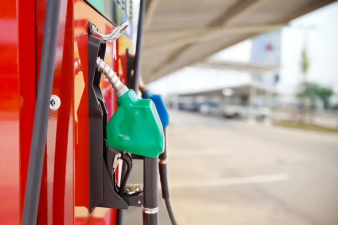
The Indian government plans to introduce a mandate for blending isobutanol with diesel by the end of 2026 to enhance domestic energy security and lower carbon emissions in the transport sector. This policy shift follows the successful deployment of E20 (20% ethanol-blended petrol) across the country and subsequent unsuccessful trials of blending ethanol with diesel due to poor chemical miscibility. Because diesel consumption in India is nearly double that of petrol, the Ministry of Road Transport and Highways expects the isobutanol-diesel mandate to deliver a much larger reduction in crude oil import dependence.
Understanding Isobutanol as a Biofuel
Isobutanol is a four-carbon, alcohol-based second-generation biofuel produced primarily through the microbial fermentation of agricultural feedstocks such as sugarcane, molasses, and non-food biomass. Unlike ethanol, which possesses a two-carbon structure, isobutanol shares a closer chemical affinity with petroleum-based diesel fuel, making it a highly viable alternative for heavy transport applications.
Key Physical and Chemical Properties
- Energy Density: Isobutanol holds a higher energy density than ethanol, closely matching that of standard diesel. This ensures a minimal drop in overall fuel efficiency and engine power output.
- Corrosivity and Volatility: It is less corrosive than ethanol, minimizing damage to existing pipelines, storage tanks, and internal vehicular engine components. It also exhibits lower volatility and a higher flash point, making storage and transport safer.
- Miscibility: Isobutanol mixes uniformly with diesel without requiring specific chemical stabilizing additives, solving the phase separation issues encountered during ethanol-diesel testing.
Strategic Shifts in Fuel Blending
India originally targeted a 5% biodiesel blending target under the National Policy on Biofuels. However, constraints in the supply chain of non-edible oilseeds like Jatropha restricted widespread commercial rollout.
Transition from Ethanol to Isobutanol
In September 2025, experimental field trials using a 10% ethanol-diesel blend failed due to poor stability and ignition complications in compression-ignition engines. This prompted the Ministry of Road Transport and Highways to pivot toward isobutanol. The Automotive Research Association of India launched an 18-month pilot project to optimize blend ratios, evaluate cold-start performance under diverse Indian climatic conditions, and ensure compliance with Bharat Stage VI emission norms. Bharat Petroleum Corporation Limited is leading the core strategic industrial research for this initiative.
Decarbonizing Heavy-Duty and Commercial Transport
While passenger vehicle segments in India have seen a steady decline in diesel models, the commercial fleet consisting of medium and heavy commercial vehicles, buses, and agricultural tractors remains completely dependent on diesel fuel.
Infrastructure and Material Adjustments
Initial mandates are projected to introduce a conservative 5% to 10% isobutanol blend, which standard modern diesel engines can accommodate without immediate retrofitting. For long-term implementation, the government has directed the development of dedicated flex-fuel engines capable of running on up to 100% isobutanol. Manufacturers will need to upgrade engine metallurgy to prevent internal corrosion during prolonged periods of vehicle storage.
E-Mobility and Tractor-Trailer Interchangeability
To complement the biofuel rollout in the logistics sector, the government is introducing regulatory frameworks for heavy-duty electric trucks. A forthcoming draft notification will standardize tractor-trailer interchangeability to bypass long charging durations. Instead of halting a commercial vehicle for battery charging or utilizing complex battery-swapping stations, logistics operators can decouple the entire front tractor unit containing the depleted battery and attach a fully charged unit, ensuring the cargo trailer remains in continuous operation.
Market and Supply Chain Challenges
Establishing a commercialized isobutanol economy requires substantial industrial fermentation infrastructure that does not currently operate at diesel-scale capacities.
| Metric / Dimension | Challenge Detail | Policy Solution |
| Production Economics | Isobutanol market price is currently higher than pre-tax fossil diesel, creating a viability gap. | Introduction of direct procurement guarantees and administered pricing mechanisms similar to the Ethanol Blended Petrol program. |
| Feedstock Allocation | Scaling up production demands a massive supply of sugarcane and agricultural biomass. | Leveraging existing supply chains built under the national ethanol program and utilizing non-food biomass targets. |
| Technical Limitations | Lower temperature operations can induce cold-start delays due to altered fuel chemistry. | Ongoing testing by the Automotive Research Association of India to refine fuel additives for varying Indian climates. |
IASPOINT Booster Facts for UPSC
- Fuel Generation Classification: Isobutanol derived from lignocellulosic biomass, agricultural residues, and non-food energy crops falls under Second-Generation (2G) biofuels, whereas sugarcane juice and molasses-derived fuels represent First-Generation (1G).
- Crude Oil Vulnerability: India imports more than 85% of its crude oil requirements, making its macroeconomic indicators like current account deficit and domestic inflation heavily exposed to global energy price shocks.
- Alternative Logistics Corridors: Alongside the isobutanol push, India has operationalized pilot hydrogen-powered public transit buses on inter-state routes like Delhi-Faridabad and Delhi-Noida, requiring specialized hydrogen refueling stations.
- Tolling Efficiency: The Ministry plans to implement Multi-Lane Free Flow barrier-less tolling systems in the upcoming fiscal year to eliminate delays at toll plazas, further cutting fuel wastage and transit emissions for commercial fleets.