
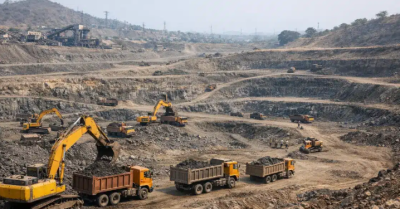
India has achieved a first in the mining sector by making 30 mineral blocks operational in a single financial year, FY2025-26. The development is for domestic mineral production, industrial supply chains and the wider push for self-reliance in critical raw materials. Limestone and iron ore account for most of the operationalised blocks, with Gujarat emerging as the leading state.
Key Mineral Blocks Operationalised
- Thirty mineral blocks became operational during FY2025-26.
- Most of the blocks are limestone blocks, followed by iron ore blocks.
- The operationalisation reflects faster movement from auction to production in the mining sector.
State-wise Distribution
- Gujarat has the highest number of operational blocks, with eight.
- Standalone limestone blocks are mainly in Gujarat, Madhya Pradesh and Rajasthan.
- Goa leads in iron ore blocks, while Madhya Pradesh, Odisha and Karnataka also have multiple iron ore blocks.
- Other states with operational limestone blocks include Andhra Pradesh, Maharashtra, Chhattisgarh and Assam.
Mineral Co-existence in Blocks
- Some blocks contain more than one mineral, improving their commercial value.
- Odisha has three mines where iron ore and manganese co-exist.
- In Gujarat, limestone co-exists with marl in two blocks.
- One Gujarat block contains limestone with marl and bauxite.
Significance for Mining Sector
- The development indicates improved operational readiness after mineral block auctions.
- It may support steel, cement and allied industries through better mineral availability.
- It also marks the growing role of states such as Gujarat, Goa and Odisha in mineral production.