
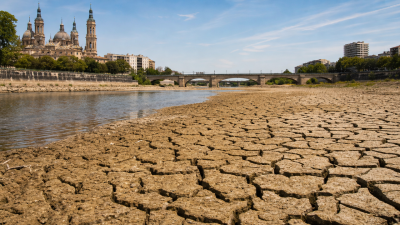
A Climate Analytics study released recently found that concurrent heatwaves and droughts across Europe have deepened income inequality and pushed millions into poverty. The finding coincides with a severe June 2026 heatwave affecting France, Spain and Italy and a European Central Bank warning on economic risks.
What is the issue?
Definition and mechanism
Compound heat-drought extremes are concurrent or closely successive periods of unusually high temperatures and reduced precipitation. Their combined effect is non-linear: drought reduces water availability and agricultural yields while heat increases losses from crop failure, energy demand and health impacts. Together they amplify economic shocks and household exposure.
Why it matters for governance, economy and society
- Governance: Requires integrated water, agriculture, health and social policy; cross-border coordination in the EU.
- Economy: Direct income losses, sectoral shocks (agriculture, tourism, energy), risks to inflation and credit access.
- Society: Disproportionate loss for poorer households; increased mortality and humanitarian strain on health systems.
Empirical findings (2004–2022) and current manifestation
Climate Analytics (May 2026; released 24 June 2026) reports that when heatwaves coincided with drought months, annual household income in Europe fell by an additional 0.8 percentage points compared with heatwaves alone. The poorest quintile experienced a 3.6 percentage points greater income reduction than the richest. Compound events raised Europe’s at‑risk‑of‑poverty (AROP) rate by about 1.1 percentage points, adding an estimated 5.6 million people to poverty. Recent June 2026 events: Western Europe saw record heat (France national average 29.8°C on the hottest day since 1947; local highs 43.3°C and 42.1°C). At least 18 heat-related deaths and 40 drownings were reported in France during the heat spell. The European Central Bank warned that drought and extreme heat threaten inflation and credit access; over 40% of bank loans in Southern and Western Europe are concentrated in businesses highly exposed to drought.
How compound extremes deepen inequality and poverty
- Income channels: Loss of farm income, reduced work hours in outdoor sectors, lower tourism receipts, and higher household expenditure (water, cooling, medical care).
- Distributional effect: Poorer households face larger proportional income losses, weaker asset buffers, and limited access to credit or insurance.
- Labour market: Reduced productivity and employment in exposed sectors disproportionately affect low‑skilled workers.
- Social safety nets: Existing benefits insufficiently indexed to climatic shocks; targeting gaps leave many newly vulnerable.
Economic ramifications
Inflation and supply-side shocks
Crop failures and water constraints raise food and energy costs. The ECB flagged upward pressure on inflation from supply disruptions and higher energy prices linked to heat and drought.
Credit and financial stability
- Loan concentration: High exposure of bank portfolios to drought‑sensitive businesses raises default and non-performing asset risk.
- Investment: Reduced profitability in affected regions depresses local investment and employment.
- Market responses: Need for climate stress tests, contingency capital and targeted liquidity support.
Projected future impacts
The study projects that if global warming reaches 2.7°C by 2100, average European household incomes could fall by about 27%, potentially putting 127 million people at risk of poverty. Countries such as Greece and Spain are identified as most vulnerable due to exposure, economic structure and social protection gaps.
Policy responses: Mitigation and adaptation
- Mitigation: Rapid GHG emission reductions in line with Paris goals; accelerate renewables and energy efficiency to limit future extremes.
- Adaptation — sectoral measures:
- Agriculture: Drought‑resistant crops, precision irrigation, soil moisture conservation, crop diversification.
- Water management: Integrated water resource management, reuse, reservoir optimisation, demand management.
- Urban planning: Heat‑resilient building codes, cool roofs, green infrastructure, public cooling centres.
- Health: Heat action plans, public advisories, expanded healthcare capacity.
- Social protection: Shock‑responsive safety nets, temporary cash transfers, index‑based support tied to climate indicators.
- Financial measures: Climate stress testing for banks, targeted credit lines for exposed SMEs, climate insurance and catastrophe pools, mobilisation of public and private climate finance, green bonds for adaptation infrastructure.
- Governance: Cross‑sector coordination, EU‑level contingency planning, local capacity building, improved data and monitoring for compound events.
International and regional cooperation
- Climate diplomacy: Stronger commitments under multilateral frameworks and faster finance and technology transfer to support adaptation.
- Regional coordination: Shared water management, transboundary drought contingency, harmonised early warning and emergency response.
- Financial cooperation: Mobilise EU funds, EIB and multilateral development bank lending for resilience projects in most affected regions.
Challenges
- Funding gaps: Large adaptation financing needs exceed current allocations.
- Political economy: Short electoral cycles reduce incentives for long‑term investment.
- Implementation: Technical capacity, land‑use conflicts and administrative bottlenecks hamper rollout.
- Insurance limits: Rising premiums and excluded risks reduce coverage for poorest households.
Lessons for India and developing regions
- Proactive social protection: Shock‑responsive cash transfers and wage guarantees to protect poorest households.
- Climate‑smart agriculture: Promote drought‑resistant varieties, micro‑irrigation, and crop insurance indexed to climate metrics.
- Urban heat management: Integrate cooling strategies into urban planning and public health preparedness.
- Financial resilience: Use blended finance, regional catastrophe pools and targeted subsidies to ensure credit access for exposed sectors.
- Data and early warning: Invest in granular climate and socio‑economic data to design targeted interventions for compound events.
Model Questions
1. Analyse how compound heat-drought extremes exacerbate income inequality and increase poverty in Europe. What are the immediate and medium-term economic consequences? [GS-III: Economic Development]
Compound heat-drought events amplify income shocks by reducing farm yields, tourism receipts and outdoor labour productivity while raising household expenditures. Between 2004–2022 they caused an additional 0.8 percentage point fall in household income and increased AROP by 1.1 percentage points (≈5.6 million people). Immediate effects include loss of livelihoods and higher inflation; medium-term impacts include credit stress, reduced investment and regional economic divergence.
2. Examine how concurrent heatwaves and droughts deepen social vulnerabilities and widen disparities. What lessons can developing countries draw for policy design? [GS-II: Governance]
Concurrent extremes hit low‑income households harder due to limited assets, insurance and access to credit, producing deeper poverty and health risks. Lessons: build shock‑responsive social protection, strengthen local disaster preparedness, prioritise climate‑resilient agriculture and water management, and invest in early warning systems and public health measures to protect vulnerable populations.
3. Critically evaluate projected future impacts of unabated warming on Europe and propose mitigation and adaptation measures at national and international levels. [GS-III: Environment & DM]
If warming reaches 2.7°C by 2100, household incomes could fall ~27% and 127 million people face poverty risk. Mitigation requires rapid GHG reductions and energy transition. Adaptation needs include water governance, drought‑resilient agriculture, urban heat measures, social protection and finance for resilience. Internationally, enhanced climate finance, technology transfer and coordinated regional planning are necessary to limit damages and support adaptation.
4. Discuss the financial system and macroeconomic risks posed by compound heat-drought extremes and recommend policy tools to safeguard economic stability. [GS-III: Economic Development]
Compound extremes create supply shocks that push inflation up and concentrate credit risk in exposed sectors; over 40% of loans in parts of Southern and Western Europe are drought‑sensitive. Policy tools: climate stress tests for banks, targeted credit facilities, subsidy redesign, risk‑pooling insurance, green bonds for adaptation, and contingency fiscal buffers to support vulnerable regions and prevent systemic financial strain.
Last Modified: June 25, 2026