
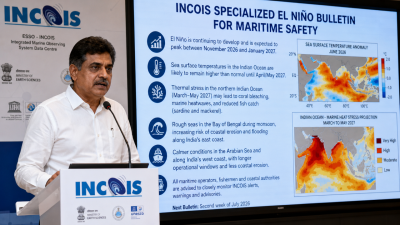
The Indian National Centre for Ocean Information Services (INCOIS) released its first specialised El Niño Bulletin on 22 June 2026 to outline likely impacts on India’s maritime sectors.
Key projections
- Peak timing: El Niño expected to peak between November 2026 and January 2027.
- Sea surface temperatures: Indian Ocean SSTs projected above normal until April–May 2027.
- Thermal stress window: Northern Indian Ocean likely to face thermal stress particularly from March–May 2027.
Marine ecosystem and fisheries impacts
- Coral bleaching: Elevated SSTs raise risk of bleaching events and more frequent marine heatwaves.
- Target species: Reduced catches forecast for Indian oil sardine (Sardinella longiceps) and Indian mackerel (Rastrelliger kanagurta) due to migration and lowered recruitment.
- Timing of fish impacts: Recruitment declines likely during and after peak thermal stress (Mar–May 2027).
Coastal and operational impacts
- Bay of Bengal: Rougher seas in monsoon; increased coastal erosion and flood risk along the east coast.
- Arabian Sea and west coast: Calmer sea conditions expected; lower coastal erosion and extended operational windows.
INCOIS advisories and schedule
- Advisory recipients: Maritime operators, fishermen and coastal authorities advised to monitor INCOIS alerts and advisories.
- Bulletin schedule: First specialised bulletin issued 22 June 2026; next bulletin due second week of July 2026.
IASPOINT Booster Facts
- Institutional: INCOIS operates under the Ministry of Earth Sciences and provides ocean information and advisory services.
- Scientific: El Niño is the warm phase of ENSO, affecting ocean–atmosphere coupling; SST anomalies and Oceanic Niño Index (ONI) are monitoring parameters.
- International: WMO and IOC coordinate global ENSO monitoring and climate advisories.