
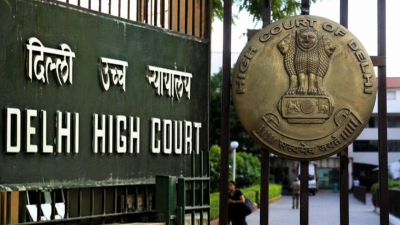
The Delhi High Court on 29 May 2026 issued a landmark ruling in Laksh Vir Singh Yadav v. Union of India, defining a structured proportionality test for the right to be forgotten. The court required de‑indexing or masking of personal data in online judicial records and gave search engines and legal databases a two‑week compliance window.
What is the issue?
The court recognised a judge‑made right to be forgotten as part of informational privacy under Article 21. Requests may lead to de‑indexing or masking of personal identifiers in online judicial records where the information no longer serves public interest. The right is subject to a structured proportionality test and is not absolute.
Why it matters
Governance: Judicial records are public but personal harm from outdated or private matters requires protection. Rule of law & access to justice: The ruling preserves judicial records while enabling privacy safeguards through masking rather than deletion. Technology & compliance: Search engines and legal databases must adopt new technical and procedural measures within short timelines.
Constitutional basis
The court grounded the right to be forgotten in Article 21 (life and personal liberty), treating informational privacy and dignity as intrinsic. The decision recognises a tension between Article 21 and Article 19(1)(a) (freedom of speech and expression) and seeks a balance through proportionality review.
Delhi High Court ruling — core directives
- Test established: India’s first structured proportionality test for right to be forgotten.
- Remedy preference: Masking or de‑indexing of parties’ names instead of deleting judicial records.
- Scope: Applicable to acquittals, quashed proceedings, settled matrimonial disputes and matters of a purely private nature.
- Obligation on private entities: Enforceable against search engines and legal databases; compliance ordered within two weeks.
- Not a blanket right: Each request must pass proportionality factors before relief is granted.
Structured proportionality test — factors
- Nature of information: Criminal, civil, private, or public‑interest content.
- Elapsed time: How long since the event occurred.
- Accuracy: Whether the information remains factually correct.
- Continuing relevance: Present public interest in the information.
- Impact on dignity/privacy: Harm to reputation, dignity or private life.
- Open justice consideration: Whether masking preserves judicial transparency.
Scope and limits
The ruling targets indexing and searchable exposure of personal data in online judicial records. It does not mandate deletion of the underlying judgments. Relief is especially directed at categories listed earlier. The right remains qualified where public interest or open justice outweighs privacy concerns.
Interplay with the Digital Personal Data Protection Act, 2023
| Dimension | DPDP Act, 2023 (Section 12) | Delhi High Court framework |
|---|---|---|
| Legal source | Statutory | Judge‑made (court order) |
| Basis for erasure | Primarily consent and specified grounds | Informational privacy under Article 21; proportionality test |
| Coverage of judicial records | Not explicit; public archives excluded in practice | Explicitly covers online judicial records for masking/de‑indexing |
| Enforcement mechanism | Data Protection Board (proposed role); statutory remedies | Court orders against platforms; timelines for compliance |
| Limitations | Consent bias; operational gaps until Board is functional | Relies on judicial process; practical enforcement challenges |
Enforcement, stakeholders and processes
- Primary actors: Courts, search engines (e.g., Google), legal databases (e.g., Indian Kanoon), data fiduciaries, Data Protection Board (when operational).
- Operational steps: Individual files request → platform assesses per proportionality test → masking/de‑indexing action or judicial review.
- Timelines: Delhi High Court ordered a two‑week compliance period for de‑indexing by search engines and legal databases.
Implementation challenges
- Technical compliance: De‑indexing and selective masking across mirrored archives and caches require consistent protocols and tooling.
- Coordination: Multiple platforms and intermediaries complicate uniform application of orders.
- Institutional gap: Data Protection Board not fully operational, limiting statutory adjudication routes.
- Standard setting: Absence of standard operating procedures for proportionality assessment at platform level.
- Cross‑border content: International hosting may dilute domestic enforcement effectiveness.
Way forward — institutional and procedural measures
- Statutory clarity: Amend or interpret the DPDP Act to explicitly address judicial records and public archives.
- Operationalise Data Protection Board: Empower the Board to handle routine erasure disputes and provide binding guidance on proportionality criteria.
- Tiered decision‑making: Platform first assessment, Board review for contested cases, and fast judicial remedy for appeals.
- Standard protocols: Technical standards for masking, de‑indexing and audit trails to ensure compliance and accountability.
- Capacity building: Train judges, registry staff and platform compliance officers on proportionality assessment and privacy harms.
- International cooperation: Mechanisms for cross‑border takedowns or geo‑blocking where content resides overseas.
Model Questions
1. Examine the constitutional basis and the structured proportionality test established by the Delhi High Court for the right to be forgotten. How does the ruling reconcile Article 21 with the principle of open justice? [GS-II: Constitution of India & Polity]
The Delhi High Court derived the right to be forgotten from Article 21, treating informational privacy and dignity as core. It prescribed a structured proportionality test considering nature, elapsed time, accuracy, relevance and privacy impact. Reconciliation with open justice occurs by preferring masking/de‑indexing of identifiers rather than deleting records, preserving judicial transparency while reducing personal harm when public interest no longer exists.
2. Analyse the interplay between the Delhi High Court’s judge‑made framework for the right to be forgotten and the Digital Personal Data Protection Act, 2023. Identify key legal gaps. [GS-II: Governance]
The DPDP Act gives a limited, largely consent‑based erasure remedy under Section 12 and lacks explicit coverage of judicial records. The Delhi High Court’s framework fills that gap judicially but remains judge‑made. Key gaps: absence of statutory mandate for judicial records, a non‑operational Data Protection Board, and unclear platform obligations. Legislative clarification and Board operationalisation are required for consistent, scalable enforcement.
3. “The right to be forgotten is not a blanket right.” Critically evaluate the factors in the Delhi High Court’s proportionality test and outline practical implications for individuals, search engines and legal databases. [GS-II: Governance]
The test weighs nature of information, time elapsed, accuracy, continuing relevance and impact on dignity/privacy against public interest. Practical implications: individuals gain remedial pathway for privacy harms; platforms must implement assessment workflows, masking tools and audit trails; legal databases need policy revision and rapid response mechanisms. Platforms face tight compliance timelines and higher operational costs to align with court orders.
4. Discuss governance challenges in implementing the Delhi High Court’s directives on the right to be forgotten and suggest measures to establish an effective adjudicatory and enforcement mechanism. [GS-II: Governance]
Challenges include technical consistency across platforms, coordination among intermediaries, cross‑border enforcement and an absent Data Protection Board. Measures: operationalise the Board with binding standards, institute a tiered resolution model (platform assessment → Board review → judicial appeal), issue technical standards for masking/de‑indexing, build platform audit obligations and train judiciary and regulators on proportionality assessments.
Last Modified: July 9, 2026