
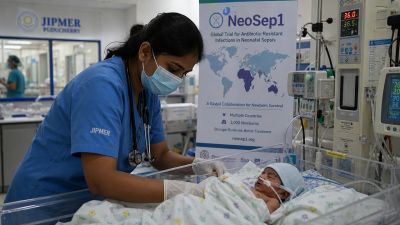
The NeoSep1 global trial recently expanded to India to test antibiotic combinations for drug‑resistant neonatal sepsis; the first infant was enrolled at JIPMER, Puducherry, with recruitment also underway at Pt. B.D. Sharma PGIMS Rohtak and soon at Lokmanya Tilak Hospital, Mumbai. The trial targets 3,000 newborns across Asia and Africa.
What is the immediate issue
Scope
Neonatal sepsis is a bloodstream infection in infants under 90 days. It is classified as early‑onset (within 72 hours) and late‑onset (up to 90 days). It is the second leading cause of neonatal mortality worldwide and causes over one million deaths annually. Drug‑resistant neonatal sepsis kills more than 214,000 newborns each year, mainly in low‑ and middle‑income countries.
Why it matters for governance, health systems and society
- Public health: High neonatal mortality increases infant and under‑five mortality rates and strains neonatal intensive care units.
- Health equity: Disproportionate burden in LMICs reflects gaps in sanitation, institutional delivery coverage, infection control and access to effective antibiotics.
- Economy: Treatment of drug‑resistant infections raises cost of care and causes loss of future human capital.
- Security: AMR reduces resilience of health systems during epidemics and complicates routine care.
Neonatal sepsis in India: burden and microbiology
Neonatal sepsis accounts for 30–40% of neonatal deaths in India, equal to an estimated 200,000–250,000 preventable deaths annually. Gram‑negative organisms — Klebsiella pneumoniae and Escherichia coli — predominate. This differs from many high‑income settings where Group B Streptococcus remains a common cause.
| Dimension | India / LMICs | High‑income countries |
|---|---|---|
| Predominant pathogens | Gram‑negative Enterobacterales (Klebsiella, E. coli) | Group B Streptococcus, some Gram‑positives |
| AMR profile | High prevalence of multidrug resistance among Gram‑negatives | Lower proportion of resistant Gram‑negatives; different challenges |
| Health system constraints | Limited access to second‑line antibiotics, diagnostics, NICU beds | Better access to diagnostics and newer drugs |
The NeoSep1 trial: design, scope and findings
Sponsor and partners
Sponsored by the Global Antibiotic Research and Development Partnership (GARDP) Foundation in collaboration with UCL Innovative Clinical Trials Unit (InCTU), City St George’s, University of London (SGUL), and Penta Foundation. Prof. Sarah Walker leads the project at InCTU.
Objectives and scope
- Objective: Identify safe, effective, affordable antibiotic regimens for drug‑resistant neonatal sepsis in LMIC settings.
- Enrollment target: 3,000 newborns across Asia and Africa by end‑2028.
- Primary outcome: Death within 28 days. Secondary outcomes include death within 90 days, need for additional antibiotics, hospital length of stay and re‑admission.
Methodology — PRACTical (Personalised Randomised Controlled Trial)
The PRACTical design permits simultaneous comparison and adaptive ranking of multiple antibiotic regimens. It aligns regimen selection with local pathogen and resistance patterns. The design increases efficiency when testing several combinations in diverse settings.
Key empirical result
Part 1, conducted in South Africa and Kenya in 2023, validated dosing for fosfomycin and flomoxef in newborns when used in combination with other antibiotics. These dose data now inform Part 2 regimen evaluation in additional countries including India, Vietnam and Pakistan.
India’s role and operational details
- Recruitment: Trial expanded to India on 9 July 2026. First enrolment at JIPMER, Puducherry; Pt. B.D. Sharma PGIMS Rohtak has enrolled an infant; Lokmanya Tilak Municipal Hospital, Mumbai, expected to begin shortly.
- Leadership: Dr Nishad Plakkal, Head of Neonatology at JIPMER, is the Principal Investigator for India.
- Significance: Indian participation supplies data on local pathogens and resistance patterns and strengthens clinical trial capacity for neonatal therapeutics.
Ethical and regulatory considerations
- Vulnerable population: Newborns require stringent consent processes involving parents or guardians and ethics committee oversight.
- Risk minimisation: Independent data safety monitoring boards, age‑appropriate dosing validated in earlier phases, and stopping rules are essential.
- Regulatory framework: Trials in India operate under New Drugs and Clinical Trial Rules and institutional ethics committees; adherence to ICMR National Ethical Guidelines is required.
- Post‑trial access: Plans for making effective regimens affordable and available in participating settings should be specified.
Public health governance and policy implications
- Antimicrobial stewardship: Hospital‑level stewardship policies and national programmes reduce inappropriate antibiotic use and preserve efficacy.
- Surveillance: Strengthen laboratory networks and AMR surveillance (for example, ICMR AMR surveillance efforts) to inform empirical therapy and policy.
- Integration: Link trial findings to national treatment guidelines and the National Action Plan on AMR to ensure scale‑up where effective.
Science, technology and capacity building
- Diagnostics: Rapid, point‑of‑care diagnostics are needed to distinguish sepsis from other conditions and to guide targeted therapy.
- Drug development: Repurposing and combination strategies (fosfomycin, flomoxef) provide near‑term options while new antibiotics are developed.
- Human resources: Training clinicians and nurses in early recognition, infection control and trial conduct improves outcomes and research quality.
Challenges
- AMR burden: High prevalence of resistant Gram‑negative organisms limits empirical therapy options.
- Infrastructure: Gaps in NICU capacity, microbiology services and cold‑chain for drug supply complicate trial and treatment delivery.
- Funding and scale: Sustained financing required to translate trial results into accessible treatment regimens.
- Equity: Ensuring rural and under‑served populations benefit from validated regimens remains a policy challenge.
Way forward: policy and operational priorities
- Short term: Fast‑track integration of NeoSep1 evidence into hospital protocols and national guidelines where appropriate. Ensure post‑trial access plans are in place.
- Medium term: Expand AMR surveillance, invest in neonatal diagnostics, and scale stewardship programmes across public hospitals.
- Long term: Strengthen research capacity, public‑private partnerships for affordable antibiotic access, and sustained funding for neonatal health programmes.
Model Questions
1. Discuss the multi‑faceted challenge of antimicrobial resistance (AMR) in neonatal sepsis in low‑ and middle‑income countries and evaluate how trials such as NeoSep1 contribute to addressing this crisis. [GS-II: Governance]
AMR increases neonatal sepsis mortality by reducing effective empiric options, especially where Gram‑negative resistance is common. Drivers include antibiotic misuse, poor infection control and weak diagnostics. Trials like NeoSep1 test multiple, locally relevant regimens using adaptive designs, supply dose and safety data (e.g. fosfomycin, flomoxef), and generate evidence to update guidelines, inform stewardship and support equitable access to effective, affordable therapies.
2. Examine the importance of innovative trial methodologies such as the PRACTical design for developing antibiotic regimens for neonatal sepsis. What ethical and logistical issues arise when conducting such trials in newborns? [GS-III: Science & Technology]
PRACTical design allows simultaneous comparison and adaptive ranking of multiple regimens, improving efficiency in heterogeneous settings. Ethical issues include proxy consent, minimising risk, safety monitoring and post‑trial access. Logistical challenges cover standardising protocols, cold‑chain, laboratory capacity, training staff, and multi‑country regulatory approvals. Robust ethics oversight, DSMBs, validated dosing and community engagement are necessary.
3. Analyse the role of international partnerships (GARDP, UCL InCTU, SGUL, Penta) in addressing neonatal sepsis through NeoSep1. What does India’s participation imply for national research capacity and public health policy? [GS-II: International Relations]
Partnerships pool technical, funding and operational expertise to run large, multi‑site trials and ensure ethical standards. They align product development with LMIC needs and support knowledge transfer. India’s participation provides local pathogen data, builds clinical trial capacity, informs national treatment guidelines, and strengthens stewardship and surveillance. It enhances India’s role in global health research and expedites adoption of effective regimens.
4. Evaluate the socio‑economic and public health implications of neonatal sepsis in India and propose a comprehensive approach integrating national policies with global research efforts to reduce preventable deaths. [GS-III: Economic Development]
High neonatal sepsis mortality causes loss of life, increases healthcare expenditure and reduces human capital. A comprehensive approach combines strengthened maternal and newborn care, infection control, AMR surveillance, hospital stewardship, investment in diagnostics, participation in trials like NeoSep1, and policies ensuring affordable access to validated antibiotics. Public financing and capacity building in peripheral facilities are necessary to reach underserved populations.
Last Modified: July 11, 2026