
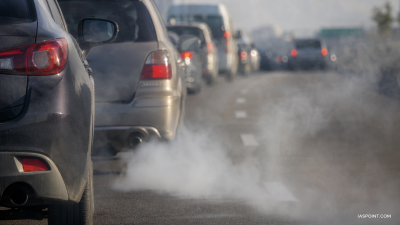
The Ministry of Power released the draft Corporate Average Fuel Economy (CAFE) III norms on 16 July 2026. The draft covers M1 passenger vehicles sold in India for 2027–28 to 2031–32, proposes progressively tighter fleet CO2 targets, market-based compliance and technology incentives, and invites comments until 6 August 2026.
What is proposed
Scope and timeline
CAFE‑III applies to M1 passenger vehicles (up to eight seats plus driver) manufactured or imported for sale in India during 2027–28 to 2031–32. The draft sets the compliance window from 1 April 2027 for five fiscal years, following CAFE‑II.
Core targets (summary)
| Fiscal year | Fuel consumption (L/100 km) | Declared tailpipe CO₂ (gCO₂/km) | BEE credit buyout (₹ / gCO₂/km) |
|---|---|---|---|
| FY28 (2027–28) | 3.996 | 94.76 | 2,500 |
| FY29 | (progressive tightening) | (progressive tightening) | (rising) |
| FY32 (2031–32) | 3.3273 | 78.90 | 4,500 |
Why it matters
- Environment: Targets link fleet performance to declared tailpipe CO₂ and push transport-sector decarbonisation, aligning with long‑term net‑zero objectives.
- Industry and economy: Mandates require capital spending on powertrains, driveline efficiency and electrification; affect vehicle pricing and manufacturer competitiveness.
- Governance: Introduces a market mechanism administered by the Bureau of Energy Efficiency (BEE), raising responsibilities for monitoring, verification and inter‑ministerial coordination.
- Technology & supply chain: Spurs demand for hybrid/EV systems, advanced ICE technologies and alternative fuels; increases focus on battery and critical mineral supply security.
Key provisions
Targets and metric
Compliance is measured by fleet‑average declared tailpipe CO₂. The draft sets progressively tighter gCO₂/km thresholds corresponding to lower litres/100 km values across the five‑year window.
Market‑based compliance and BEE role
- Credit trading: Manufacturers generating over‑performance credits may trade them. Under‑performing firms can buy credits on the market.
- Direct buyout: BEE will offer a credit buyout option. The price schedule starts at ₹2,500 per gCO₂/km in FY28 and rises to ₹4,500 by FY32.
- Statutory authority: BEE remains the statutory agency under the Energy Conservation Act, tasked with administering the credit registry, buyout and verification protocols.
Technology incentives and alternative fuels
- Technology benefit: Approved fuel‑saving technologies attract compliance benefits up to 9 gCO₂/km in total, capped at 1 gCO₂/km per technology.
- Carbon Neutrality Factor: The draft recognises ethanol, biofuels and compressed biogas for carbon‑neutrality adjustments. An 8% CNF for current ethanol blending levels reduces declared tailpipe CO₂ for compliance.
Consultation
The Ministry of Power invited stakeholder feedback until 6 August 2026 as part of the rule‑making process.
Implications
- Decarbonisation trajectory: The target curve reduces fleet CO₂ from ~94.8 to 78.9 gCO₂/km, making ICE-only strategies increasingly costly and accelerating hybrids and BEVs.
- Cost and pricing: R&D, powertrain re‑engineering and compliance costs will raise manufacturing costs; some increase may be passed to consumers, affecting affordability in price‑sensitive segments.
- Competitive effects: Large manufacturers and those with EV portfolios will gain advantage. Smaller or ICE‑centric firms face higher buyout or retrofit costs, risking market consolidation.
- Supply chain and critical materials: Faster EV uptake increases demand for batteries and critical minerals, raising strategic import dependence unless domestic capacity is scaled.
- Infrastructure: Targets presuppose parallel expansion of charging networks and ethanol/CBG distribution. Infrastructure shortfalls will impede realisation of projected fleet mixes.
- Administrative risk: Effective implementation depends on transparent registries, third‑party audit, inter‑ministerial coordination and safeguards against credit misuse.
Implementation challenges and mitigations
- Verification and registry: Establish a secure digital registry managed by BEE, with mandatory third‑party verification and periodic audits to prevent double‑counting and greenwashing.
- Capacity building: Strengthen BEE technical capacity and coordination with the Ministry of Road Transport and Highways, BIS and automotive testing laboratories.
- Support for smaller firms: Provide targeted fiscal support, concessional finance and longer lead times for SMEs to adopt efficient technologies.
- Localisation policies: Use PLI schemes and incentives to attract battery, power electronics and component manufacture to reduce import dependence.
- Fuel and charging infrastructure: Accelerate E20/Ethanol expansion, CBG networks and public fast‑charging rollout linked to state and urban planning frameworks.
- Market design: Define clear rules for credit issuance, banking, expiry and cross‑year trading. Publish price discovery data to ensure efficient markets.
Model Questions
1. Analyse the structural shift in India’s automotive policy under the draft CAFE‑III norms and assess its implications for India’s Net Zero by 2070 commitment. [GS-III: Environment & DM]
The draft CAFE‑III imposes tighter fleet CO₂ targets (94.76 g/km to 78.90 g/km) and market‑based compliance, shifting policy from voluntary measures to mandatory fleet performance. It accelerates electrification, hybridisation and alternative‑fuel adoption, reducing transport emissions trajectory. Implications include higher industry CAPEX, faster EV supply‑chain demand, need for charging and fuel infrastructure, and alignment with broader net‑zero pathways if complemented by supportive fiscal and infrastructure policies.
2. Examine the governance role of the Bureau of Energy Efficiency (BEE) in administering the market‑based compliance mechanism under CAFE‑III. [GS-II: Governance]
BEE is the statutory administrator for credit issuance, buyout and registry under CAFE‑III. Its functions include verifying declared tailpipe CO₂, operating a secure credit registry, managing the buyout mechanism and ensuring transparent price discovery. Effective governance requires technical capacity, third‑party audit frameworks, inter‑ministerial coordination, legal clarity on enforcement, and safeguards against fraud and double‑counting.
3. Discuss how the draft’s technology incentives and carbon‑neutrality adjustments for biofuels address transition challenges in the automobile sector. [GS-III: Science & Technology]
The draft offers up to 9 gCO₂/km benefit for approved technologies and an 8% CNF for ethanol blending. These measures lower immediate compliance burden, encourage incremental efficiency (regenerative braking, mild hybrids) and use of biofuels as a bridge to electrification. They buy time for manufacturers to shift platforms while stimulating deployment of intermediate technologies and domestic biofuel supply chains.
4. Assess the likely economic effects of CAFE‑III on passenger‑vehicle manufacturers and consumers in India. [GS-III: Economic Development]
CAFE‑III raises compliance costs through R&D and powertrain upgrades; larger firms with EV lines can absorb costs, smaller firms may face buyouts or consolidation. Vehicle prices are likely to rise, affecting affordability and demand in budget segments. Escalating BEE buyout prices increase operating costs for non‑compliant firms. Policy measures (incentives, credit market transparency, support for localisation) can mitigate adverse economic impacts.
Last Modified: July 16, 2026