
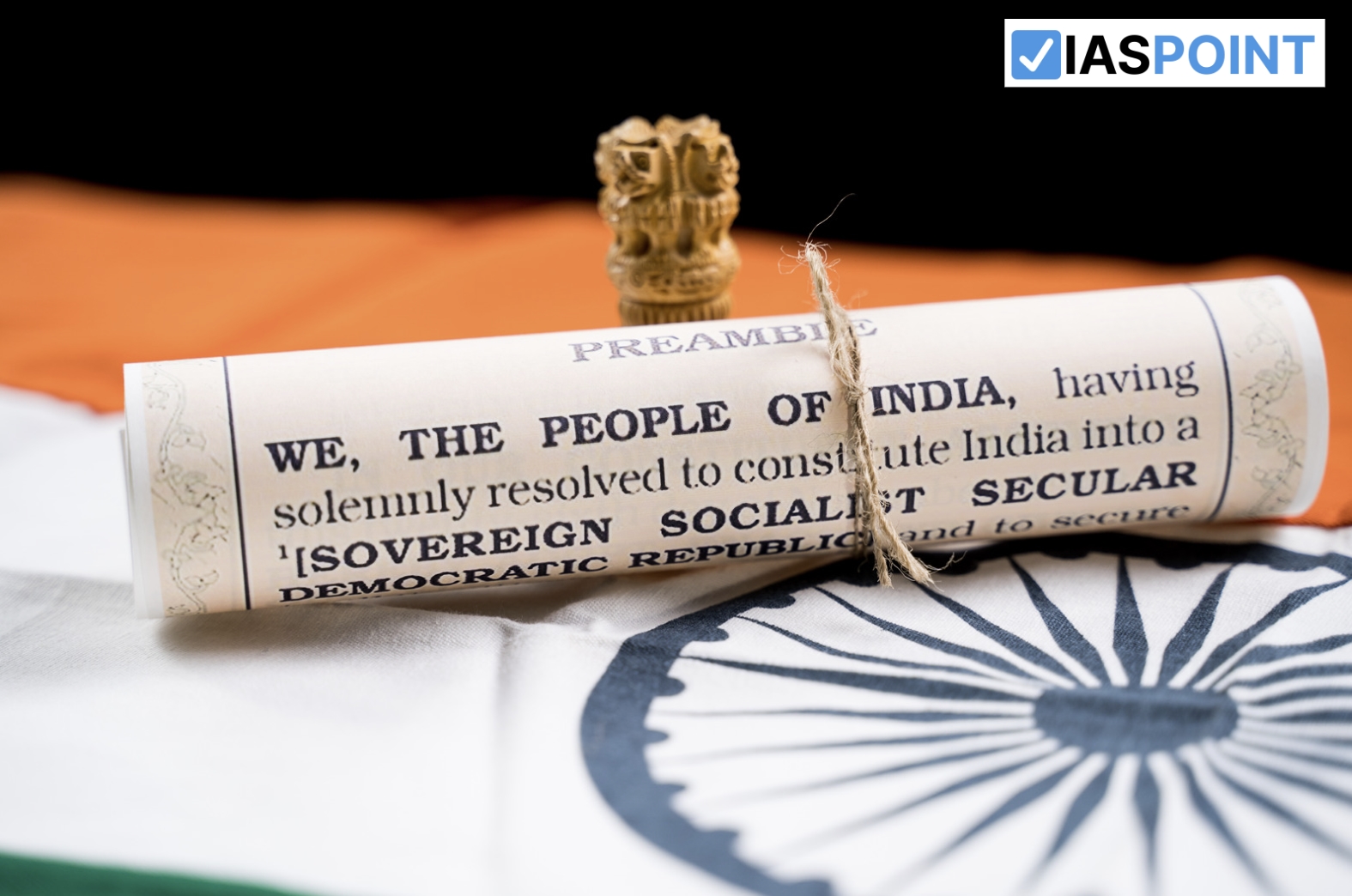

Citizenship refers to the legal status of a person as a member of a sovereign state. It grants individuals rights and responsibilities within that state. In India, citizenship is defined and regulated by the Constitution and subsequent laws.
Constitutional Framework
The Constitution of India addresses citizenship in Articles 5 to 11. These articles outline the criteria for acquiring and losing citizenship. They were enacted on 26 January 1950, the day the Constitution came into effect.
Article 5 – Citizenship at Commencement
Article 5 provides citizenship to individuals domiciled in India at the Constitution’s commencement. This includes:
- Persons born in India.
- Individuals with at least one parent born in India.
- Residents of India for five years preceding the Constitution’s commencement.
Article 6 – Migrants from Pakistan
This article addresses citizenship for those who migrated from Pakistan. It states:
- Individuals migrating before 19 July 1948 and residing in India are citizens.
- Those migrating after this date must register as citizens, having resided in India for six months prior to application.
Article 7 – Migrants to Pakistan
Article 7 caters to individuals who migrated to Pakistan post-1 March 1947 but later returned to India. They can gain citizenship if they return with a resettlement permit.
Article 8 – Persons of Indian Origin Abroad
This article allows individuals of Indian origin residing outside India to register as Indian citizens. This applies if they or their parents/grandparents were born in undivided India.
Article 9 – Voluntary Acquisition of Foreign Citizenship
Article 9 stipulates that any person who voluntarily acquires foreign citizenship ceases to be an Indian citizen.
Article 10 – Continuation of Citizenship
This article ensures that those recognised as Indian citizens will remain citizens, subject to laws made by Parliament.
Article 11 – Parliamentary Authority
Parliament is empowered to regulate citizenship acquisition and termination through legislation. This includes the Citizenship Act of 1955.
Citizenship Act, 1955
The Citizenship Act, 1955, defines the processes for acquiring and terminating Indian citizenship. It has been amended multiple times to adapt to changing circumstances.
Acquisition of Citizenship
Citizenship can be acquired through several methods:
- By birth.
- By descent.
- By registration.
- By naturalisation.
- By incorporation of territory.
Citizenship by Birth
Individuals born in India between 26 January 1950 and 1 July 1987 are citizens, regardless of their parents’ nationality. For those born after 1 July 1987, at least one parent must be an Indian citizen.
Citizenship by Descent
Children born outside India can acquire citizenship if their father is an Indian citizen at birth. For those born post-10 December 1992, either parent must be a citizen.
Citizenship by Registration
This applies to:
- Persons of Indian origin residing in India for seven years.
- Spouses of Indian citizens residing in India for seven years.
- Minor children of Indian citizens.
Citizenship by Naturalisation
Naturalisation requires:
- Residence in India for 12 years.
- Renunciation of prior citizenship.
- Good character and knowledge of an Indian language.
Citizenship by Incorporation of Territory
When new territories are incorporated into India, the government can declare the residents as Indian citizens.
Termination of Citizenship
Citizenship can be terminated through:
- Renunciation.
- Termination by the government.
- Deprivation under specific conditions.
Renunciation of Citizenship
An Indian citizen can renounce citizenship by declaring their intent. This applies if they acquire citizenship of another country.
Termination of Citizenship
Citizenship may be terminated if an individual voluntarily acquires foreign citizenship. This does not apply during wartime.
Deprivation of Citizenship
The government can deprive citizenship if:
- Acquired through fraudulent means.
- Involvement in anti-national activities.
- Long-term residence outside India without sufficient cause.
Persons of Indian Origin (PIO) Card
The PIO card is available for individuals of Indian origin who are citizens of specific countries. It allows multiple entries into India for 15 years without needing a visa.
Overseas Citizen of India (OCI) Card
The OCI card is for foreign nationals eligible for Indian citizenship as of 26 January 1950. It grants lifelong entry into India but does not confer voting rights.
Fundamental Rights of Citizens
Indian citizens enjoy various rights, including:
- Right to equality (Article 14).
- Right against discrimination (Article 15).
- Right to freedom of speech and expression (Article 19).
- Right to culture and education (Articles 29 and 30).
Duties of Citizens
Citizens also have duties, such as:
- Abiding by the Constitution.
- Respecting national symbols.
- Promoting harmony and brotherhood.
Principles of Citizenship
India primarily follows the principle of jus sanguinis (right of blood) for citizenship. This means citizenship is based on descent rather than the place of birth.
Recent Amendments to Citizenship Law
The Citizenship Act has undergone several amendments:
- 1986 – Clarified citizenship for those born in India.
- 2003 – Stricter rules for citizenship acquisition.
- 2019 – Provided citizenship to specific religious minorities from neighbouring countries.
Single Citizenship
India provides for single citizenship, meaning all Indians are citizens of India, regardless of the state or territory they reside in. This contrasts with countries like the USA, which have dual citizenship systems.
Categories of Individuals
In India, individuals are classified as either citizens or foreigners. Citizens possess full civil and political rights, while foreigners do not. There are certain rights exclusive to citizens only. These include Right to vote in elections; eligibility for public office; and protection against discrimination.


