Indian Polity & Constitution for UPSC Prelims

I. Foundational Concepts of Indian Polity

  1. Evolution of Constitutional Framework
  2. Making of the Constitution
  3. Philosophy of the Constitution
  4. Key Features of the Indian Constitution
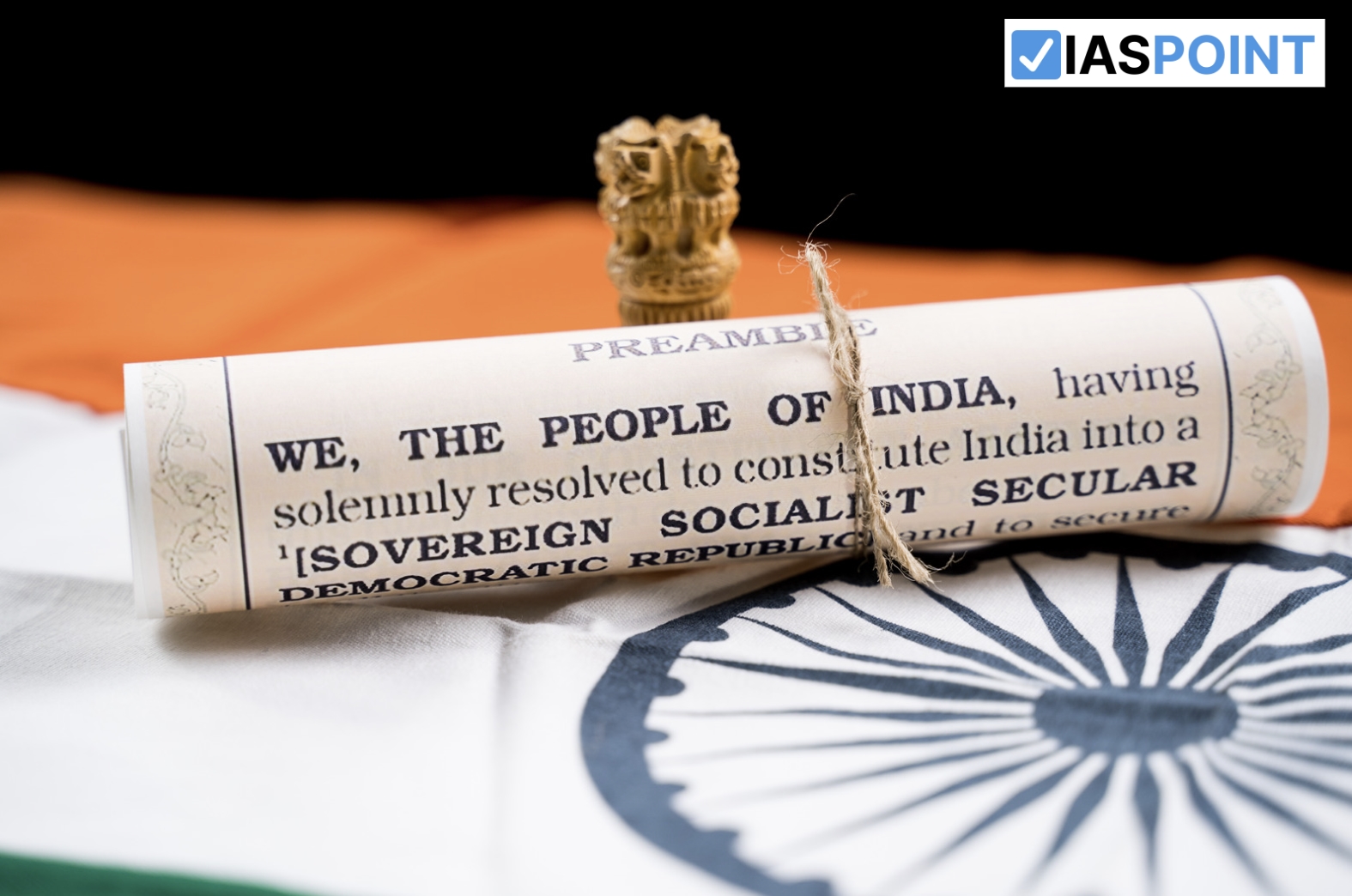
  5. Preamble: Vision and Ideals
  6. The Union and Its Territory
  7. Citizenship: Provisions and Policies

II. Fundamental Rights, Duties, and Principles

  1. Fundamental Rights: Scope and Limitations
  2. Directive Principles of State Policy
  3. Fundamental Duties of Citizens
  4. Doctrine of Basic Structure
  5. Constitutional Amendments

III. Central Government

  1. President: Powers and Functions
  2. Vice-President: Role and Responsibilities
  3. Prime Minister: Role and Powers
  4. Union Council of Ministers
  5. Cabinet Committees

IV. State Government

  1. Governor: Role and Powers
  2. Chief Minister: Executive Head of the State
  3. State Council of Ministers
  4. State Legislatures: Composition and Functions

V. Local Governance

  1. Panchayati Raj System
  2. Urban Local Bodies: Municipalities and Corporations

VI. Parliamentary System and Processes

  1. Indian Parliament: Structure and Powers
  2. Parliamentary Committees: Roles and Relevance
  3. Indian Parliamentary Group (IPG)

VII. Federalism and Inter-Governmental Relations

  1. India’s Quasi-Federal System
  2. Centre-State Relations
  3. Inter-State Relations
  4. Emergency Provisions

VIII. Judiciary

  1. Supreme Court: Powers and Jurisdiction
  2. High Courts: Role and Structure
  3. Subordinate Courts

IX. Judicial Mechanisms

  1. Judicial Review
  2. Judicial Activism
  3. Public Interest Litigation (PIL)

X. Alternative Dispute Resolution

  1. Tribunals: Scope and Authority
  2. Consumer Forums
  3. Lok Adalats and Alternative Mechanisms

XI. Union Territories and Special Provisions

  1. Administration of Union Territories
  2. Scheduled and Tribal Areas

XII. Constitutional Bodies

  1. Election Commission of India
  2. Union Public Service Commission (UPSC)
  3. State Public Service Commissions
  4. Finance Commission
  5. Goods and Services Tax (GST) Council
  6. Comptroller and Auditor General (CAG)
  7. Attorney General of India
  8. Advocate General of States

XIII. Special Commissions

  1. National Commission for Scheduled Castes
  2. National Commission for Scheduled Tribes
  3. National Commission for Backward Classes
  4. Special Officer for Linguistic Minorities

XIV. Non-Constitutional Bodies

  1. NITI Aayog: Policy Think Tank
  2. Central Vigilance Commission (CVC)
  3. Central Bureau of Investigation (CBI)
  4. Lokpal and Lokayuktas
  5. National Human Rights Commission (NHRC)
  6. State Human Rights Commissions
  7. National Commission for Women (NCW)
  8. National Commission for Protection of Child Rights
  9. National Commission on Minorities
  10. Central and State Information Commissions

XV. Political Dynamics and Elections

  1. Political Parties: National and Regional
  2. Coalition Governments: Evolution and Impact
  3. Electoral Process and Laws
  4. Electoral Reforms and Innovations
  5. Anti-Defection Law
  6. Voting Behavior and Trends
  7. EVMs and Election Technology

XVI. Societal Structures and Advocacy

  1. Pressure Groups and Their Influence
  2. Non-governmental Organizations (NGOs)

XVII. Cooperative Societies and Public Administration

  1. Cooperatives and Cooperative Movement

XVIII. Public Administration

  1. Public Services: Recruitment and Administration

XIX. Languages and Special Provisions

  1. Official Language and Regional Language Policies
  2. Special Provisions for Certain States and Classes

XX. Miscellaneous Topics

  1. National Integration and Unity
  2. Foreign Policy Principles and Challenges
  3. Landmark Judicial Verdicts
  4. Significant Doctrines in Indian Law
  5. Constitutions of Other Nations: A Comparative Study
  6. Rights and Liabilities of the Government

Child Protection Schemes and Programmes

Child Protection Schemes and Programmes

Some of the existing Child Protection Schemes and Programmes include:

A Programme of Juvenile Justice for children in need of care and protection and children in conflict with law.”The Government of India provides financial assistance to the State Governments/UT Administrations for establishment and maintenance of various homes, salaries of staff, food, clothing, etc, for children in need of care and protection and juveniles in conflict with law. Financial assistance is based on proposals submitted by States on a 50-50 cost sharing basis.

An Integrated Programme for Street Children without homes and family ties. Under the scheme, NGOs are supported to run 24 hours drop-in shelters and provide food, clothing, shelter, non-formal education, recreation, counselling, guidance and referral services for children.

“The other components of the scheme include enrolment in schools, vocational training, occupational placement, mobilizing preventive health services and reducing the incidence of drug and substance abuse, HIV/AIDS etc.

CHILDLINE Service for children in distress, especially children in need of care and protection so as to provide medical services, shelter, rescue from abuse, counselling, repatriation and rehabilitation. Under this initiative, a telephone helpline, number 1098, runs in 74 urban and semi-urban centres in the country.

Shishu Greha Scheme for care and protection of orphans/abandoned/destitute infants or children up to 6 years and promote in-country adoption for rehabilitating them.

Scheme for Working Children in Need of Care and Protection for children working as domestic workers, at roadside dhabas, mechanical shops etc. “The scheme provides for bridge education and vocational training, medicine, food, recreation and sports equipments.

Rajiv Gandhi National Creche Scheme for the Children of Working Mothers in the age group of 0’6 years. “The scheme provides for comprehensive day-care services including facilities like food, shelter, medical, recreation, etc. to children below 6 years of age.

Pilot Project to Combat the Trafficking of Women and Children for Commercial Sexual Exploitation in Source and Destination Areas for providing care and protection to be trafficked and sexually abused women and children components of the scheme include networking with law enforcement agencies, rescue operations, temporary shelters for the victims, repatriation of hometown and legal services.

National Child Labour Project (NCLP) for the rehabilitation of child labour. Under the scheme, project societies at the district level are fully funded for opening up of Special Schools/Rehabilitation Centres for the rehabilitation of child labourers. “These Special Schools/Rehabilitation Centres provide non-formal education, vocational training, supplementary nutrition and stipend to children withdrawn from employment.

“The Courts, especially the Supreme Court has, through their numerous decisions have favoured the well-being of the children. In People’s Union for Democratic Rights v Union of India, 1982, the apex court held that children under 14 could not be employed in hazardous occupations. “The cases such as M.C. Mehta v. State of Tamil Nadu, 1991 and 1996 had the same verdict as in the above case. In Gaurav Jain v. Union of India, 1997, the Supreme Court held that the children of the prostitutes have the right to equality of opportunity, dignity, care, protection and rehabilitation so as to be part of the mainstream of social life without any pre-stigma attached to them.

Leave a Reply

Your email address will not be published. Required fields are marked *

Archives