
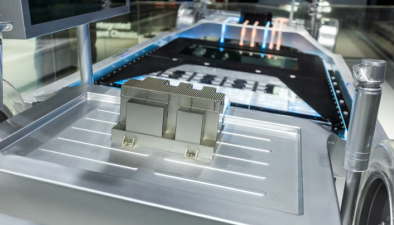
China has developed iron-based battery technologies that include an all-iron flow battery and lithium iron phosphate (LFP) batteries. These systems are used in electric vehicles, grid storage, and data-centre power applications.
All-Iron Flow Battery
The Chinese Academy of Sciences reported a stable all-iron flow battery on 27 April 2026. The battery can operate for more than 6,000 charge-discharge cycles without capacity loss and uses a new electrolyte system. Iron is about 80 times cheaper than lithium in raw material cost, and this cost difference is relevant for large-scale stationary storage. The battery uses a molecular-level “synergistic design” to address stability issues seen in earlier all-iron flow batteries. The design creates a new iron complex that functions as a structural shield and an electrostatic barrier.
Lithium Iron Phosphate Batteries
Contemporary Amperex Technology Co. Ltd. (CATL) unveiled its Shenxing LFP battery on 21 April 2026. The battery can recharge from 10% to 98% in six minutes. CATL is the world’s largest electric vehicle battery manufacturer. China’s power battery installations in 2024 totalled 548.4 GWh. This was a 41.5% increase from 2023, and LFP batteries accounted for 409 GWh, or 74.6% of total installations.
Market and Industrial Context
Iron-air battery modules in the Asia Pacific region are projected to record a compound annual growth rate of 22.1% from 2026 to 2034. Utility-scale commercial deployments in China are expected after 2027. China has held a near-monopoly in the production of iron-based batteries, which are used in electric vehicles and AI data centres. Western companies have begun to enter this segment.
Related Industrial Expansion
On 23 July 2025, Yuneng New Energy Battery Material announced a plan to invest $132.4 million in a lithium-iron phosphate cathode materials factory in Seremban, Malaysia. The planned annual production capacity of the facility is 90,000 tonnes.
Last Modified: April 27, 2026