
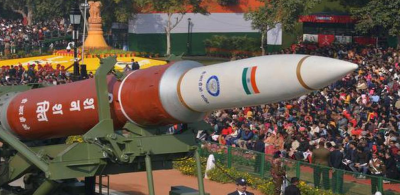
Defence Minister Rajnath Singh inaugurated a new state-of-the-art defence manufacturing complex by Nibe Limited in Shirdi, Maharashtra. This private facility is capable of producing 5 lakh 155 mm and 120 mm artillery shells annually using fully indigenous technology. The launch reflects India’s strategic push toward self-reliance in defence manufacturing under the Make in India initiative, aiming to elevate private sector participation in domestic defence production from the current 25-30% to 50%. The Shirdi complex serves as a critical multi-domain hub, expanding regional industrial capabilities across rocket launchers, drones, explosives, and advanced electronic systems.
Overview of the Shirdi Defence Manufacturing Complex
The Shirdi complex represents an integrated private sector deployment in military hardware and clean energy infrastructure.
- Scale and Investment: The facility spans 200 acres in the Ahilya Nagar district of Maharashtra, involving an initial investment of ₹1,000 crore out of a planned total allocation of ₹3,000 crore. It is expected to create 2,000 direct jobs and integrate a supply chain network of over 100 local Micro, Small, and Medium Enterprises (MSMEs).
- Production Spectrum: Beyond its flagship artillery shell lines, the hub houses a missile manufacturing unit, advanced aerospace and aviation component facilities, and defence electronics segments.
- Strategic Technologies Displayed: The inauguration featured the flagging off of the indigenous ‘Suryastra’ Universal Rocket Launching System, which possesses tested ranges of 150 km and 300 km. It also showcased ‘Vayu Astra-1’, an indigenous loitering munition or kamikaze drone designed to strike targets up to 100 km deep.
- Explosives and Energy Integration: The event included the unveiling of indigenous TNT and RDX plant technologies. A separate 2,000-acre secondary site within the district is being established to scale production of heavy military explosives like TNT, RDX, and HMX. Additionally, a 15-tonne capacity renewable bio-energy compressed biogas plant was established at the Shirdi site to align with sustainable industrial practices.
Evolution of India’s Defence Production and Export Landscape
The Indian defence sector has shifted from public sector dominance and a high reliance on imports to an export-driven industrial model.
Financial and Production Milestones
Annual domestic defence production reached an all-time high of ₹1.5 lakh crore in FY25. Backed by joint public-private participation, national defence exports reached ₹38,424 crore in FY26, marking a 62.66% increase over the previous fiscal year, with equipment supplied to more than 100 countries.
Paradigm Shift in Future Warfare
Modern global conflicts demonstrate that future warfare outcomes depend on advancements in munitions, precision guided systems, and automation rather than army size alone. The expansion of high-capacity private shell units aims to secure steady munitions supply chains during long-drawn conventional conflicts, reducing vulnerabilities related to the global weaponization of rare earth minerals and trade routes.
Institutional Frameworks Driving Indigenization
The Ministry of Defence has deployed multiple policy instruments over the past decade to formalize private participation and restrict direct weapon imports.
Positive Indigenisation Lists
The government has notified positive indigenization lists comprising more than 5,000 items, including sub-assemblies, raw materials, and major weapon platforms. The armed forces must procure these specific items exclusively from domestic manufacturers.
Strategic Partnership Model
This framework under the Defence Acquisition Procedure enables major private Indian firms to collaborate with foreign Original Equipment Manufacturers (OEMs). The model seeks to establish domestic manufacturing plants for high-end platforms like submarines, fighter aircraft, and armored vehicles, ensuring direct technology transfer.
Corporatization of Ordnance Factory Boards
The restructuring of the old Ordnance Factory Board into seven distinct unlisted Defence Public Sector Undertakings (DPSUs) sought to transform functional efficiency. These entities now compete directly with private firms, improving cost-effectiveness, corporate governance, and R&D pipelines.
Financial Ecosystems for Defence Startups
- iDEX (Innovations for Defence Excellence): Connects the Ministry of Defence with startups, MSMEs, and innovators to source small-scale technical solutions for the armed forces.
- ADITI Scheme: Focuses on developing critical and strategic deep-tech technologies, offering grants up to ₹25 crore to tech startups.
- Technology Development Fund (TDF): Executed by the Defence Research and Development Organisation (DRDO), this fund provides financial support to upgrade the technical capabilities of private industries and academies.
IASPOINT Booster Facts for UPSC
- Defence Industrial Corridors (DICs): India has established two dedicated Defence Industrial Corridors in Uttar Pradesh (covering Aligarh, Agra, Jhansi, Chitrakoot, Kanpur, and Lucknow nodes) and Tamil Nadu (covering Chennai, Coimbatore, Hosur, Salem, and Tiruchirappalli nodes) to foster regional aerospace and defence manufacturing clusters.
- FDI Limits in Defence: Under current regulations, Foreign Direct Investment (FDI) in the defence sector is permitted up to 74% through the automatic route, and up to 100% via the government route wherever it is likely to provide access to modern technology.
- SIPRI Export-Import Status: Historically ranked as the world’s largest arms importer, India’s expanding indigenous base under the Make in India initiative has diversified its export profile, placing it among the top global suppliers of light combat aircraft, coastal surveillance systems, and advanced artillery rocket systems like the Pinaka and BrahMos.
- Ammunition Classification: The 155 mm artillery shell serves as the standard caliber for NATO and modern heavy artillery weapon systems globally, used heavily in Indian platforms like the M777 ultra-light howitzer and the K9 Vajra-T tracked self-propelled gun.
- Operation Sindoor: A historical military reference cited by the leadership to highlight early domestic automated deployment and tactical munitions adaptation in challenging high-altitude operational environments.
- International Space Collaboration: On the sidelines of the Shirdi complex launch, Nibe Group exchanged a Memorandum of Understanding (MoU) with US-based geospatial intelligence firm Black Sky to collaborate on satellite assembly, extending private domestic manufacturing into space-based intelligence architectures.