
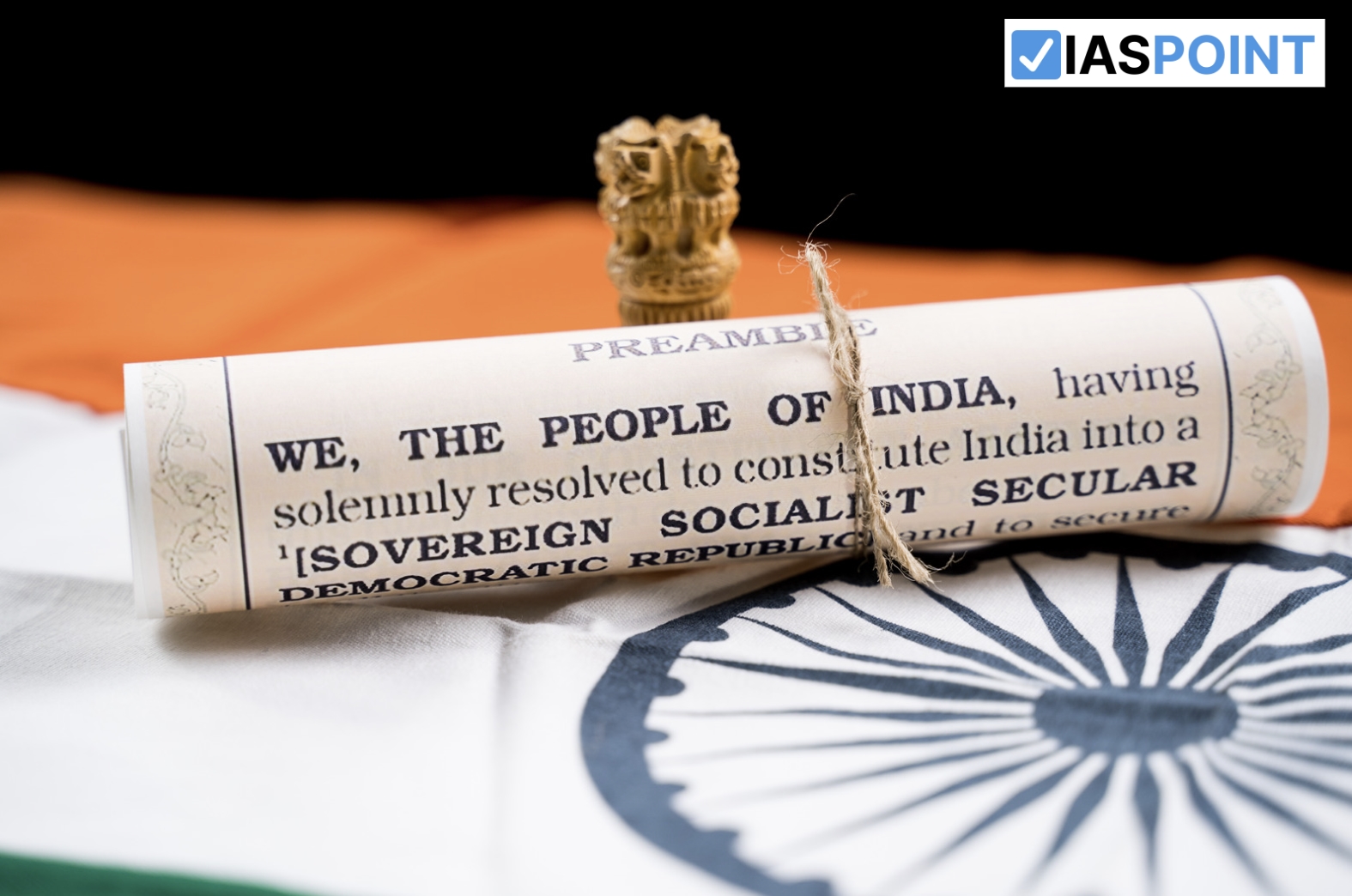

Directive Principles of State Policy (DPSP) are guidelines for the State in India. They are enshrined in Part IV of the Constitution of India, encompassing Articles 36 to 51. DPSPs are inspired by the Irish Constitution, which in turn drew from the Spanish Constitution. They aim to establish social and economic justice, guiding the government in policy formulation.
Nature of DPSP
DPSPs are non-justiciable, meaning they cannot be enforced by courts. However, they are fundamental in governance, as stated in Article 37. Their purpose is to ensure a welfare state, promoting the well-being of citizens.
Classification of DPSP
DPSPs are generally classified into three categories based on their ideological foundations:
- Socialistic Principles: Focus on social and economic justice.
- Gandhian Principles: Inspired by Mahatma Gandhi’s philosophy.
- Liberal-Intellectual Principles: Emphasise individual rights and freedoms.
Socialistic Principles
These principles aim to reduce economic inequality and promote social welfare. Key articles include:
- Article 38: Promotes welfare through social justice.
- Article 39: Ensures adequate livelihood and equitable resource distribution.
- Article 41: Secures the right to work, education, and public assistance.
- Article 42: Mandates humane working conditions and maternity relief.
- Article 43: Aims for a living wage and decent working standards.
Gandhian Principles
These principles reflect Gandhi’s vision for rural self-governance and social justice. Important articles include:
- Article 40: Establishes village panchayats for self-governance.
- Article 46: Promotes the interests of Scheduled Castes and Scheduled Tribes.
- Article 47: Advocates for public health and prohibition of harmful substances.
Liberal-Intellectual Principles
These principles focus on individual rights and modern governance. Notable articles include:
- Article 44: Calls for a uniform civil code.
- Article 45: Mandates early childhood care and education.
- Article 51: Promotes international peace and cooperation.
Amendments to DPSP
Several amendments have added or modified DPSPs:
- 42nd Amendment (1976): Added new directives on legal aid and environmental protection.
- 44th Amendment (1978): Strengthened economic equality provisions.
- 86th Amendment (2002): Made elementary education a fundamental right.
Conflict with Fundamental Rights
The relationship between DPSP and Fundamental Rights (FR) has been contentious. Key court cases highlight this conflict:
- Champakam Dorairajan Case (1951): Established that FRs prevail over DPSPs.
- Golaknath Case (1967): Ruled that FRs cannot be amended to enforce DPSPs.
- Kesavananda Bharati Case (1973): Introduced the basic structure doctrine, limiting amendments.
- Minerva Mills Case (1980): Reinforced the need for balance between FRs and DPSPs.
Implementation of DPSP
Despite being non-justiciable, various laws and policies reflect the ideals of DPSPs:
- Land Reforms: Laws to abolish zamindari and promote land distribution.
- Labour Reforms: Acts to protect workers’ rights and ensure fair wages.
- Panchayati Raj: Establishment of local self-governance systems.
- Education Acts: Implementation of free and compulsory education.
Recent Developments
Recent legislative measures have been enacted to further the objectives of DPSPs:
- Minimum Wages Act: Ensures fair wages for workers.
- Consumer Protection Act: Safeguards consumer interests.
- Environment Protection Acts: Address environmental sustainability.
Criticism of DPSP
DPSPs face criticism on several grounds:
- They lack legal enforceability.
- Arrangements may seem illogical.
- They are perceived as conservative.
- Potential for conflict between Centre and State.
Significance of DPSP
DPSPs play important role in shaping India’s socio-economic policies. They aim to establish a welfare state and ensure justice for all citizens. Their ideals guide the government in addressing issues of inequality and social justice.


