
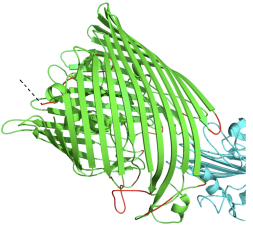
Proteins usually adopt stable three-dimensional shapes, but intrinsically disordered proteins remain flexible and can change form while interacting with other molecules. Researchers at the National Centre for Biological Sciences, Tata Institute of Fundamental Research, Bengaluru, have developed an artificial intelligence-based tool called Disobind to predict how these proteins attach to their binding partners. The development is for understanding cell signalling, gene regulation, disease pathways, and future drug design.
What Disobind Does
Disobind analyses protein sequences and uses protein language models trained on large datasets of known protein sequences. It predicts which regions of a disordered protein are likely to make contact with another protein. Unlike many existing methods, it does not require structural information or sequence alignments. It also takes the binding partner into account, which is important because the interaction of disordered proteins depends strongly on context.
Why Intrinsically Disordered Proteins Matter
Intrinsically disordered proteins play key roles in cellular communication. They help regulate signalling networks, assist protein movement inside cells, control which genes are switched on or off, support protein folding and quality control, and help form biomolecular condensates. Their flexibility makes them difficult to study using conventional structural biology tools. Better understanding of these interactions can improve knowledge of disease mechanisms and support more precise therapeutic strategies.
Performance and Scientific Value
The researchers benchmarked Disobind against existing predictors, including AlphaFold-multimer and AlphaFold3. It showed higher accuracy on previously unseen protein pairs. Its performance improved further when combined with AlphaFold-multimer. This suggests that AI tools can complement each other in mapping protein interactions, especially for flexible proteins that are difficult to model by traditional methods.
Applications in Disease and Drug Discovery
The tool has been tested across diverse biological systems, including immune signalling molecules and repair proteins linked to cancer and neurodegeneration. It may help identify new interaction motifs associated with disease and reveal intervention points for regulating disordered protein interactions across the proteome. Disobind has been made open-source and freely available for researchers worldwide.
Last Modified: April 27, 2026