
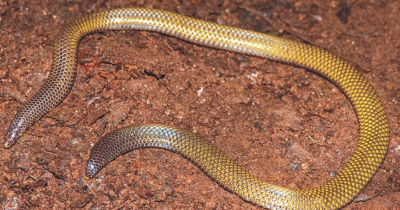
Indian scientists have identified a rare subterranean amphibian species in the northern Western Ghats of Maharashtra and named it Gegeneophis valmiki. The discovery was made by a multi-institutional team led by the Zoological Survey of India (ZSI). The species was first collected in 2017 during surveys on the Valmiki Plateau in Satara district. It has been named after the Maharshi Valmiki Mandir near the discovery site.
Discovery and Naming
The species belongs to the genus Gegeneophis, commonly known as blind caecilians. These amphibians spend most of their lives underground. Their eyes are covered by bone and they resemble earthworms in appearance. The name honours the local cultural landmark associated with the site of discovery.
Scientific Significance
The finding adds to the biodiversity record of the Western Ghats, one of India’s major biodiversity hotspots. Subterranean amphibians are difficult to detect because of their hidden lifestyle. Their discovery requires repeated field surveys, careful excavation, and taxonomic study. The research has been published in the international journal Phyllomedusa.
Conservation Importance
Amphibians are among the most threatened vertebrate groups globally. Many species face habitat loss, climate stress, pollution, and disease. The discovery marks the need for faster species documentation, especially in ecologically sensitive regions. Undocumented species may disappear before they are scientifically recorded, leading to silent extinctions.
Western Ghats Biodiversity Context
The northern Western Ghats support high endemism and many rare reptiles, amphibians, and plants. Such discoveries strengthen the case for habitat protection, long-term monitoring, and taxonomic research. They also show that even well-studied landscapes can still yield new species.
Last Modified: April 27, 2026