
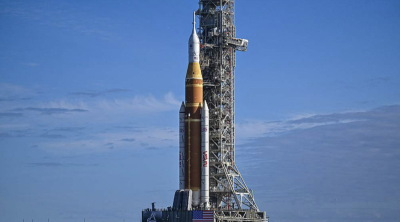
NASA has moved the Space Launch System rocket to its launchpad at Kennedy Space Center in Florida, marking a major step towards the Artemis II mission. The mission is expected to send four astronauts on a 10-day flight around the Moon and back, making it the first crewed lunar mission under NASA’s Artemis programme. The rollout comes as the agency enters the final phase of launch preparations, with the mission potentially lifting off as early as 6 February, subject to readiness checks.
Rocket Rollout to Launchpad
The 322-foot Space Launch System travelled from the Vehicle Assembly Building to the launchpad on a mobile platform at a very slow pace. The move took place at sunrise and drew large numbers of NASA staff and contractors to the site. The rollout is a standard but part of launch preparation before a crewed mission.
Artemis II Mission Profile
Artemis II is the second mission in NASA’s Artemis programme and the first to carry astronauts. It follows the uncrewed Artemis I flight in 2022. The crew includes three United States astronauts and one Canadian astronaut. The mission will last about 10 days and will take the crew farther from Earth than any humans have travelled before.
Launch Readiness and Timeline
A key factor in the launch schedule is the wet dress rehearsal, which simulates the countdown and checks for technical issues. The rehearsal is scheduled four days before launch. NASA has also noted that the launch of Crew-12 to the International Space Station may affect resources and timing. Artemis II has three possible launch windows through April, depending on orbital conditions and mission readiness.
Broader Significance of Artemis Programme
Artemis II is seen as an important step in NASA’s plan to return humans to deep space and eventually to the Moon’s surface. The mission also reflects international cooperation, with Canada participating in the crew. It is intended to test systems, procedures and human spaceflight capability for future lunar exploration.
Last Modified: April 27, 2026