
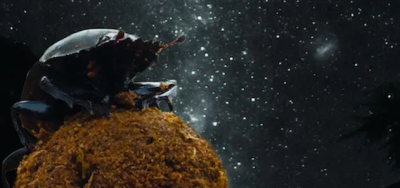
Dung beetles have been found to use the Milky Way as a natural navigation aid while rolling dung balls across the ground at night. This behaviour helps them move in straight lines and avoid returning to the same dung pile, which reduces competition and improves survival. The finding marks a remarkable example of animal orientation based on celestial cues.
What Scientists Found
Dung beetles do not move randomly after collecting dung. They travel in remarkably straight paths, even in darkness. When the night sky is clear, they use the broad glow of the Milky Way as a directional guide. This allows them to maintain a steady course away from rivals.
How the Beetles Navigate
Researchers believe the beetles detect patterns of polarised light in the sky. They may not need to identify individual stars. Instead, the diffuse light band of the Milky Way provides a visible reference point. When this sky pattern is removed in experiments, the beetles lose their direction and begin to move in circles.
Scientific Importance
This discovery shows that navigation in nature can depend on simple but highly effective adaptations. It also demonstrates that even small insects can use complex environmental signals for survival. The study adds to the understanding of animal behaviour, sensory biology, and the role of celestial light in navigation.
Why It Matters for General Studies
The finding is relevant to science and technology discussions because it compares natural navigation with human-made systems such as GPS. It also raises broader questions about evolution, sensory perception, and adaptation in living organisms.
Last Modified: April 27, 2026