
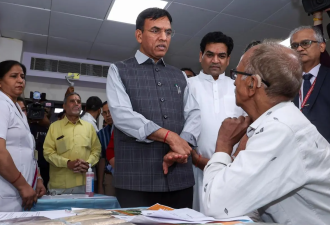
The Employees’ State Insurance Corporation (ESIC) launched a nationwide free Annual Health Check-Up Initiative on May 7, 2026, targeting insured workers aged 40 years and above. The programme aligns with the statutory mandates of the Code on Social Security, 2020, which legalizes preventive healthcare screenings for older workforce segments. Formally inaugurated by the Union Minister of Labour and Employment, Youth Affairs and Sports at the ESIC Medical College and Hospital in Basaidarapur, New Delhi, the initiative simultaneously rolled out across 11 other major ESIC hospitals nationwide, including facilities in Jaipur and Visakhapatnam. The health campaign aims to streamline the early detection and management of chronic, non-communicable diseases for an estimated 10 million eligible insured individuals.
Statutory Framework and Objective
The operational rollout of the preventive healthcare campaign represents a direct implementation of India’s consolidated labour reforms.
Legislative Alignment
The initiative is anchored in the Code on Social Security, 2020, and the Occupational Safety, Health and Working Conditions Code, 2020. These codes replace traditional ad-hoc health camps with an explicit legal obligation to provide regular health screenings. Under this statutory framework, employers and state insurance agencies must ensure structural access to medical diagnostics for workers cross-sectioned by age and occupational risk.
Target Beneficiaries
- General Workforce: All registered Insured Persons (IPs) under the ESI scheme who have attained 40 years of age and above are eligible for the free check-ups.
- Hazardous Occupations: Workers engaged in dangerous operations—such as handling toxic chemicals, hazardous mineral dust, or heavy manufacturing machinery—receive mandatory medical evaluations irrespective of their age.
Diagnostic Matrix and Continuum of Care
The health screening package focuses heavily on identifying lifestyle diseases and occupational health hazards before they progress to advanced stages.
Core Diagnostic Testing Profile
The routine clinical assessment provided at the daily ESIC hospital desks includes a specific battery of laboratory and radiological evaluations:
- Metabolic and Cardiovascular Screenings: Blood pressure monitoring, fasting/post-prandial blood glucose tests for diabetes, and complete lipid profile tracking for high cholesterol.
- Hematological Screening: Complete blood count (CBC) tests to diagnose varying degrees of anemia and blood disorders common among industrial laborers.
- Radiological and Electrical Cardiac Tests: Standard Electrocardiograms (ECG) to identify underlying ischemic heart diseases, alongside Chest X-rays to screen for pulmonary conditions and occupational lung diseases like pneumoconiosis or silicosis.
Post-Screening Medical Support
The initiative functions beyond basic diagnostic identification by feeding directly into the therapeutic network of ESIC. Individuals diagnosed with chronic or acute clinical conditions during the screenings receive immediate, zero-cost access to corrective medical care. This involves the direct provisioning of long-term maintenance drugs, specialized outpatient department (OPD) treatment, and advanced tertiary healthcare support across dedicated ESIC medical networks.
Comparison of Preventive Health Mandates
The implementation of the new guidelines marks a structural shift in how worker health is regulated compared to legacy systems.
| Feature | Legacy Framework (Factories Act, 1948 / ESI Act, 1948) | New Framework (Labour Codes & 2026 Initiative) |
| Legal Mandate for Health Check-up | Absent or limited strictly to hazardous zones inside factory premises | Universally mandatory for all covered workers aged 40 years and above |
| Hazardous Work Age Limits | Varied based on specific state amendment rules | Mandatory diagnostic testing regardless of the worker’s age |
| Data Architecture | Manual, scattered fitness registers maintained by individual factories | Centralized, systematic digital health records mapped for long-term monitoring |
| Geographical Scope | Restricted mostly to specific notified industrial clusters | Extended pan-India across all functional ESIC Medical Colleges and network hospitals |
Strategic Challenges in Program Implementation
While the preventative framework is structurally designed for large-scale worker welfare, several socio-economic hurdles restrict its optimum delivery.
Opportunity Cost and Wage Loss
A primary barrier to high participation rates is the high opportunity cost for daily-wage and piece-rate workers. Attending a diagnostic screening at an ESIC hospital often requires taking a full day off work. Without built-in compensation or statutory wage protection for the hours spent at the clinic, many eligible workers skip the sessions to avoid losing their daily wages.
Operational Constraints and Resource Distribution
The heavy influx of patients under the new age-based eligibility criteria puts significant pressure on existing medical infrastructure. ESIC medical institutions face chronic crowding, long wait times, and logistical bottlenecks. If a local facility lacks specialized diagnostic equipment, workers must be referred to external empaneled centers, requiring repeat visits that add to their travel expenses and time commitment.
Demography and Disease Inclusivity
The current diagnostic package focuses primarily on standard non-communicable metabolic disorders. It lacks specialized focus areas, such as targeted medical staff and separate spaces for female workers, or screening protocols for environmental risks like heat-related illnesses that affect construction and agricultural laborers.
IASPOINT Booster Facts for UPSC
- About ESIC: The Employees’ State Insurance Corporation is a statutory corporate body established under the Employees’ State Insurance Act, 1948. It functions under the administrative control of the Ministry of Labour and Employment.
- The Four New Labour Codes: The Central Government consolidated 29 distinct central labour laws into four comprehensive codes: The Code on Wages, 2019; The Industrial Relations Code, 2020; The Code on Social Security, 2020; and The Occupational Safety, Health and Working Conditions Code, 2020.
- Financing Model: The ESI scheme is a self-financing social security structure. The capital fund is built via fixed monthly percentages cut from employee wages and matching contributions paid directly by employers.
- Scheme Convergence: ESIC has officially signed a Memorandum of Understanding (MoU) with the National Health Authority (NHA) to converge its medical services with the Ayushman Bharat Pradhan Mantri Jan Arogya Yojana (AB PM-JAY) to maximize institutional bed capacity and outreach.
- Quality Standardization: To ensure the reliability of its diagnostic data across all its clinical biochemistry labs, ESIC entered into a formal alignment with the National Accreditation Board for Testing and Calibration Laboratories (NABL).