
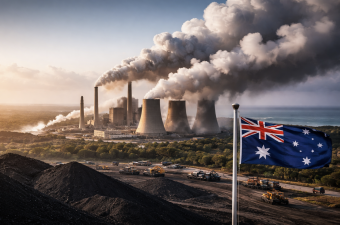
The 2025 State of the Climate Report by the World Meteorological Organization reveals alarming trends. The past 11 years rank as the hottest on record, with 2025 being the second or third warmest year globally. Despite slight cooling effects from La Niña, global temperatures remain exceptionally high. Australia, with per capita emissions three times the global average, faces severe climate impacts and urgent calls for emission reductions.
Rising Carbon Dioxide Levels
Carbon dioxide (CO2) in the atmosphere reached record highs in 2025, about 50% above pre-industrial levels. Emissions continue to increase due to fossil fuel use. CO2 remains in the atmosphere for decades, intensifying the greenhouse effect and global warming. Each year of high emissions adds to this dangerous buildup.
Global Temperature and Ocean Changes
The global average temperature in 2025 was 1.43°C above pre-industrial levels. Oceans stored record heat, causing sea levels to rise and increasing ocean acidification. Arctic and Antarctic ice levels are near record lows, and glaciers continue to shrink. These changes threaten marine ecosystems and coastal communities.
Extreme Weather Events
Human-driven climate change worsened extreme weather in 2025. Central Asia experienced severe heatwaves, East Asia faced destructive wildfires, and the Caribbean was hit by Hurricane Melissa. Attribution studies confirm that greenhouse gas emissions make such events more frequent and intense.
Australia’s Climate Impact and Response
Australia’s per capita carbon emissions are among the highest worldwide. The country endured its fourth warmest year in 2025, with record sea surface temperatures and prolonged heatwaves. Bushfire seasons have lengthened and intensified. Australia aims for net zero emissions by 2050, but faster action is critical to meet targets and reduce future harm.
Topics for Prelims:
Carbon Dioxide and Greenhouse Effect
- CO2 levels are 50% above pre-industrial levels.
- Fossil fuels remain the main emission source.
- CO2 traps heat, causing global warming.
- Emissions accumulate over decades.
- Reducing emissions slows climate change.
Climate Indicators and Ocean Changes
- 2025 was 1.43°C warmer than pre-industrial average.
- Oceans absorbed record heat in 2025.
- Ocean acidification harms marine life.
- Arctic and Antarctic ice at record lows.
- Glaciers continue to shrink worldwide.
Australia’s Climate Impact
- Australia’s per capita emissions triple global average.
- 2025 was Australia’s fourth warmest year.
- Sea temperatures around Australia reached historic highs.
- Heatwaves and bushfires are more frequent and intense.
- Net zero emissions target set for 2050.
Questions for Mains:
- Critically discuss the role of fossil fuels in global greenhouse gas emissions and evaluate the effectiveness of international efforts to reduce their use. [GS-III-Economic Development]
- Analyse the impact of rising ocean temperatures on marine biodiversity and coastal communities, and examine adaptive strategies for sustainable development. [GS-III-Environment & DM]
- Estimate the challenges and opportunities for Australia in achieving its net zero emissions target by 2050, and discuss the implications for global climate change mitigation. [GS-II-Governance]
- Point out the causes and consequences of increasing extreme weather events due to climate change, and critically discuss the role of climate science in disaster risk management. [GS-III-Internal & External Security]
Answer Hints:
1. Critically discuss the role of fossil fuels in global greenhouse gas emissions and evaluate the effectiveness of international efforts to reduce their use. [GS-III-Economic Development]
- Fossil fuels are the primary source of global CO2 emissions, driving about 75% of greenhouse gases.
- CO2 from fossil fuels remains in the atmosphere for decades, causing long-term warming.
- Global emissions reached record highs in 2025 despite awareness and policies.
- International efforts include the Paris Agreement aiming to limit warming to 1.5°C by reducing fossil fuel use.
- Effectiveness is mixed – some countries decarbonise rapidly, but many, including Australia, lag behind.
- Challenges include economic dependence, energy security, and political will; need faster, coordinated global action.
2. Analyse the impact of rising ocean temperatures on marine biodiversity and coastal communities, and examine adaptive strategies for sustainable development. [GS-III-Environment & DM]
- Oceans reached record heat in 2025, causing coral bleaching and loss of marine species.
- Ocean acidification from CO2 absorption harms shell-forming organisms and disrupts food chains.
- Sea level rise threatens coastal habitats, infrastructure, and millions of people globally.
- Marine ecosystem degradation affects fisheries and livelihoods of coastal communities.
- Adaptive strategies – coastal defenses, marine protected areas, sustainable fisheries management, and ecosystem restoration.
- Integrating climate resilience in coastal planning and community-based adaptation enhances sustainability.
3. Estimate the challenges and opportunities for Australia in achieving its net zero emissions target by 2050, and discuss the implications for global climate change mitigation. [GS-II-Governance]
- Australia’s per capita emissions are three times the global average, posing a major reduction challenge.
- Key challenges – reliance on fossil fuels, economic interests in mining, and political resistance.
- Opportunities include abundant renewable energy resources (solar, wind), technology innovation, and export potential in green hydrogen.
- Meeting net zero by 2050 requires rapid policy shifts, investment in clean energy, and carbon removal technologies.
- Australia’s progress is critical for global efforts due to its high emissions and influence in the region.
- Successful transition can position Australia as a climate leader and contribute to limiting global warming.
4. Point out the causes and consequences of increasing extreme weather events due to climate change, and critically discuss the role of climate science in disaster risk management. [GS-III-Internal & External Security]
- Causes – rising greenhouse gas emissions intensify heatwaves, storms, wildfires, and floods.
- Consequences – loss of lives, economic damage, displacement, and strain on emergency services.
- Attribution science links specific extreme events directly to human-induced climate change.
- Climate science improves forecasting, early warning systems, and risk assessment accuracy.
- Integrating scientific data into disaster management enhances preparedness, response, and resilience.
- Challenges remain in translating science into policy and ensuring community-level implementation.