
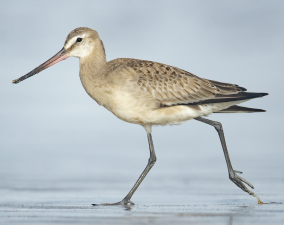
The Hudsonian godwit, a long-distance migratory shorebird, is facing a sharp population collapse due to climate change, habitat loss and human activity across its flyway. The species breeds in the Arctic and migrates to Patagonia, covering nearly 30,000 km each year. It is among 42 species proposed for international protection under the UN Convention on the Conservation of Migratory Species (CMS), which is meeting in Brazil.
Species and Migration Pattern
The Hudsonian godwit is known for one of the longest non-stop flights among birds. It can travel up to 11,000 km without stopping to feed, drink or rest. Its annual migration links the Arctic, North and South America, and the southern cone of South America. Such long journeys depend on reliable stopover sites and abundant food resources.
Reasons for Decline
The species has suffered a 95% population decline in four decades. Key pressures include:
- Climate change in the Arctic, which has altered spring timing and created a mismatch between chick hatching and insect availability.
- Changes in migration timing, with birds now leaving about six days later than a decade ago.
- Expansion of salmon and oyster farming in southern Chile, which has increased disturbance in feeding areas.
- Changes in farming practices in the United States, which have reduced shallow wetlands used for feeding and resting.
CMS and International Protection
The Convention on the Conservation of Migratory Species is a global treaty that protects migratory animals crossing national borders. Countries that are parties to the convention are expected to conserve habitats, remove barriers to migration and cooperate with other range states. The proposed list also includes species such as the snowy owl, striped hyena and hammerhead shark.
Why It Matters for Conservation
The decline of the Hudsonian godwit marks the vulnerability of migratory species to multiple, linked threats across continents. It shows that conservation must address breeding grounds, stopover sites and wintering areas together. The case is also for biodiversity policy, habitat restoration and climate adaptation in international conservation frameworks.
Last Modified: April 29, 2026