
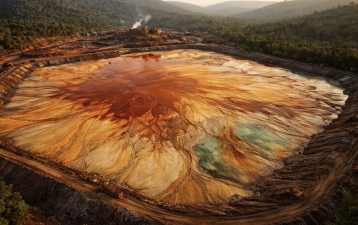
India has introduced its first tailings policy to guide the exploration and recovery of critical minerals from both primary ore bodies and secondary sources such as mine dumps, overburden, red mud, slag, and tailings from existing mines. The policy is intended to improve domestic mineral security, support green technologies, and reduce import dependence on strategic minerals.
What Tailings Policy Covers
Tailings are the waste material left after valuable minerals are extracted from crushed ore. The new policy creates a framework to assess whether these waste streams can yield additional minerals. It covers primary mineral deposits as well as secondary sources already generated during mining and processing.
Why the Policy Matters
Critical minerals such as lithium, cobalt, nickel and rare earth elements are essential for:
- Solar panels
- Wind turbines
- Batteries
- Advanced industrial applications
The policy supports India’s push for self-reliance and resilient supply chains. It also recognises that critical and strategic elements may exist across multiple sectors, not only under the direct control of the Ministry of Mines.
Role of Mining Institutions
The policy calls for coordinated action among agencies such as the Indian Bureau of Mines, Central Mine Planning & Design Institute, and Atomic Minerals Directorate. These bodies are expected to analyse samples from dumps and tailings of existing mines. The aim is to identify the location, quantity, and recoverability of companion elements and other valuable minerals.
Companion Minerals and Economic Viability
The policy marks the concept of companionality, where one mined ore may contain several useful elements. For example:
- Copper may contain selenium, tellurium, molybdenum, cobalt, rhenium, gold and silver.
- Zinc may occur with germanium, silver, cadmium and indium.
The policy seeks to evaluate whether recovery from such sources is technically feasible and economically viable. It is expected to provide a standard roadmap for tapping critical minerals from both primary and secondary sources.
Last Modified: April 27, 2026