
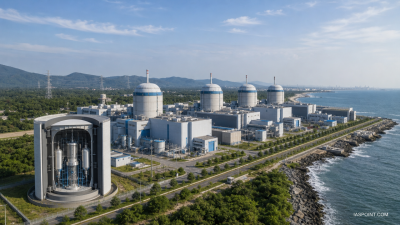
India has set a target to develop and operationalise at least five indigenously designed Small Modular Reactors (SMRs) by 2033. Bhabha Atomic Research Centre (BARC) is designing three types — a 220-MWe BSMR-200, a 55-MWe SMR-55 and an up to 5-MWth High-Temperature Gas-Cooled Reactor (HTGCR) — within the SHANTI Act framework.
What is the current issue
India aims rapid deployment of indigenous SMRs as part of the Nuclear Energy Mission to expand nuclear capacity, decarbonise industry, and enable distributed and process-heat applications. The programme runs alongside legal reform under the SHANTI Act, 2025, which permits private participation and redefines regulatory and liability arrangements.
Why it matters
- Governance: New licensing, inspection and liability regimes require expanded institutional capacity and rule-making by the AERB and related agencies.
- Economy: SMRs target captive power for energy-intensive industry, reuse of retiring coal sites, and supply to remote grids; government committed over USD 2 billion to development.
- Environment: SMRs provide carbon-free baseload and process heat, supporting national decarbonisation targets and hydrogen production without fossil inputs.
- Security: Fuel-cycle control, site security, and non-proliferation obligations shape technology choices and international cooperation.
- Technology: Modular factory fabrication, shorter construction timelines and passive safety features change project economics and project delivery models.
- Society: Local acceptance, emergency planning and waste-management arrangements will influence site selection and deployment pace.
- International relations: Private entry and indigenous designs affect partnerships, export potential and compliance with multilateral safeguards.
Technical features of India’s SMR programme
| Design | Capacity | Technology | Primary use / site |
|---|---|---|---|
| BSMR-200 | 220 MWe | Pressurised water reactor (PWR) | Electricity; lead unit proposed at Tarapur, Maharashtra |
| SMR-55 | 55 MWe | PWR | Distributed and captive power; lead unit proposed at Tarapur |
| HTGCR | Up to 5 MWth (thermal) | Graphite-moderated, helium-cooled high-temperature reactor | Process heat and thermochemical hydrogen production; proposed at BARC Visakhapatnam |
Regulatory and legal framework
- SHANTI Act, 2025: Replaced earlier statutes; permits domestic private and joint-venture participation in building, owning, operating and decommissioning nuclear plants; grants statutory status to AERB.
- Liability and dispute resolution: Implements a graded liability structure with operator liability capped at 300 million SDRs and an Atomic Energy Redressal Advisory Council for disputes.
- Controls retained: Uranium enrichment and strategic fuel-cycle activities remain under state control; licensing excludes entities inimical to national security.
- Regulatory demands: AERB must scale technical inspection, site-authorisation and emergency-preparedness capabilities for multiple private operators.
Economic and deployment considerations
- Funding: Government commitment exceeds USD 2 billion for SMR design, prototypes and lead units through 2033.
- Cost dynamics: SMRs reduce absolute capital per unit and allow phased investment, but per-MW costs may be higher without serial manufacturing.
- Revenue models: Captive power contracts, long-term PPAs, retrofit of coal sites using existing grid and water infrastructure, and industrial off-take (heat/hydrogen) are primary business cases.
- Private finance: Required measures include clear licensing timelines, standard module certification, risk-sharing instruments, and credit-enhancing PPAs.
- Supply chain: Factory fabrication, domestic vendor development and quality assurance are critical to reduce unit costs through learning curves.
HTGCR and the hydrogen economy
The HTGCR is designed to deliver high-temperature process heat for thermochemical cycles that produce hydrogen without grid electricity or fossil fuels. Small thermal units can supply process heat to local chemical, steel and cement plants or feed decentralised hydrogen production, reducing industrial CO2 emissions from hard-to-abate sectors.
Challenges and risks
- Regulatory capacity: Timely, independent safety oversight for multiple private operators and new technologies.
- Liability and accountability: Capped operator liability raises concerns on compensation adequacy and supplier responsibility.
- Waste management: Spent fuel storage, interim storage protocols and plans for long-term repositories need legal and technical clarity.
- Fuel-cycle security: Dependence on state-controlled enrichment requires commercial arrangements for fuel supply to private operators.
- Public acceptance: Local risk communication, emergency planning zones and stakeholder benefits will determine siting feasibility.
- Cost competitiveness: Achieving serial production and lowering per-unit costs is essential to compete with renewables plus storage.
- Non-proliferation and export controls: Compliance with IAEA safeguards and export-control regimes is necessary for international cooperation.
Way forward
- Standardised licensing: Fast-track type certification and uniform site-authorisation procedures for repeatable module designs.
- Strengthen AERB: Expand staff, technical laboratories, inspection capacity and statutory rule-making resources.
- Financing instruments: Offer guarantees, viability-gap funding, long-term PPAs and blended finance to attract private capital.
- Industrial clusters: Develop SMR manufacturing hubs and vendor qualification schemes to reduce costs through scale.
- Waste and fuel protocols: Define interim spent-fuel storage norms, centralised high-level waste repository plans and commercial fuel-supply agreements.
- Community engagement: Implement transparent local consultation, benefits-sharing and emergency-preparedness exercises.
- International cooperation: Pursue technology partnerships, joint R&D, and assured fuel and waste management collaboration under safeguards.
Model Questions
1. Analyse the scientific and operational advantages of Small Modular Reactors over conventional large reactors. Evaluate how India’s indigenous SMR programme can support national decarbonisation targets. [GS-III: Science & Technology]
India’s SMRs provide modular factory fabrication, shorter construction time, smaller site footprint and enhanced passive safety. Operational flexibility allows load-following and captive industrial supply. Indigenous BSMR-200 and SMR-55 enable carbon-free baseload for industry, replacement of retiring coal units and integration with renewables. Serial manufacturing and deployment reduce emissions at scale and support the Nuclear Energy Mission’s intermediate and long-term capacity goals aligned with net-zero objectives.
2. Discuss key provisions of the SHANTI Act, 2025 and the challenges in balancing private participation with nuclear safety and public accountability. [GS-II: Governance]
The SHANTI Act permits private construction, operation and decommissioning, grants statutory status to AERB, repeals prior statutes, and sets a graded liability cap with an advisory redress council. Challenges include expanding regulator capacity, ensuring operator compliance, resolving operator/supplier liability gaps, safeguarding fuel-cycle control, and maintaining transparent compensation mechanisms. Strong inspection regimes, clear licence conditions and independent oversight are necessary to balance commercial entry and public safety.
3. Examine the role of High-Temperature Gas-Cooled Reactors in India’s hydrogen strategy and industrial decarbonisation. [GS-III: Science & Technology]
HTGCRs deliver high-temperature process heat suitable for thermochemical hydrogen production without electricity-based electrolysis. Small thermal units at industrial clusters enable local, low-carbon hydrogen for steel, cement and chemicals, replacing fossil heat and feedstocks. Coupling HTGCRs with decentralised hydrogen offtake reduces transmission losses and grid dependence, addressing variability of renewables and providing continuous process heat for hard-to-abate sectors.
4. Assess the economic viability and principal investment challenges of integrating SMRs into India’s industrial sector. What measures are needed to attract private capital under the SHANTI Act, 2025? [GS-III: Economic Development]
SMRs lower absolute capital per unit and suit phased industrial deployment, but higher per-MW costs, uncertain serial-production gains and long payback periods deter investment. To attract capital: standardise type certification, provide long-term PPAs or captive contracts, offer credit guarantees and blended finance, develop vendor clusters for manufacturing scale-up, and clarify regulatory timelines and fuel-supply assurances to reduce commercial and regulatory risk.
Last Modified: July 24, 2026