
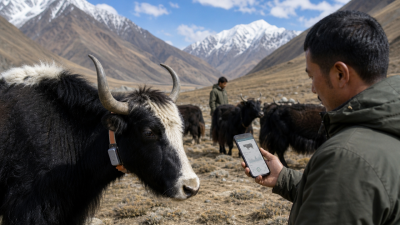
On 6 July 2026, ICAR–National Research Centre on Yak (Dirang) and Assam Don Bosco University (Guwahati) announced an IoT-based collar-attached system for yak health monitoring, stress prediction and geo-fencing in high‑altitude Himalayan regions.
System Features
- Form factor: collar-mounted IoT device for individual animals.
- Functions: movement tracking, stress prediction and geo-fencing to monitor boundaries.
- Operational aim: provide real‑time health information and reduce manual tracking in remote terrain.
Technical & Operational Context
- Deployment zone: designed for Himalayan pastures, including herds near international borders and areas above 8,000 ft.
- End users: yak herders (brokpas) managing mobile and sedentary herds.
- Application: an instance of precision livestock farming tailored to extreme environments.
Species & Distribution
- Species: Indian yak — Bos grunniens.
- Population: ~58,000 yaks in India (20th Livestock Census).
- Geographic spread: nearly half the population in Ladakh; others in Arunachal Pradesh, Sikkim, Himachal Pradesh and Uttarakhand.
IASPOINT Booster Facts
- ICAR–NRC on Yak: research centre under the Indian Council of Agricultural Research, located at Dirang.
- Geo‑fencing (brief): uses GPS/GNSS to create virtual boundaries and trigger location‑based alerts.