
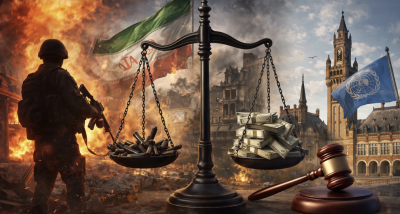
The ongoing Iran war in 2026 shows no signs of early peace despite reports of secret diplomacy. The conflict has spread to Gulf states, with Iran attacking US military assets. Iran’s blockade of the Strait of Hormuz risks drawing NATO countries into the war. This war has caused thousands of deaths, widespread destruction, and major disruption in global oil and gas markets. It began as a pre-emptive strike against Iran’s suspected nuclear ambitions but is widely seen as a power struggle over energy and regional control. The conflict exposes weaknesses in the international legal system established after 1945.
Background and Legal Issues
The US and Israel launched attacks on Iran without UN Security Council approval or US Congress consent. This violates international law and the US War Powers Resolution of 1973. The strikes targeted political leaders and civilian areas, breaching principles of distinction and proportionality in war. No clear proof exists of Iran planning nuclear attacks against the US or Israel. The justification of regime change contradicts the sovereignty and territorial integrity principles central to international law and the UN Charter.
Global Reactions and Diplomatic Stance
Many nations, especially in the Global South, question the legitimacy of the war. India’s Prime Minister Narendra Modi has called for peace and de-escalation, reflecting India’s commitment to peaceful conflict resolution. India promotes adherence to international law to prevent abuse of power and supports multilateralism over unilateral military actions. The Government of India balances national interests with a principled foreign policy rooted in ancient philosophy and Nehruvian ideals.
Wider Implications for International Order
The war marks the decline of the post-World War II international legal order. US actions in Venezuela and trade wars further weaken global law and cooperation. The conflict reveals how power politics override legal norms. It signals a setback for civilisation’s progress towards peaceful dispute resolution. Despite this, history shows war cannot create lasting peace. The challenge is to restore respect for international law and ensure global justice through cooperation.
Topics for Prelims:
Iran War 2026
- Started as pre-emptive strike against Iran’s nuclear programme.
- Extended to Gulf states with attacks on US military assets.
- Blockade of Strait of Hormuz threatens global oil supply.
- Thousands killed and major destruction in Iran.
- Raises risk of NATO involvement.
International Law and War
- UN Security Council approval required for war.
- War Powers Resolution limits US executive military action.
- Principles of distinction and proportionality in armed conflict.
- Sovereignty and territorial integrity protected by UN Charter.
- Regime change justification lacks legal basis.
India’s Diplomatic Position
- Calls for peace and de-escalation in Iran conflict.
- Supports peaceful conflict resolution and multilateralism.
- Anchored in vasudhaiva kutumbakam philosophy.
- Balances national interest with global justice.
- Opposes unilateral military actions violating international law.
Questions for Mains:
- Critically analyse the role of the UN Security Council in maintaining international peace and security in the context of unilateral military actions. [GS-II-International Relations]
- With suitable examples, estimate the impact of power politics on the effectiveness of international law in conflict resolution. [GS-II-International Relations]
- Point out the challenges faced by India in balancing national interests and ethical foreign policy principles in contemporary geopolitics. [GS-II-Constitution of India & Polity, GS-II-Governance]
- Underline the significance of the principles of distinction and proportionality in modern armed conflicts and evaluate their enforcement mechanisms. [GS-II-International Relations]
Answer Hints:
1. Critically analyse the role of the UN Security Council in maintaining international peace and security in the context of unilateral military actions. [GS-II-International Relations]
- UN Security Council (UNSC) is the primary body mandated to maintain international peace under the UN Charter.
- UNSC must authorize use of force except in self-defence; unilateral military actions violate this principle.
- Examples – US-Israeli strikes on Iran without UNSC approval undermine its authority and legitimacy.
- Veto power of permanent members often causes paralysis, limiting effective conflict resolution.
- Unilateral actions erode the post-1945 international legal order and weaken collective security mechanisms.
- Need for reform or strengthening UNSC to address power politics and ensure compliance with international law.
2. With suitable examples, estimate the impact of power politics on the effectiveness of international law in conflict resolution. [GS-II-International Relations]
- Power politics often override international legal norms, as seen in US-led strikes on Iran without legal mandate.
- US actions in Venezuela and tariff wars exemplify unilateralism weakening global legal frameworks.
- Regime change justifications violate sovereignty, undermining UN Charter principles.
- International law lacks enforcement when powerful states prioritize strategic interests over legal obligations.
- Global South’s skepticism reflects perceived bias and impotence of international law against hegemonic powers.
- Power dynamics cause selective application of law, reducing its role in peaceful conflict resolution.
3. Point out the challenges faced by India in balancing national interests and ethical foreign policy principles in contemporary geopolitics. [GS-II-Constitution of India & Polity, GS-II-Governance]
- India’s ethical stance promotes peace, multilateralism, and adherence to international law (vasudhaiva kutumbakam philosophy).
- Geopolitical realities require pragmatic engagement with power blocs and dynamic alliances.
- Balancing moral principles with safeguarding national security and economic interests amid regional conflicts.
- Domestic political accountability vs. confidential foreign policy decisions limits public discourse.
- Managing relations with conflicting powers (e.g., US and Iran) without compromising strategic autonomy.
- Ensuring India’s voice is respected in global forums while avoiding acquiescence to unilateralism.
4. Underline the significance of the principles of distinction and proportionality in modern armed conflicts and evaluate their enforcement mechanisms. [GS-II-International Relations]
- Principle of distinction mandates differentiation between combatants and civilians to minimize civilian harm.
- Proportionality requires that military force used is proportionate to the military advantage sought.
- These principles are core to International Humanitarian Law and Geneva Conventions.
- Violations, such as attacks on civilian areas in Iran, breach these principles and constitute war crimes.
- Enforcement mechanisms include International Criminal Court, UN investigations, and sanctions but face political challenges.
- Lack of universal jurisdiction and political will often impede effective enforcement in powerful states’ conflicts.