
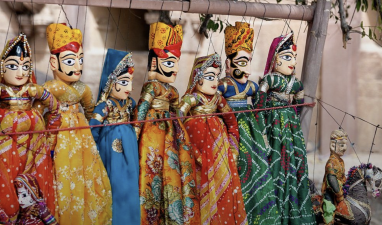
Kathputli, the traditional string puppet art of Rajasthan, remains one of India’s most recognisable folk traditions. In Jaipur’s Kathputli Nagar, generations of artisan families continue to make these wooden puppets by hand. The craft combines carving, painting, stitching, and performance, linking household production with live folk theatre.
Origin and Meaning
Kathputli is formed from the words kath meaning wood and putli meaning doll. The art has deep roots in Rajasthan’s cultural history. It was traditionally used by travelling performers to narrate stories of Rajput rulers, warriors, folk heroes, and moral lessons. It served as a medium of entertainment, memory, and public communication.
Craft and Design
- Each puppet is made from wood, cloth, thread, and paint.
- The faces are painted with bold eyes and sharp features.
- Bright costumes reflect royal and desert traditions.
- The design gives every puppet a distinct character and expression.
Performance Tradition
Kathputli shows are performed with strings, music, and rhythmic narration. Folk instruments such as the dholak and harmonium are commonly used. The performances often mix humour, satire, and storytelling. They present both legendary tales and social themes, making the art form relevant across generations.
Cultural Significance
Kathputli is more than a craft. It preserves Rajasthan’s folk identity and oral traditions. The art supports artisan livelihoods and remains visible in fairs, cultural festivals, and stage performances in India and abroad. Kathputli Nagar in Jaipur is an important centre for this living heritage.
Last Modified: April 25, 2026