
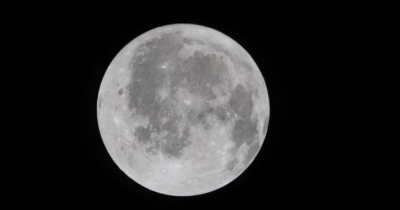
The four astronauts of NASA’s Artemis II mission have entered the Moon’s gravitational sphere of influence during a crewed flight that is set to take them farther from Earth than any humans before. The Orion capsule is on a near 10-day journey that marks the first crewed test flight of NASA’s Artemis programme and a key step towards future Moon landings.
Record-Breaking Lunar Flyby
The crew of Reid Wiseman, Victor Glover, Christina Koch and Jeremy Hansen is expected to reach a maximum distance of about 252,757 miles from Earth. This will surpass the Apollo 13 record held for 56 years. The spacecraft will pass around the Moon’s far side, where the astronauts will see Earth as a small object in the background.
Mission Objective and Significance
Artemis II is designed to test the Orion spacecraft and mission systems in deep space with astronauts on board. The mission is part of NASA’s wider plan to return humans to the Moon by 2028 and build a sustained presence there over the following decade. The programme is also viewed as a preparatory stage for future crewed missions to Mars.
Far-Side Flyby and Scientific Observations
During the lunar flyby, the crew will experience brief communication blackouts as the Moon blocks signals from NASA’s Deep Space Network. They will use cameras to photograph the Moon’s shadowed far side and the Earthrise view from lunar distance. Scientists at NASA’s Johnson Space Centre will monitor the observations and record the astronauts’ descriptions of the lunar environment.
Last Modified: April 28, 2026