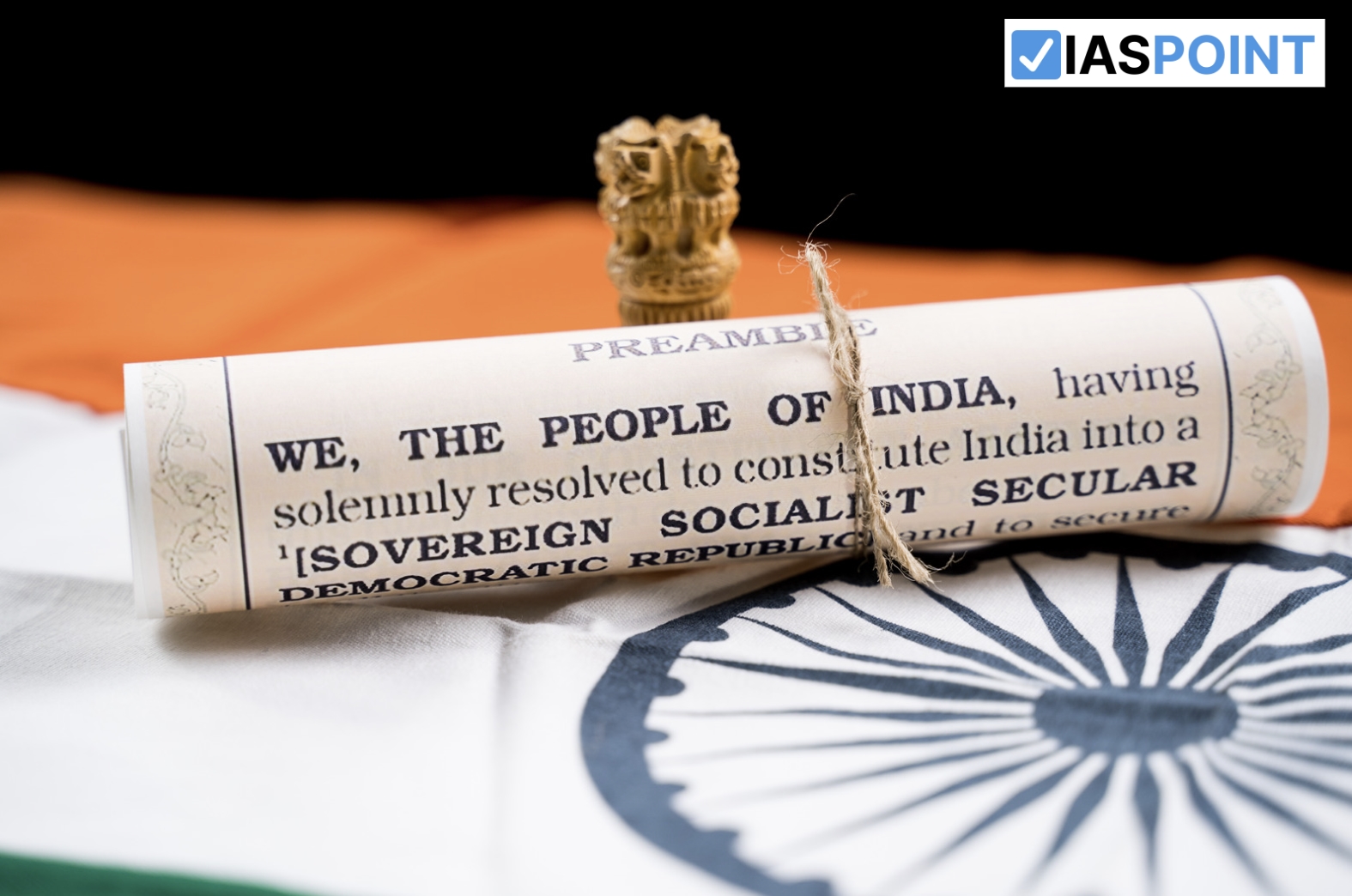
Indian Polity & Constitution for UPSC Prelims

I. Foundational Concepts of Indian Polity

  1. Evolution of Constitutional Framework
  2. Making of the Constitution
  3. Philosophy of the Constitution
  4. Key Features of the Indian Constitution
  5. Preamble: Vision and Ideals
  6. The Union and Its Territory
  7. Citizenship: Provisions and Policies

II. Fundamental Rights, Duties, and Principles

  1. Fundamental Rights: Scope and Limitations
  2. Directive Principles of State Policy
  3. Fundamental Duties of Citizens
  4. Doctrine of Basic Structure
  5. Constitutional Amendments

III. Central Government

  1. President: Powers and Functions
  2. Vice-President: Role and Responsibilities
  3. Prime Minister: Role and Powers
  4. Union Council of Ministers
  5. Cabinet Committees

IV. State Government

  1. Governor: Role and Powers
  2. Chief Minister: Executive Head of the State
  3. State Council of Ministers
  4. State Legislatures: Composition and Functions

V. Local Governance

  1. Panchayati Raj System
  2. Urban Local Bodies: Municipalities and Corporations

VI. Parliamentary System and Processes

  1. Indian Parliament: Structure and Powers
  2. Parliamentary Committees: Roles and Relevance
  3. Indian Parliamentary Group (IPG)

VII. Federalism and Inter-Governmental Relations

  1. India’s Quasi-Federal System
  2. Centre-State Relations
  3. Inter-State Relations
  4. Emergency Provisions

VIII. Judiciary

  1. Supreme Court: Powers and Jurisdiction
  2. High Courts: Role and Structure
  3. Subordinate Courts

IX. Judicial Mechanisms

  1. Judicial Review
  2. Judicial Activism
  3. Public Interest Litigation (PIL)

X. Alternative Dispute Resolution

  1. Tribunals: Scope and Authority
  2. Consumer Forums
  3. Lok Adalats and Alternative Mechanisms

XI. Union Territories and Special Provisions

  1. Administration of Union Territories
  2. Scheduled and Tribal Areas

XII. Constitutional Bodies

  1. Election Commission of India
  2. Union Public Service Commission (UPSC)
  3. State Public Service Commissions
  4. Finance Commission
  5. Goods and Services Tax (GST) Council
  6. Comptroller and Auditor General (CAG)
  7. Attorney General of India
  8. Advocate General of States

XIII. Special Commissions

  1. National Commission for Scheduled Castes
  2. National Commission for Scheduled Tribes
  3. National Commission for Backward Classes
  4. Special Officer for Linguistic Minorities

XIV. Non-Constitutional Bodies

  1. NITI Aayog: Policy Think Tank
  2. Central Vigilance Commission (CVC)
  3. Central Bureau of Investigation (CBI)
  4. Lokpal and Lokayuktas
  5. National Human Rights Commission (NHRC)
  6. State Human Rights Commissions
  7. National Commission for Women (NCW)
  8. National Commission for Protection of Child Rights
  9. National Commission on Minorities
  10. Central and State Information Commissions

XV. Political Dynamics and Elections

  1. Political Parties: National and Regional
  2. Coalition Governments: Evolution and Impact
  3. Electoral Process and Laws
  4. Electoral Reforms and Innovations
  5. Anti-Defection Law
  6. Voting Behavior and Trends
  7. EVMs and Election Technology

XVI. Societal Structures and Advocacy

  1. Pressure Groups and Their Influence
  2. Non-governmental Organizations (NGOs)

XVII. Cooperative Societies and Public Administration

  1. Cooperatives and Cooperative Movement

XVIII. Public Administration

  1. Public Services: Recruitment and Administration

XIX. Languages and Special Provisions

  1. Official Language and Regional Language Policies
  2. Special Provisions for Certain States and Classes

XX. Miscellaneous Topics

  1. National Integration and Unity
  2. Foreign Policy Principles and Challenges
  3. Landmark Judicial Verdicts
  4. Significant Doctrines in Indian Law
  5. Constitutions of Other Nations: A Comparative Study
  6. Rights and Liabilities of the Government

National Commission for Minorities

National Commission for Minorities

The Government of India has set up a Commission for protecting the rights of minorities. The National Commission on Minorities (NCW) consists of a Chairperson, a Vice Chairperson and four other members. All of them are appointed by the President. The functions of the National Commission for Minorities, as a statutory commission established by an Act of 1992, under the Act, are:

(i) to evaluate the progress of the development of minorities under the Union and States;

(ii) to monitor the working of the safeguards provided in the Constitution and in the laws enacted by Parliament and the State Legislatures;

(iii) to make recommendations for the effective implementation of safeguards for the protection of the interests of minorities by the Central Governments or the State Governments;

(iv) to look into specific complaints regarding deprivation of rights and safeguards of the minorities and take up such matters with the appropriate authorities;

(v) to cause studies to be undertaken into problems arising out of any discrimination against minorities and recommend measures for their removal;

(vi) conduct studies, research and analysis on the issues relating to socio-economic and educational development of minorities;

(vii) to suggest appropriate measures in respect of any minority to be undertaken by the Central Government or the State Governments;

(viii) to make periodical or special reports to the Central Government on any matter pertaining to minorities and in particular the difficulties confronted by them;

(ix) any other matter which may be referred to it by the Central Government. The powers of NCM, acting as a civil court, are:

(a) summoning and enforcing the attendance of any person from any part of India and examining him on oath;

(b) requiring the discovery and production of any document;

(c) receiving evidence on affidavit;

(d) requisitioning any public record or copy thereof from any court or office;

(e) issuing commissions for the examination of witnesses and documents;

(f) any other matter which may be prescribed. The reports of NCM are to be placed in the Parliament and in the State Legislature. The NCM does well for the protection of minorities in the country.

Leave a Reply

Your email address will not be published. Required fields are marked *

Archives