
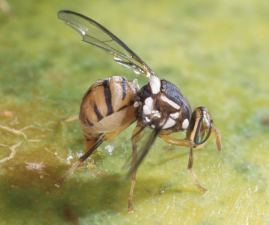
A research expedition in the Himalayan foothills of Himachal Pradesh has identified two new fruit fly species and recorded a genus never before documented in India. The findings add to knowledge of the country’s insect diversity, especially within the fruit fly subfamily Trypetinae, which includes many species linked to wild plants and fruit crops.
New Species Identified
The two newly described species are Acidoxantha paratotoflava and Hemilea suneriae. Acidoxantha paratotoflava is a greenish-yellow fly with four black stripes on the thorax and larger black spots on the abdomen. It also has distinctive hook-like male genital structures. Hemilea suneriae is reddish-brown with prominent black dots and a unique wing pattern with one clear hyaline window in a dark area.
Methods Used in the Study
The team used traditional sweep nets and a specialised female attractant known as Solan Bait. This patented bait helped trap flies that are usually difficult to observe in the wild. The specimens were then studied under microscopes, with emphasis on wing markings and reproductive structures, which are key features in fruit fly identification.
Important Taxonomic Records
The study also recorded the genus Rhagoletis in India for the first time. This genus is globally important because several species are known pests of fruit crops. In another finding, the male of Euphranta nigripeda was described for the first time, solving a taxonomic gap that had remained since the species was first known in 1913.
Ecological and Exam Relevance
These discoveries show the underexplored biodiversity of the Himalayan region. They also show the importance of host-plant studies, including associations with species such as Bombax ceiba (Silk Cotton tree). Such research is relevant for biodiversity conservation, insect taxonomy, and the study of crop-associated insect groups in India.
Last Modified: April 28, 2026