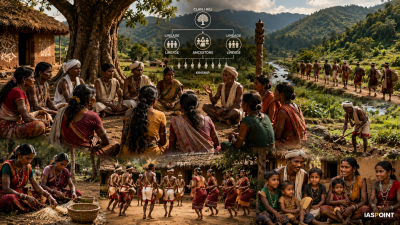
Tribal societies in India, often referred to as Adivasis, are characterized by a social structure that differs significantly from the caste-based hierarchy of mainstream Indian society. Their organization...
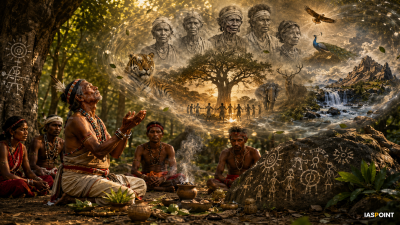
Tribal cosmology in India represents a complex worldview where the boundaries between the physical and spiritual realms are fluid. Unlike institutionalized religions, tribal belief systems are rooted in...
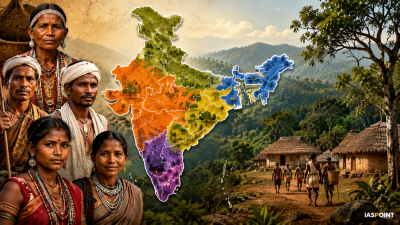
The tribal population in India, comprising approximately 8.6% of the total population according to the 2011 Census, is not uniformly distributed. Geographically, these communities are categorized into five...
The development of traditional weaponry in India is deeply rooted in the Dhanurveda, an Upaveda of the Yajur Veda. This ancient science classifies weapons based on their mode...
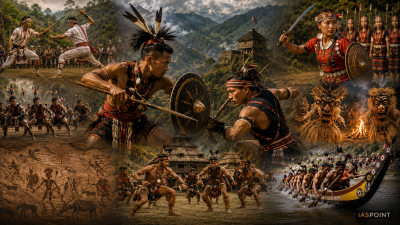
The North-Eastern frontier of India, characterized by its diverse tribal demographics and rugged terrain, has fostered a unique martial culture. These arts evolved not only as systems of...
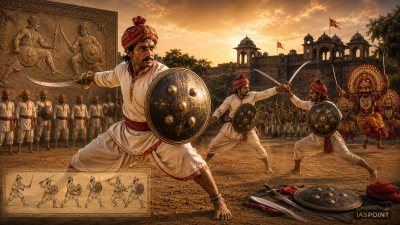
Pari-Khanda is a traditional martial art originating from the state of Bihar, specifically nurtured by the Rajputs. It is considered the foundational precursor to the world-renowned Chhau dance...
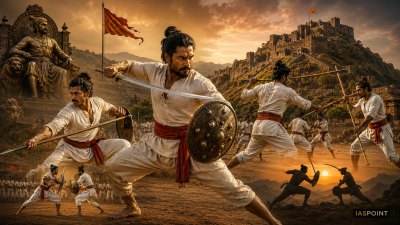
Mardani Khel is a traditional weapon-based martial art originating from the state of Maharashtra. While its roots can be traced to the early medieval period, it saw its...
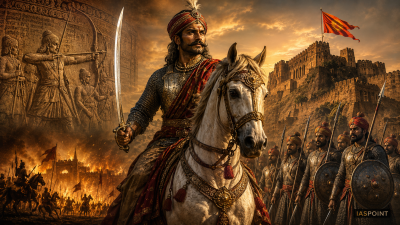
The Rajput martial tradition represents a unique synthesis of Vedic military science and a socio-cultural ethos known as Rajputra-Dharma. Emerging prominently between the 6th and 12th centuries CE,...
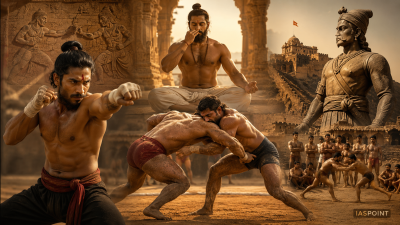
In the vast spectrum of the Martial Arts and Traditional Sports Unit of Indian Heritage, Musti-Yuddha (unarmed striking) and Malla-Yuddha (grappling/wrestling) represent the foundational pillars of physical combat....
The martial heritage of Manipur is collectively known as Huyen Lallong, which translates to "The Method of Safeguarding" (Huyen – War/Conflict; Lallong – Method/Knowledge). This system is subdivided...