
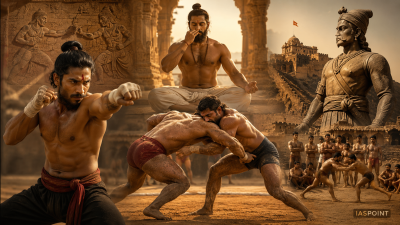
In the vast spectrum of the Martial Arts and Traditional Sports Unit of Indian Heritage, Musti-Yuddha (unarmed striking) and Malla-Yuddha (grappling/wrestling) represent the foundational pillars of physical combat. These arts are rooted in the ancient Indian concept of Prana-Vashya (breath control) and Sharir-Shakti (physical prowess), predating most modern combat sports. They provided the physiological and tactical basis for the warrior classes (Kshatriyas) across various dynasties, from the Mauryas to the Marathas.
Malla-Yuddha: The Ancient Science of Grappling
Malla-Yuddha, translated as “Wrestling Combat,” is the oldest codified form of wrestling in the Indian subcontinent. It is distinct from modern “Kushti,” as it was originally designed for the battlefield where the objective was to incapacitate or kill an opponent.
Evolution and Literary References
- Vedic and Epic Origins: The Mahabharata contains extensive descriptions of Malla-Yuddha, notably the duel between Bhima and Jarasandha, which lasted 27 days. The Ramayana mentions the wrestling prowess of Hanuman and Vali.
- Manasollasa: This 12th-century Sanskrit text by the Western Chalukya King Someshvara III provides a detailed manual on the training, diet, and types of wrestling matches.
- Malla Purana: A 13th-century Gujarati text specifically dedicated to the Jyesthimalla clan of wrestlers, categorizing techniques and dietary requirements.
Classification of Malla-Yuddha Techniques
The art is traditionally divided into four distinct styles based on the intensity and methodology of the bout:
| Style | Methodology | Primary Objective |
| Hanumanti | Focuses on technical superiority and agility. | Mastering holds and escapes. |
| Jambuvanti | Utilizes locks (Bandha) and pressure points. | Forcing the opponent into submission. |
| Jarasandhi | Focused on breaking limbs and joint manipulation. | Battlefield lethality; incapacitation. |
| Bhimaseni | Relies on sheer physical strength and crushing force. | Overpowering the opponent through mass and power. |
The Three Pillars of Training
- Vyayam (Physical Exercise): Includes Dands (jackknife pushups) and Baithaks (squats).
- Sthambha-Shakti: Training with the Mallakhamb (wrestling pole) to improve grip, balance, and core strength.
- Ahara (Diet): Strict emphasis on Sattvic and Rajasic foods, often involving high consumption of milk, ghee, and almonds.
Musti-Yuddha: The Traditional Art of Boxing
Musti-Yuddha, literally “Fist Combat,” originated in Varanasi (Kashi). It is a complete striking system involving punches, kicks, knees, and elbow strikes.
Historical and Technical Features
- Varanasi Tradition: Kashi remains the spiritual and physical home of Musti-Yuddha. Historically, it was a brutal form of combat where practitioners fought without gloves.
- Categorization of Strikes: The art involves four types of strikes: Musti (fist), Koni (elbow), Janu (knee), and Paada (kick).
- Spiritual Connection: Matches were often held during religious festivals and were preceded by prayers to Lord Hanuman, the patron deity of the art.
Musti-Yuddha vs. Modern Boxing
- Targets: Unlike modern boxing which restricts hits below the belt, Musti-Yuddha targets the chest, face, and solar plexus.
- Methodology: It incorporates Pankration-like elements where a fighter can grab the opponent’s hair or neck to deliver a knee strike.
- Modern Status: It is now a rare art form, surviving primarily as a cultural demonstration in Uttar Pradesh and parts of South India.
Key Differences: Malla-Yuddha vs. Musti-Yuddha
| Feature | Malla-Yuddha | Musti-Yuddha |
| Primary Focus | Grappling, Throws, Locks | Striking, Punching, Kicking |
| Philosophical Base | Strength and Endurance | Speed and Reflexes |
| Geographic Hub | Across India (Deccan and North) | Varanasi (Kashi) |
| Patron Deity | Lord Hanuman / Lord Krishna | Lord Hanuman |
| Outcome Goal | Pinning or breaking the opponent | Knocking out the opponent |
Cultural Trivia and Facts for UPSC Prelims
- The Akhada Culture: Both arts are practiced in an Akhada, a traditional gymnasium. The soil (Mitti) is often mixed with oil, ochre, and buttermilk to prevent infections and provide a better grip.
- Malla-Yuddha in Southeast Asia: The expansion of Indian culture led to the development of similar wrestling forms in Southeast Asia, such as Bokator in Cambodia and Muay Boran in Thailand.
- The Mughal Influence: During the Mughal era, Malla-Yuddha was influenced by Persian wrestling (Pahlavani), leading to the birth of the modern Kushti, which focuses more on the sporting aspect than the lethal techniques of ancient Malla-Yuddha.
- Royal Titles: In ancient India, champion wrestlers were awarded titles such as Kesari (Lion) and Kumar (Prince), traditions that continue in modern Indian wrestling tournaments like the Hind Kesari.
- Integration with Yoga: Both arts utilize Asanas to increase the range of motion and Pranayama to regulate heart rates during high-intensity combat.