
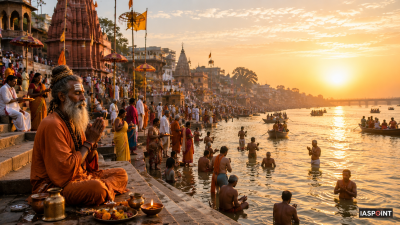
The term Tirtha originates from the Sanskrit root tr, meaning “to cross over” or “to ford.” In the context of Indian sacred geography, a Tirtha represents a “crossing place” or a spiritual ford where the boundary between the mundane world (Samsara) and the divine realm becomes permeable. While often associated with water bodies, the concept encompasses any location, person, or mental state that facilitates the transition from ignorance to enlightenment.
Classification of Tirthas
According to the Puranas (specifically the Brahma Purana and Skanda Purana), Tirthas are categorized into four distinct types based on their origin and nature:
- Daiva Tirthas: Sites established by gods or celestial beings, such as Kashi (Varanasi), Badri-kshetra, and Kedarnath.
- Asura Tirthas: Places associated with the penance or destruction of demons (Asuras), such as Gaya (associated with Gayasura).
- Arsha Tirthas: Sites established by ancient sages (Rishis), often where they performed rigorous austerities, such as Kanva-ashram or Naimisharanya.
- Manusha Tirthas: Locations sanctified by the deeds of great kings or virtuous humans, often involving historical or legendary figures like Ambareesha or Manu.
Geographic and Symbolic Manifestations
The sacred geography of India is mapped through various networks of Tirthas, creating a unified cultural consciousness across the subcontinent.
Sthala (Physical Location)
Most Tirthas are situated at natural intersections or “junctions” of power:
- Sangams: Confluences of rivers (e.g., Prayagraj).
- Parvatas: Sacred mountains representing the axis mundi (e.g., Mount Kailash, Arunachala).
- Sagaras: Coastal sites where the land meets the sea (e.g., Puri, Rameshwaram, Kanyakumari).
Jangama Tirtha (The Moving Tirtha)
Traditional texts emphasize that a Tirtha is not merely a static physical location. A wandering ascetic, a virtuous teacher (Guru), or a saint is considered a Jangama Tirtha. Their presence sanctifies the ground they walk upon, allowing devotees to “cross over” through association with their wisdom.
Manasa Tirtha (The Mental Tirtha)
Philosophical treatises like the Mahabharata (Anushasana Parva) argue that physical pilgrimage is secondary to internal purity. Virtues such as truth (Satya), forgiveness (Kshama), and self-control (Indriya-nigraha) are defined as Manasa Tirthas. Without internal sanctity, a physical dip in a holy river is considered a mere bath.
Key Sacred Circuits and Networks
The integration of Tirthas into circuits reflects the “cultural landscaping” of India, encouraging pan-Indian travel and cultural exchange.
| Circuit Type | Key Sites / Components | Significance |
| Char Dham | Badrinath (North), Puri (East), Rameshwaram (South), Dwarka (West) | Established by Adi Shankara to unify the four corners of India. |
| Sapta Puri | Ayodhya, Mathura, Maya (Haridwar), Kashi, Kanchi, Avantika (Ujjain), Dwarka | The seven holy cities believed to bestow liberation (Moksha). |
| Shakti Peethas | 51 sites (e.g., Kamakhya, Kalighat, Jwalamukhi) | Places where parts of Sati’s body fell; central to Tantric traditions. |
| Jyotirlingas | 12 sites (e.g., Somnath, Mahakaleshwar, Vishwanath) | Manifestations of Shiva as a pillar of light. |
| Kumbh Mela Sites | Prayagraj, Haridwar, Ujjain, Nashik | Rotating pilgrimage based on planetary positions (Jupiter and Sun). |
Ritual Dimensions: Snana, Dana, and Shraddha
The practice of Tirthayatra (pilgrimage) involves specific ritual actions intended to generate spiritual merit (Punya).
- Snana (Ritual Purification): Contact with sacred water is believed to wash away “malas” (impurities) of the physical and subtle bodies.
- Dana (Ritual Charity): Giving to the needy or to the custodians of the Tirtha at specific astrological timings (Muhurtas) is considered highly efficacious.
- Shraddha (Ancestral Rites): Sites like Gaya, Pehowa, and Siddhpur are designated for Pinda-daan, ensuring the spiritual progression of deceased ancestors.
- Pradakshina (Circumambulation): Walking around a sacred entity (a temple, a hill like Govardhan, or a river like the Narmada Parikrama) to internalize its energy.
Cultural and Historical Significance for UPSC
- National Integration: Tirthas served as early mechanisms for “Cultural Verticality,” where local deities were Sanskritized and linked to Great Traditions, fostering a sense of a “Sacred Geography” long before modern political boundaries.
- Socio-Economic Impact: Historically, Tirthas were hubs of trade, art, and education. Markets (Haats) and craft centers thrived around pilgrimage sites (e.g., Kanjeevaram silks at Kanchipuram).
- Architectural Evolution: The development of temple architecture (Nagara, Dravida, and Vesara styles) was largely driven by the need to provide a grand “house” for the deity at a Tirtha.
- Epigraphic Evidence: Inscriptions from the Gupta, Chola, and Vijayanagara periods record massive land grants and endowments to Tirthas, highlighting their role in the medieval political economy.
Trivia and Fact File
- The Narmada Exception: While the Ganges is considered holy for bathing, the Narmada is considered so sacred that the mere sight (Darshana) of it is said to purify a devotee.
- Kashi Vishvanath: Often called Avimukta-kshetra (the place never forsaken by Shiva), it is considered the oldest living Tirtha in India.
- Pancha-Prayag: The five confluences in the Alaknanda river valley (Vishnuprayag, Nandaprayag, Karnaprayag, Rudraprayag, and Devprayag) are essential Tirthas in the Himalayan sacred landscape.