
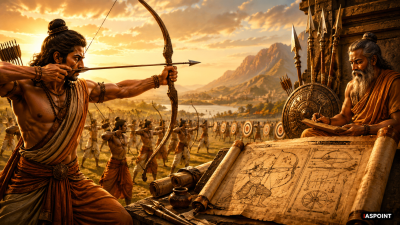
Dhanurveda is considered the Upaveda (applied knowledge) of the Yajur Veda, though some traditions associate it with the Atharva Veda. It is the earliest comprehensive treatise on the science of archery and the art of warfare in ancient India. The term is derived from Dhanush (bow) and Veda (knowledge), symbolizing the primacy of archery in Vedic military strategy.
Core Philosophy and Categorization of Weapons
Dhanurveda classifies weapons and combat into four distinct categories based on the method of operation. This classification provided the structural framework for the development of later Indian martial arts.
| Category | Type of Weapon | Examples |
| Mukta | Thrown weapons (Projectiles) | Bow and arrow (Dhanush), Discus (Chakra) |
| Amukta | Non-thrown weapons (Hand-to-hand) | Sword (Kharga), Mace (Gada), Spear (Kunta) |
| Muktamukta | Weapons used both ways | Javelin, Dagger |
| Yantramukta | Mechanically propelled weapons | Catapults, Slings |
Vedic Origins and Historical Evolution
The evolution of martial arts in India is rooted in the transition from tribal skirmishes in the Early Vedic period to organized state warfare in the Mahajanapada era.
- Rig Vedic References: Mention of the Indra’s Vajra and the use of horse-drawn chariots (Ratha) in the Battle of the Ten Kings (Dasrajanya War).
- Dhanurveda Samhita: Attributed to sages like Vishwamitra or Bharadwaja, these texts detail the training of a warrior (Kshatriya), including physical conditioning, breathing techniques, and mental discipline.
- The Guru-Shishya Tradition: The transmission of martial knowledge was centralized around figures like Parashurama, Dronacharya, and Bhishma, who emphasized the “Dharmayuddha” (righteous war) code.
Development of Classical Indian Martial Arts
The principles laid down in Dhanurveda branched into various regional and specialized forms of combat, which are today recognized as the “Mothers of Martial Arts.”
Kalaripayattu: The Oldest Living Martial Art
Originating in Kerala around the 3rd century BCE, Kalaripayattu is deeply influenced by Dhanurveda and Ayurveda.
- Meythari: Focuses on physical body conditioning and flexibility.
- Kolthari: Use of wooden weapons like the long staff.
- Ankathari: Use of metal weapons like the Urumi (flexible sword).
- Marmachikitsa: The knowledge of 107 vital points (Marmas) in the human body used for both healing and disabling opponents.
Silambam: The Art of the Staff
Tracing its roots to the Sangam literature of Tamil Nadu, Silambam is one of the most sophisticated weapon-based arts.
- Weaponry: Primarily uses the bamboo staff, but also includes Vel (spear) and Valari (iron boomerang).
- Royal Patronage: Extensively promoted by the Chola, Chera, and Pandya kings.
Regional Martial Traditions of India
India’s diverse geography led to the evolution of specific combat styles tailored to local terrains and available weaponry.
- Thang-Ta (Manipur): Also known as Huyen Lallong, it involves “Thang” (sword) and “Ta” (spear). It was used by the Meitei experts to defend against Burmese invasions.
- Gatka (Punjab): A weapon-based style pioneered by the Sikhs. While it originated for self-defense, it was formalized under Guru Hargobind Ji and Guru Gobind Singh Ji.
- Mardani Khel (Maharashtra): Developed by the Marathas, focusing on the use of the Pata (gauntlet sword) and Vita (corded spear), optimized for guerrilla warfare in the Sahyadri mountains.
- Musti-Yuddha (Varanasi): One of the oldest forms of unarmed combat, resembling modern boxing, utilizing punches, kicks, and elbow strikes.
- Lathi Khela (Bengal/Bihar): A traditional stick-fighting art used primarily by the peasantry for village defense.
Trivia and Fact File for Prelims
- Bodhidharma Connection: Historical tradition credits the Buddhist monk Bodhidharma with carrying Indian martial arts (specifically Kalaripayattu and Yoga) to the Shaolin Temple in China, which subsequently influenced Kung Fu.
- The Concept of Vyayaam: Ancient Indian physical education was categorized under Vyayaam, which included Mallayuddha (wrestling) and Shastravidya (weaponry).
- Agni Purana: This Purana contains extensive chapters on Dhanurveda, detailing the proportions of bows, the manufacturing of arrows, and the specific stances (Pratyalidha, Alidha) used by archers.
- UNESCO Recognition: Several Indian martial arts are currently protected under the intangible cultural heritage initiatives to ensure the survival of Guru-Shishya parampara.
Traditional Wrestling: Mallayuddha and Kushti
Before the advent of modern wrestling, Mallayuddha was the dominant form of combat sports in ancient India. It was divided into four types:
- Hanumanti: Focuses on technical superiority.
- Jambuvanti: Uses locks and holds to force submission.
- Jarasandhi: Focuses on breaking limbs and joints.
- Bhimaseni: Relies on sheer physical strength and crushing power.