
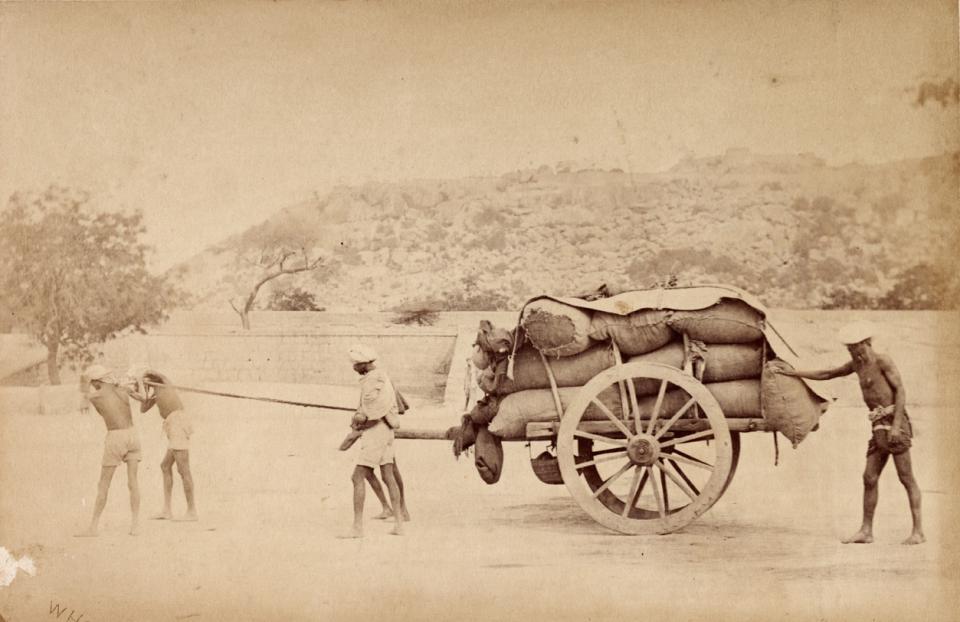
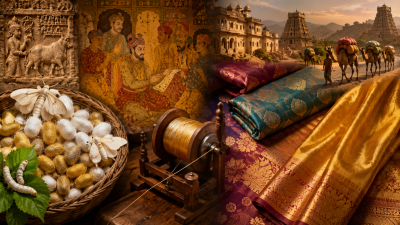
India is the second-largest producer of silk globally and holds the unique distinction of being the only country that produces all five commercial varieties of silk. Evidence of silk usage in India dates back to the Indus Valley Civilization (c. 2500 BCE), where silk filaments from wild Antheraea moths were utilized. The Vedic texts refer to silk as Hiranya, and by the medieval period, the “Silk Route” had firmly integrated Indian silk into global trade, particularly under the patronage of the Mughal and Vijayanagara empires.
Classification of Indian Silk Varieties
Indian silk is broadly classified into Mulberry and Vanya (Wild) silks. Each variety is distinguished by the species of silkworm and the primary host plant.
| Silk Variety | Silkworm Species | Primary Host Plant | Principal Producing States |
| Mulberry | Bombyx mori | Mulberry (Morus alba) | Karnataka, Andhra Pradesh, Tamil Nadu |
| Eri | Samia ricini | Castor (Ricinus communis) | Assam, Meghalaya, Manipur |
| Tasar | Antheraea paphia | Asan, Arjun, Sualu | Jharkhand, Chhattisgarh, Odisha |
| Muga | Antheraea assamensis | Som and Soalu | Assam (Endemic to Brahmaputra Valley) |
| Oak Tasar | Antheraea proylei | Oak | Manipur, Himachal Pradesh, Uttarakhand |
Major Silk Weaving Clusters and Traditions
The diversity of Indian silk is best reflected in the regional weaving clusters, each characterized by specific looms, motifs, and historical influences.
Southern Indian Silk Traditions
- Kanchipuram Silk (Tamil Nadu): Characterized by its heavy weight and “Korvai” weaving, where the border and body are woven separately and interlocked. It uses pure gold-dipped silver zari.
- Mysore Silk (Karnataka): Known for its minimalist elegance and soft texture. It was popularized by the Wadiyar dynasty and later the Mysore State Silk Filature.
- Dharmavaram (Andhra Pradesh): Distinguished by its double-shaded “Muthyala” (pearl) borders and heavy brocade work, often used for bridal attire.
- Molakalmuru (Karnataka): Features intricate motifs of fruits, animals, and birds, often with a contrasting border and pallu.
Western Indian Silk Traditions
- Paithani Silk (Maharashtra): Produced in Aurangabad, it is known for the “oblique square” design on the border and a pallu featuring the Mor (Peacock) and Asavali (Vines). It is a tapestry-woven silk.
- Patan Patola (Gujarat): A Double-Ikat silk where the warp and weft are tie-dyed before weaving. It is completely reversible and traditionally took months to complete.
- Tanchoi Silk (Gujarat): A technique introduced by Parsi weavers from China, featuring a satin-base fabric with tiny floral or bird motifs and no visible floats on the reverse.
Northern and Central Indian Silk Traditions
- Banarasi Silk (Uttar Pradesh): The most famous of Indian silks, known for Zari and Amru (pure silk) brocades. Techniques include Kimkhab (heavy gilt) and Jamdani (figured muslin on silk).
- Chanderi Silk (Madhya Pradesh): A blend of silk and fine cotton, resulting in a lightweight, sheer texture. It is known for its Butis (small floral motifs) and gold borders.
- Maheshwari Silk (Madhya Pradesh): Often featuring geometric borders inspired by the stone carvings of the Maheshwar Fort, these are lighter than Kanchipuram silks.
Eastern Indian Silk Traditions
- Baluchari Silk (West Bengal): Famous for the Pallu which depicts narrative scenes from the Ramayana, Mahabharata, and royal court life.
- Sambalpuri Silk (Odisha): Uses the Bandha (Ikat) technique. It is distinguished by its shell, wheel, and flower motifs reflecting Odia culture.
- Muga Silk (Assam): Naturally golden and highly durable. Muga is often called the “Queen of Silk” and was historically reserved for the Ahom royalty.
Technical Terminology and Processes
- Sericulture: The commercial rearing of silkworms for the production of silk.
- Reeling: The process of unwinding the silk filaments from the cocoon.
- Throwing: The process of twisting the silk yarn to prepare it for weaving.
- Zari: A thread made of fine gold or silver wire used in traditional Indian garments. Modern zari often uses a silk core with silver-plated copper wire.
- Korvai: A specialized South Indian technique of joining two different colored silks (border and body) through a three-shuttle weaving process.
Fact Sheet for UPSC Prelims
- Silk Mark Organization of India (SMOI): A quality assurance label introduced by the Central Silk Board to protect the interests of silk consumers and stakeholders.
- Central Silk Board (CSB): A statutory body established in 1948 under the Ministry of Textiles to coordinate sericulture and silk weaving in India.
- Silk Monopoly: Assam holds a global monopoly on the production of Muga silk.
- Geographical Indication (GI): Most traditional silk weaves, including Kanchipuram, Banarasi, Muga, and Molakalmuru, are protected under the GI Act, 1999.
- Ahimsa Silk: Popularized by Kusuma Rajaiah, this involves extracting silk from the cocoon after the moth has naturally emerged, ensuring no harm comes to the silkworm. It is primarily made from Eri silk.
Contemporary Challenges and Conservation
- Powerloom vs. Handloom: The influx of cheap, machine-made silk has threatened the livelihoods of traditional handloom weavers.
- Synthetic Silk: The market is flooded with “Art Silk” (Rayon or Polyester), necessitating the Silk Mark for authentication.
- Climate Change: Changes in temperature and rainfall patterns affect the health of host plants (like Mulberry and Som), impacting the quality of the cocoons.
- Cluster Development: Government schemes like the National Handloom Development Programme (NHDP) focus on providing financial and technical support to traditional silk-weaving clusters.