
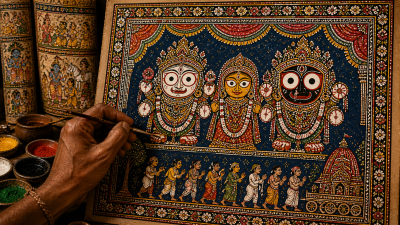
Pattachitra, derived from the Sanskrit words Patta (canvas/cloth) and Chitra (picture), is one of the oldest and most popular art forms of India, primarily concentrated in Odisha and West Bengal. While both share a common nomenclature, they have evolved into distinct styles with unique iconography, themes, and functional purposes. In Odisha, the art is intrinsically linked to the Jagannath cult of Puri, whereas in West Bengal, it serves as a visual accompaniment to oral storytelling by nomadic bards known as Chitrakars.
Pattachitra of Odisha: The Sacred Art of Puri
The Odishan school of Pattachitra is centered around the temple of Lord Jagannath. It is characterized by disciplined lines, vibrant colors, and a rigid adherence to traditional iconography.
Key Characteristics and Techniques
- Preparation of Patta: The base is prepared by bonding two layers of old cotton cloth with a mixture of crushed tamarind seeds and water. It is then coated with soft clay stone (Gundah) and polished with pebbles to achieve a leather-like finish.
- Natural Pigments: The artists, traditionally known as Mahapatras or Maharanas, use only natural minerals and vegetable colors.
- White: Prepared from powdered conch shells (Shankha).
- Black: Derived from lamp soot or burnt coconut shells.
- Yellow: Obtained from Haritala stone.
- Red: Sourced from Hingula (Cinnabar).
- The Anavasara Tradition: This is the most significant ritualistic link. During the Anavasara period (15 days when the deities of Puri remain in isolation due to a ritual fever), the Pattachitra paintings, known as Anasara Patti, are placed in the sanctum sanctorum for public viewing as substitutes for the idols.
Themes and Iconography
- Jagannath Vesha: Depictions of Lord Jagannath, Balabhadra, and Subhadra in various attires.
- Thia Badhia: A depiction of the Jagannath Temple’s structure.
- Krishna Leela: Scenes from the life of Krishna, particularly the Rasa Lila.
- Dasavatara: The ten incarnations of Lord Vishnu.
- Kanchi Abhiyan: A historical-mythological narrative of the Puri King’s expedition.
Pattachitra of West Bengal: The Narrative Scroll
The Bengal Pattachitra is traditionally a performance-based art. The Patua community creates long vertical scrolls used as visual aids while singing Pater Gaan (ballads).
Key Characteristics and Variations
- Scroll Structure: Unlike the single-frame Odishan style, Bengal Pattachitra consists of multiple panels joined together to form a long scroll (Jardano Pat). Some scrolls can extend up to 20 feet.
- Manjusha and Kalighat Influence: In the 19th century, this tradition evolved into the famous Kalighat Paintings of Kolkata, which shifted focus from purely mythological themes to social satire and contemporary events.
- Organic Binders: Use of Bel (wood apple) gum as a primary binding agent for colors.
Major Types of Bengal Pat
- Chalchitra: Found in the background of Durga Puja idols, depicting the Shiva family and mythological tales.
- Durga Pat: Dedicated specifically to the goddess Durga.
- Tribal Pat: Specifically the Jadu Patua paintings of the Santhal tribe, often associated with life-after-death rituals.
Comparative Analysis: Odisha vs. West Bengal Pattachitra
| Feature | Odisha Pattachitra | West Bengal Pattachitra |
| Primary Base | Processed cloth (Patta) | Paper or cloth scrolls |
| Center of Origin | Puri and Raghurajpur | Medinipur, Birbhum, and Bankura |
| Religious Affiliation | Lord Jagannath (Vaishnavism) | Secular, Mythological, and Social |
| Format | Single framed panels | Vertical scrolls (Jardano Pat) |
| Artistic Style | Sophisticated, fine lines, ornate | Bold, folk-style, expressive |
| Purpose | Ritualistic and Decorative | Storytelling and Performance |
| GI Tag Status | Granted (Orissa Pattachitra) | Granted (Bengal Pattachitra) |
Geographical Indication and Craft Villages
The survival of these traditions is rooted in specific clusters that have been recognized for their cultural purity.
- Raghurajpur (Odisha): India’s first heritage craft village, where every household is involved in Pattachitra or related crafts like Ganjifa cards and stone carving.
- Naya (West Bengal): Located in the Pingla block of West Midnapore, this village is the primary hub for Bengal Patuas, hosting the annual Pot Maya festival.
Fact Sheet for UPSC Prelims
- UNESCO Recognition: The Patua Sangeet (the songs accompanying the scrolls) is an integral part of Intangible Cultural Heritage discussions.
- Materials: All brushes are traditionally made from animal hair (squirrel, buffalo, or mongoose).
- Ganjifa: Pattachitra artists also create Ganjifa (locally called Ganjapa), which are circular playing cards featuring the Dasavatara theme.
- Tala Pattachitra: A variant of the art where images are etched on palm leaves using an iron stylus, then filled with lampblack.
- Pater Gaan: The oral tradition where the artist unrolls the scroll frame by frame while singing the narrative.
- Historical Timeline: References to Pattachitra can be found in ancient texts and the works of medieval poets, dating back to at least the 12th century AD in its current form.